
Morocco’s patient rise to the top
Morocco’s rise in the last decade is evident in their presence on the big stage. Playing their first international match in 1998, the Atlas Lionesses have had to bide their time.
Despite playing in the first two editions of the Women’s Africa Cup of Nations (WAFCON), exiting in the group stages on both occasions, their return to the competition wouldn’t come until 2022.
Their time away resulted in necessary investment from their federation, which in turn saw steady growth on the pitch to develop a team capable of challenging.
In the first of what is set to be three consecutive occasions hosting the tournament, Morocco finished runners-up. It was bittersweet to come so close, but a real demonstration of just how far they had come.
Three years later in the 2024 edition – held in 2025 – they repeated that feat, this time falling to 10-time title winners Nigeria at the last hurdle.
In between, they competed at their maiden FIFA Women’s World Cup tournament in 2023, shocking many as they reached the round of 16, finishing ahead of Germany to progress.
It isn’t just the senior side reaping the rewards of continued support, either.
Work has gone into grassroots football across the country, too, with different development programs focused on finding the next generation of Atlas Lionesses. As a result, participation numbers skyrocketed, with 5,000 registered players turning into 60,000.
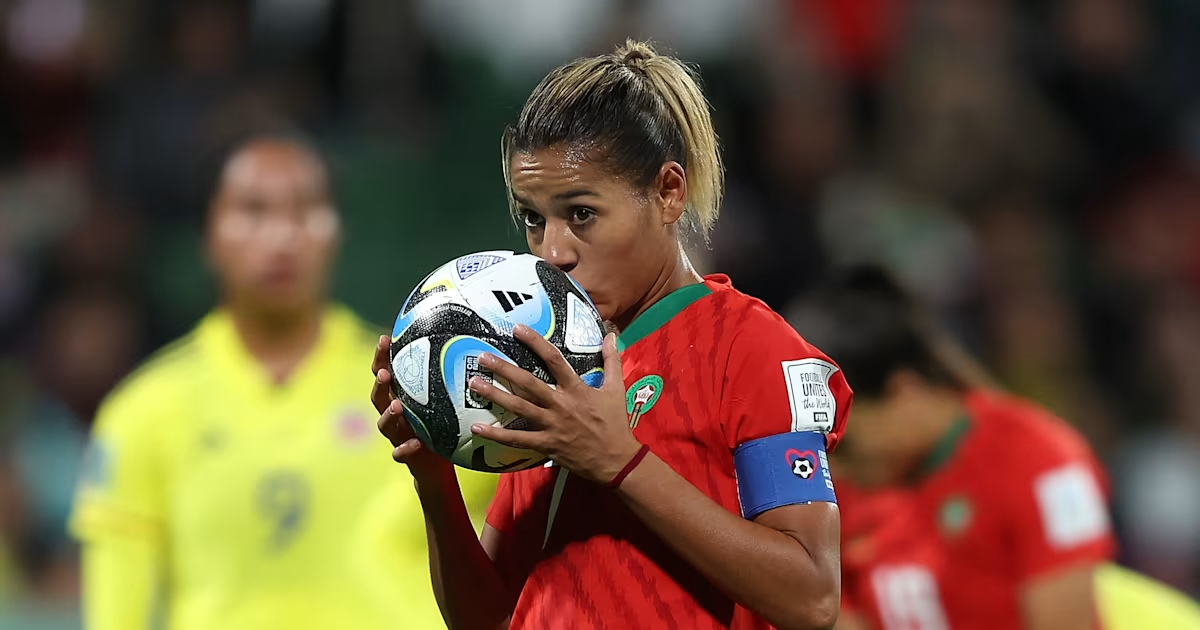
This isn’t luck, nor is it a coincidence – this is the reward of hard work and investment that has gone into bringing Morocco up to speed, as their captain emphasises.
“There are a lot of people who see the results that Morocco has achieved now, and they think it’s by coincidence, they are surprised by the results,” Chebbak said.
“This is the result of years and years of hard work. It took years to get here. It’s not by chance. I lived in a time when there was nothing dedicated to women’s football and now there is everything… but we still have more to do.”