
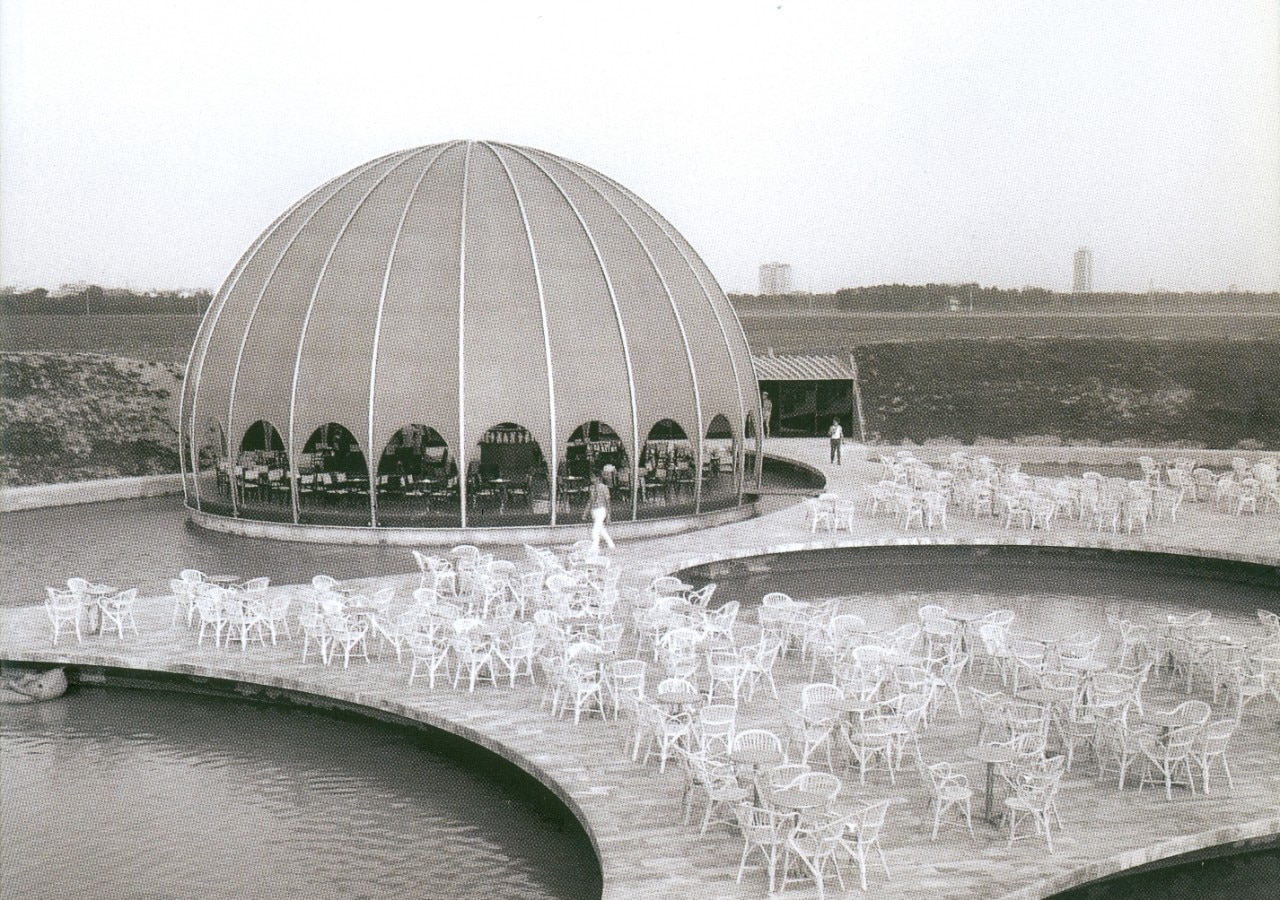
It was the post-war years. Italy’s Adriatic Riviera is changing, and Milano Marittima was changing with it. Conceived as an experiment between pine forest and salt marshes, the early twentieth-century garden city – laid out with geometric precision and dotted with villas – was rapidly giving way to a dense built fabric.
Yet what became truly cemented was not only the coastline itself, but a visual language of apartment blocks, kiosks, canopies and terraces that takes root in millions of minds across Europe and beyond: the precociously postmodern imagery of mass holidays on endless beaches, of Italian summers with their own unmistakable sound and flavour, suspended between the pop culture of seaside resorts and the dance floors of coastal clubs. It would later become the visual landscape to 1980s Italo disco, then to its revival in the 2010s, even if, in the end, there was little “Italian” about it beyond the scenery.