

Source | Rocket Lab
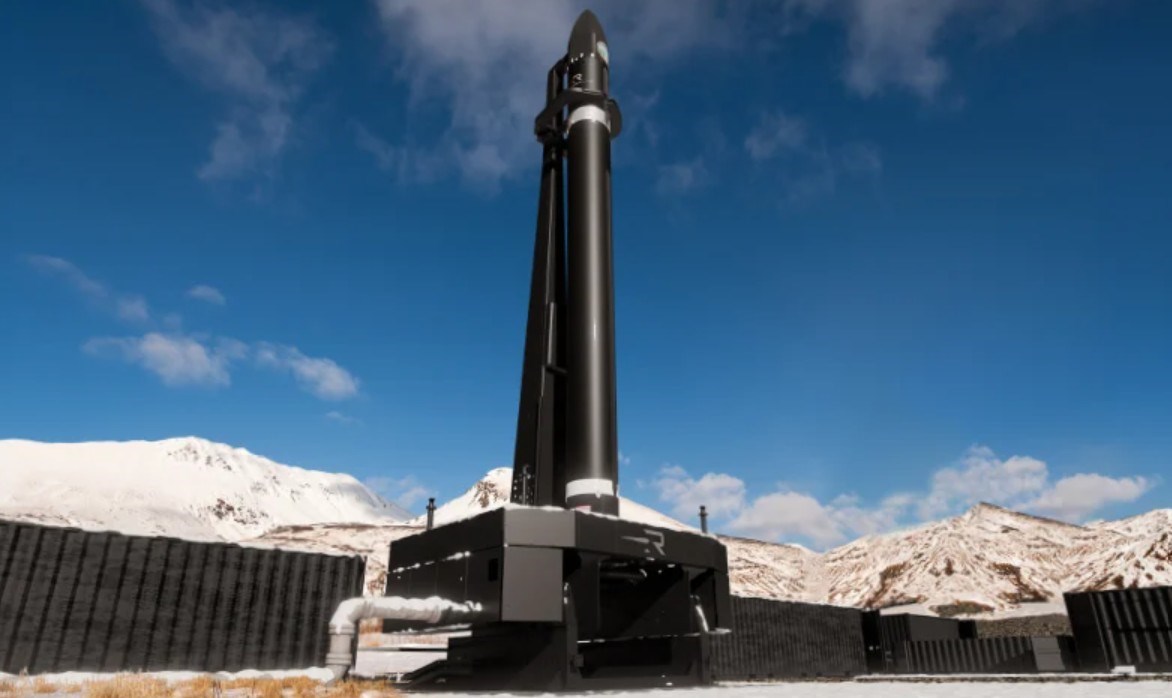
Rocket Lab Corp. (Long Beach, Calif., U.S.) has unveiled the Global Hypersonic & Orbital Spaceport Technology (GHOST) system, a containerized launch system to enable suborbital and orbital deployment — including complete rockets, launch infrastructure, ground support and range control systems — from anywhere in the world.
GHOST’s first location, named Rocket Lab Launch Complex 4, will be at the Pacific Spaceport Complex at Kodiak, Alaska, with two pads to be established for high-frequency launch campaigns. The two pads will complement Rocket Lab’s existing suborbital and orbital launch sites at Launch Complex 1 in New Zealand, and Launch Complex 2 and Launch Complex 3 in Virginia, bringing the total number of pads operated by Rocket Lab to six across two hemispheres. The system is set to make its operational debut with a suborbital launch from Alaska in 2027.
Because both Electron and HASTE use the same ground infrastructure, GHOST delivers a dual-launch capability across new locations, enabling Rocket Lab to expand the mission profiles of both vehicles and meet increasing international demand for orbital and suborbital sovereign launch capability. GHOST’s modular and small footprint is purpose-built to support responsive launch needs and time-critical national security missions, enabling rapid site activation and simultaneous launch possibilities.
GHOST’s announcement has been followed quickly by Rocket Lab’s dedicated Neutron mission for space infrastructure company Kepler Communications Inc.
Related Content
Industrializing rapid tape shearing for high-rate, 3D composite structures
ICOMAT’s first RTS factory creates preforms in 5 minutes for parts with -65% weight, higher strength and damage tolerance for wingskins, spars, fuselage, space tanks, auto chassis and more.
Taniq software helps European student team WARR fly its Type 5 pressure vessel
SNAPSHOT: The filament-wound composite vessel, designed and manufactured using Taniq’s TaniqWind Pro software, successfully flew aboard the EX-4C rocket at the European Rocketry Challenge in late 2025.
Expanding high-temperature composites in India and the U.S.
Azista USA offers polymers and processes for carbon/carbon and other CMC, including novel hot-melt phenolic and phthalonitrile prepregs for faster cycle times, alternative solutions.