
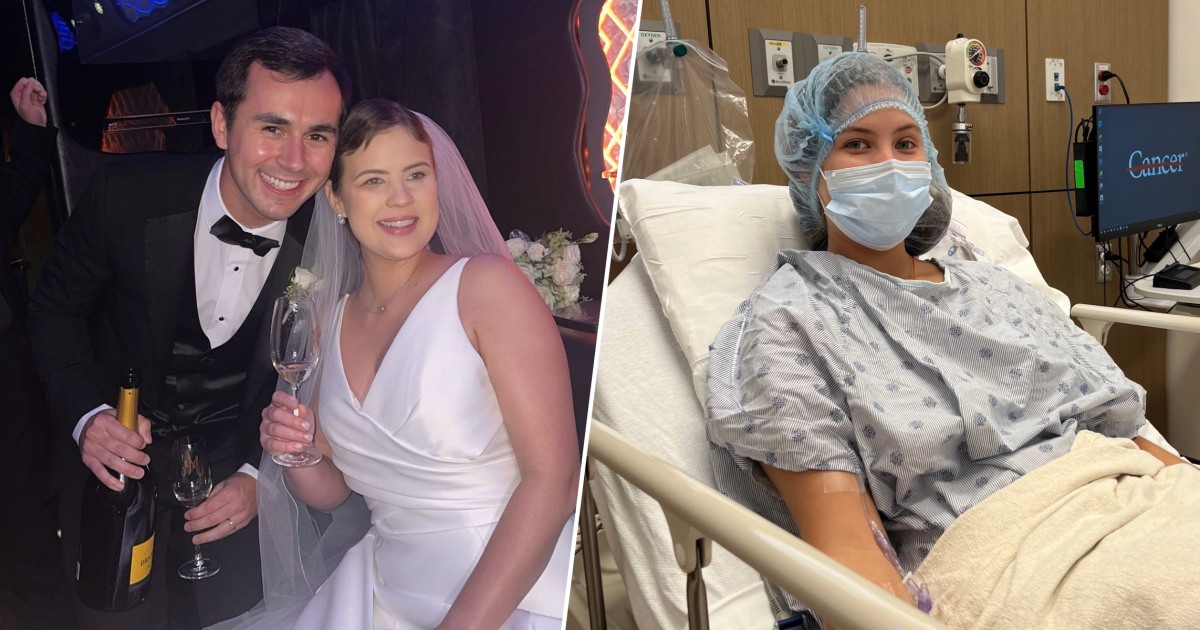
In April of 2023, Julia Fontenot came down with a bad cold.
The NICU nurse, 24 at the time, had just gotten a new job and was preparing to move to Corpus Christi, Texas, from Louisiana, where she had lived her entire life.
The cold eventually got better. “Then, I had this nagging cough that never went away,” Julia Fontenot tells TODAY.com.
She was otherwise completely healthy. “I would go to the doctor every year, and I had never had any issues, no surgery, no hospital stays.”
Shortly before moving to Texas, she went to urgent care and was prescribed steroids. The medication helped initially, but by the next month, the cough had returned.
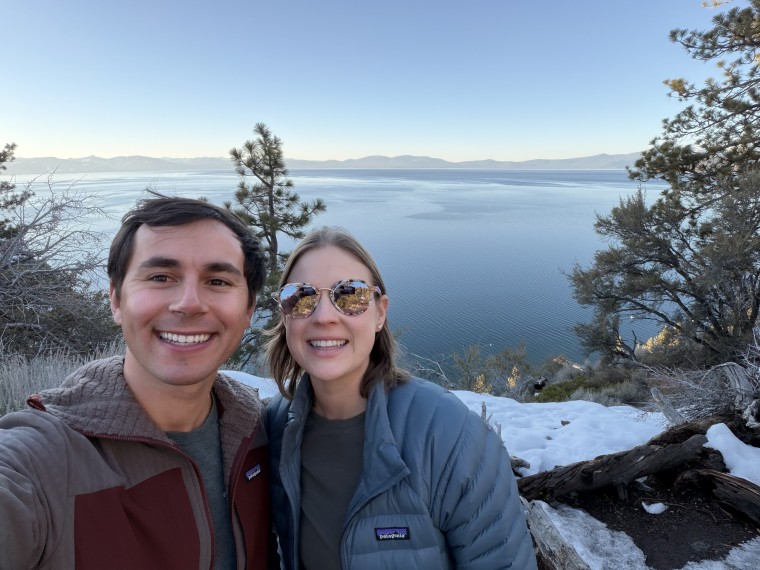 Julia Fontenot and her now-husband, Parker.Courtesy Julia FontenotA Nagging Cough Was the Only Symptom
“I didn’t really have any other symptoms; it was just a nagging, annoying cough,” Julia Fontenot says.
Eventually, she went to the employee clinic at her new hospital, where doctors ordered a chest X-ray. It showed a large mass in her right lung. A CT scan confirmed the tumor.
“They still couldn’t really tell what it was, so they referred me to a pulmonologist,” she says.
The pulmonologist looked at the scans and referred her to an oncologist at MD Anderson in Houston, the largest cancer center in the country. A few months later, a biopsy confirmed the tumor was cancerous — but it wasn’t lung cancer.
Synovial Sarcoma Diagnosis
In August 2023, Julia Fontenot was diagnosed with synovial sarcoma, a rare form of cancer that forms in the soft tissues.
“Sarcoma as a whole is only 1% of all cancers. So this is not common,” Dr. Elise Nassif Haddad, a sarcoma specialist at MD Anderson and Julia Fontenot’s doctor, tells TODAY.com.
Synovial sarcoma commonly occurs in the extremities, such as the arms or legs, often around the joints, per the Cleveland Clinic. It usually starts as a painless, slow-growing lump and can be asymptomatic early on.
In Julia Fontenot’s case, the cancer started in the tissue of her lung, which is incredibly rare. “It was also extremely aggressive,” says Haddad.
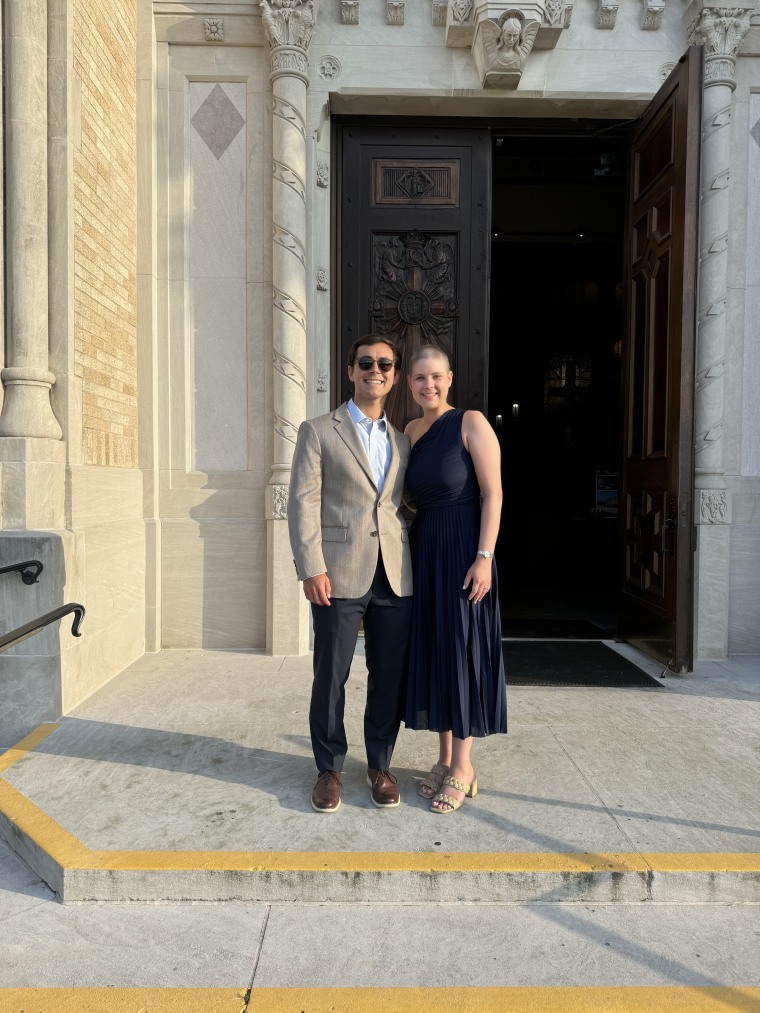 Julia Fontenot underwent two brain surgeries as part of her treatment.Courtesy Julia Fontenot
The plan was to start chemotherapy immediately, followed by radiation and lung surgery. “(Initially), the cancer seemed to be only in her lung. I remember saying, ‘This is likely going to be only a year. We’re going to get it out and we’ll be done’,” says Haddad.
Two days after her diagnosis, things took a sharp turn.
“I woke up with an excruciating headache,” says Julia Fontenot. Still in Houston, she went back to the cancer clinic, where she got an MRI of her head. The cancer had spread to her brain.
Brain Metastases
“Brain metastases from synovial sarcoma are very rare. And when it happens, it’s usually after several years,” says Haddad, who feared the young nurse could die within weeks.
Julia Fontenot was transferred to the intensive care unit, while her care team switched gears.
“Tumor spread to the brain is universally a terrible thing,” says Haddad. Brain cancer is very hard to treat for many reasons — for example, the blood-brain barrier can block chemotherapy drugs.
Julia Fontenot had three large masses in her brain, one of which was bleeding. “She needed very urgent surgery. … You can die from this super quickly,” says Haddad.
In the meantime, PET scans showed the cancer had spread to other places in her body, including her breasts.
“It was a lot worse than we thought. I was so scared,” Julia Fontenot says.
Brain Surgery and Chemotherapy
Although her doctors feared the worst, Julia Fontenot made it to surgery. She underwent a craniotomy, which involves removing part of the skull to operate and screwing it back together.
The surgeons managed to remove all her tumors, and after several rounds of radiation to the surrounding brain tissue, Julia Fontenot began chemotherapy to kill the cancer in the rest of her body.
While the primary tumor in her lung responded and shrank, the tumors in her breast “rejected everything,” says Haddad.
It took eight months of multiple powerful chemotherapy drugs to treat the sarcoma. “All throughout, I wasn’t sure she was going to make it,” Haddad notes.
Despite the odds, Julia Fontenot survived — and met a major life milestone during the process.
A Surprise Proposal
Julia Fontenot’s boyfriend at the time had remained by her side since the day she was diagnosed, including relocating with her to Houston to be closer to her care team.
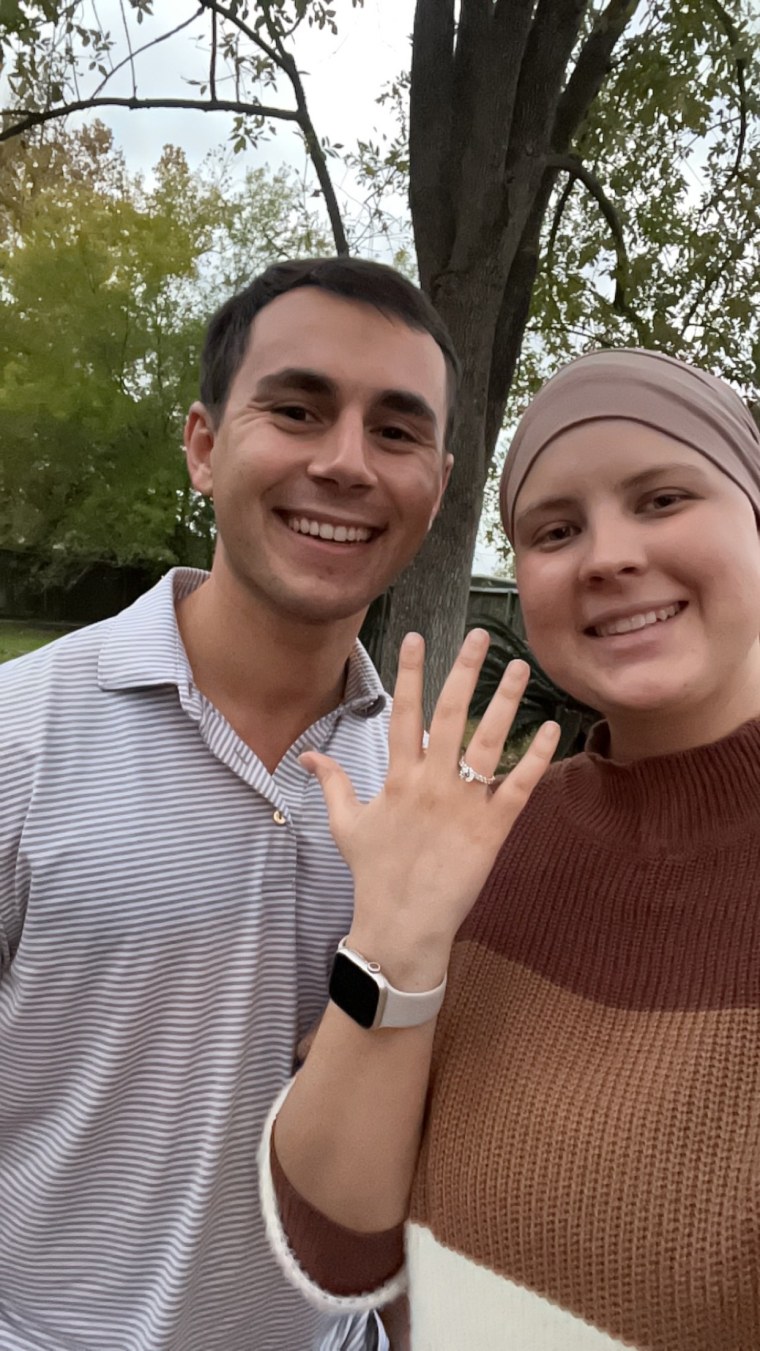 The Fontenots got engaged shortly after the cancer diagnosis.Courtesy Julia Fontenot
In November 2023, three months after her diagnosis and a few months into chemotherapy, he decided that he didn’t want to wait any longer to take the next step and bought a ring.
“(The cancer) all happened so fast. We were scared and overwhelmed,” says her now-husband Parker Fortenot. Amid all the uncertainty, the decision to get married was an easy one.
In between chemotherapy rounds, the couple went for a weekend getaway to the beach, where they got engaged.
A “Dream Wedding” During Treatment
The couple picked a date in November the following year, hoping that Julia Fontenot would be recovered enough for a wedding.
She finished chemotherapy in February 2024, but by April, she had to undergo a right lung resection to remove her primary tumor.
Planning a wedding during treatment was difficult, but also a fun distraction, she says. The couple didn’t sweat the small details.
Then, after months of clear PET scans, Julia Fontenot received a devastating blow in September 2024: She had a mass in her brain.
Two months before her wedding, Julia Fontenot underwent a second brain surgery. In a positive turn of events, the lesion was necrotic tissue, not cancer. “It was unfortunate that I had to have a craniotomy to find that out, but it was a huge relief,” she says.
 Julia Fontenot and her husband at their “very cute and small” wedding.Courtesy Julia Fontenot
By November 2024, Julia Fontenot was ready to tie the not.
The couple got married in her hometown, Baton Rouge, Louisiana, surrounded by family and friends — and gave a new meaning to the vow, “in sickness and in health.”
Beating the Statistics
“Usually for metastatic synovial sarcoma, the median survival is a year and a half. When it’s metastatic to the brain, it’s like less than six months,” says Haddad.
Three years after her cancer diagnosis, Julia Fontenot has beaten the statistics and is thriving. The now 27-year-old still has Stage 4 synovial sarcoma, Haddad notes, but currently has no evidence of disease.
“Every three to six months there’s a tiny (tumor) that pops up, and we just take it out,” Haddad adds.
In February 2025, Julia Fontenot had radiation for a lesion on her ribs, followed by a surgery to remove a small tumor on her thigh that November. Earlier this year, she had surgery to cut out a tumor on her shoulder and radiation for a spot on her lung.
Her latest PET scan was completely clear. “Today, she doesn’t have any cancer that we can see. It’s so impressive,” says Haddad.
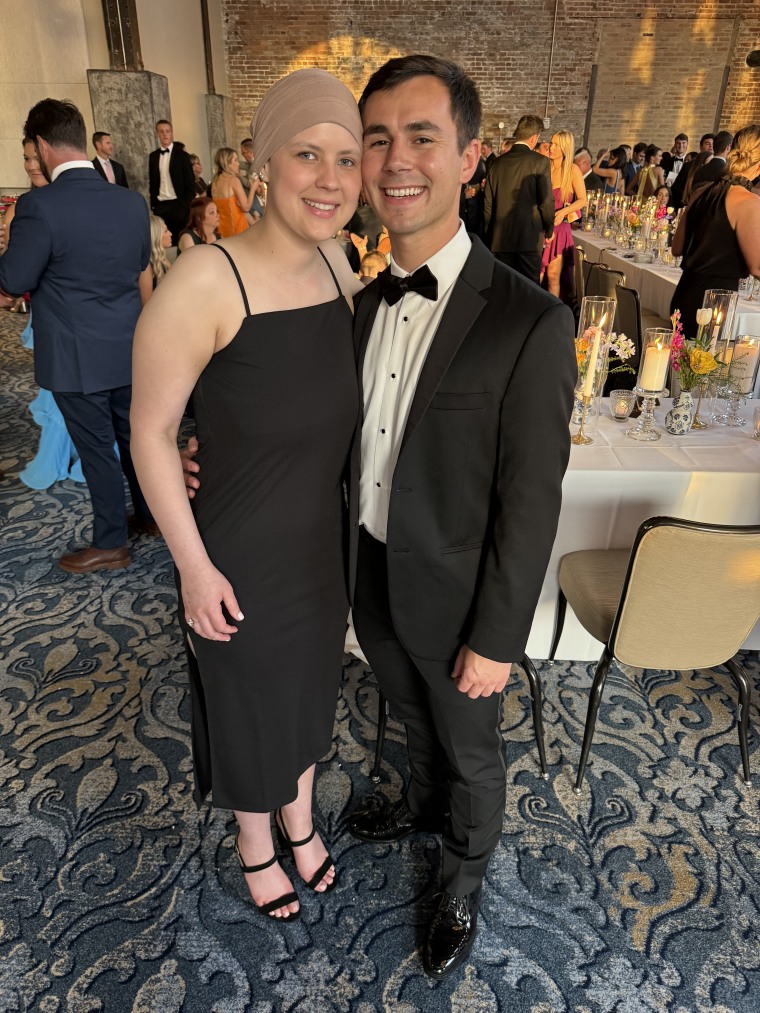 Julia Fontenot currently has no evidence of disease. Courtesy Julia Fontenot
If Julia Fontenot develops multiple tumors at once, she’ll have to restart chemotherapy. But for now, she’s in the clear and focusing on living a normal life with her husband.
“She’s been dealing with it really beautifully,” says Haddad.
Julia Fontenot is working as a nurse full-time and recently took up Pilates. She and her husband go to the beach nearly every weekend, and can finally travel more to see family and friends.
“We’re trying to live our life as best and as fun as possible … and we try to not take life too seriously because anything can happen at any time,” she says.