
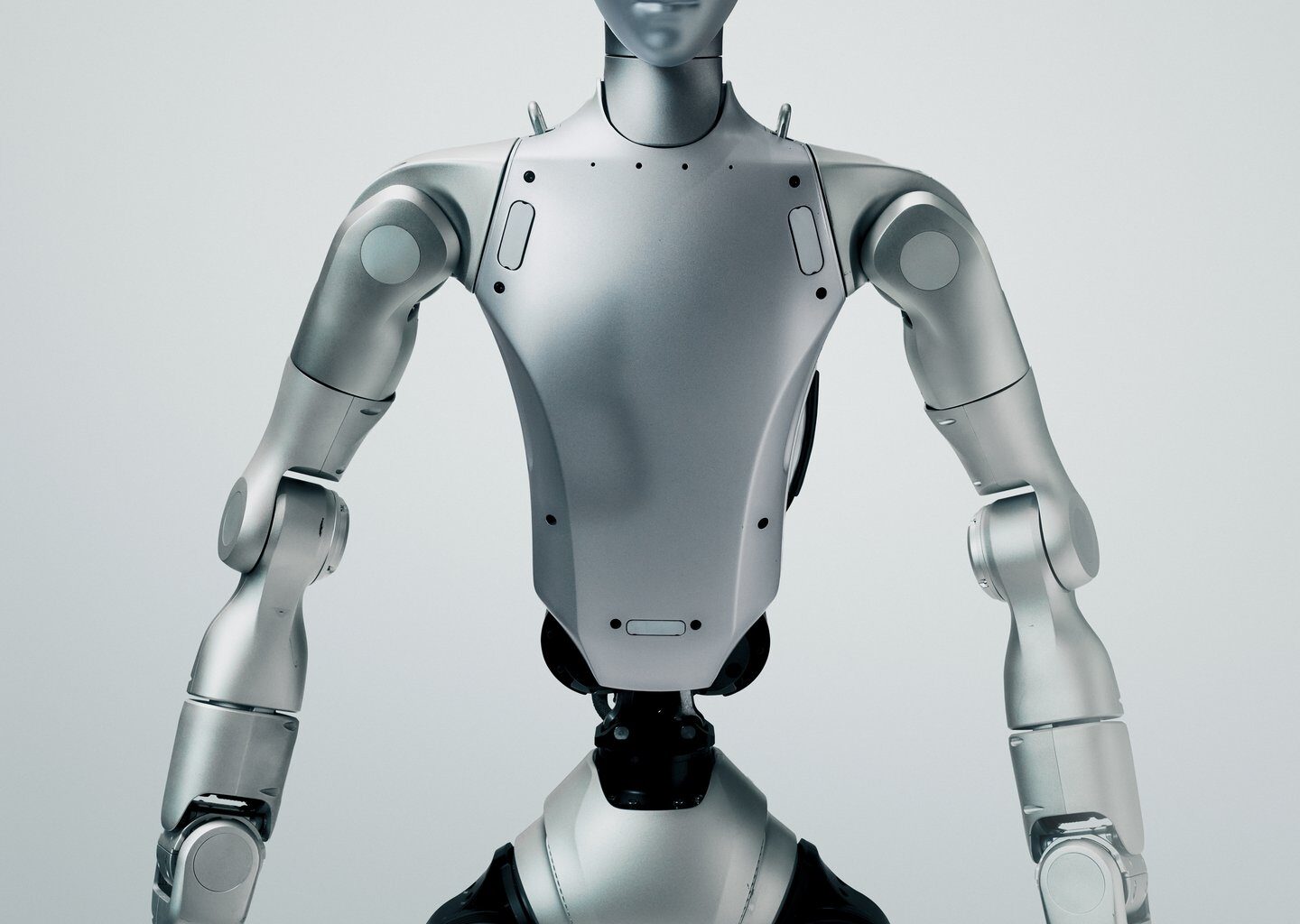
Mattia doesn’t have a single working method and he doesn’t want one. However, he does take research seriously – digging into where he is going, what the technology does, who is involved, what kinds of access he has as a photographer. “I tend to photograph while simultaneously trying to understand what I’m looking at,” says Mattia, who is no stranger to being as perplexed by certain technologies as we are. “The interesting difference [between shooting human subjects] is that robots occupy an unstable category. A machine is usually understood through its function. A robot, especially one designed with human or animal characteristics, introduces behaviour into that relationship. It moves, waits, reacts, sometimes even appears to hesitate.” In some photos, a robot dog will look charming and innocent, in others, a mecha will tower above its creator for the cover of Time Magazine. But in Mattia’s tender approach to a complicated subject, it is the human qualities behind photography and invention that shine the brightest.
Mattia tries not to decide in advance whether a technology should look reassuring or threatening, so as not to make the image too conclusive. Ambiguity is key, and it keeps these photographs feeling strange and beautiful, whether it’s a robot developed for disaster response or a robotic system developed for military use. “Technology is rarely morally simple,” says Mattia. Due to his childhood surrounded by technology, Mattia subverts the fetishisation of technology and moves towards something more human: the people on the visible end of an enormous chain of knowledge, labour, capital, experimentation and failure.