

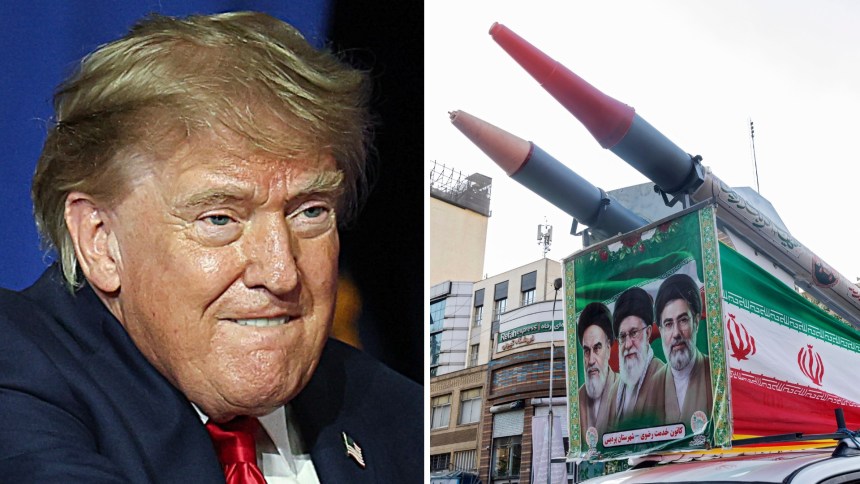
President Donald Trump returned to office promising to end foreign entanglements. Now his legacy increasingly rests on one.
As his war with Iran hits its six-month mark, the conflict is upending his presidency. Rising gas prices are squeezing consumers and fueling anxiety across party lines. Inflation is rattling bond markets and raising borrowing costs. Supply chain snarls and military equipment shortages risk creating further instability around the world.
The president who repeatedly pledged to avoid his predecessors’ missteps overseas is now seeing his own agenda derailed by an unpopular war.
None of this should surprise Trump. For decades, he mocked presidents who struggled with foreign policy challenges — Jimmy Carter’s Iranian hostage crisis, George W. Bush’s eight-year war in Iraq and Joe Biden’s rushed exit from Afghanistan. During his first term, eyeing a re-election campaign, Trump managed to limit his foreign excursions to avoid falling into this very trap.
Now the president faces an election season without his name on the ballot, but with his war in the background. Here’s how that could play out for the economy, control of Congress and international tensions.
Play
The toll on the U.S. economy
The everyday costs of war are mounting. Americans today are paying an average of $4.10 a gallon for gasoline, up almost 30% from a year earlier, far from the $2 a gallon the president promised on the campaign trail. The total hit to U.S. households from higher gasoline and diesel costs since the war began tops $92 billion, or more than $700 per household, according to Brown University’s Iran War Energy Cost Tracker.
Overall, the typical American household spent has spent more than $1,000 extra as a result of the war due to higher fuel prices, groceries, interest rates and other costs, Moody’s Analytics chief economist Mark Zandi estimated this summer.
Trump has tried to downplay the hit to consumers, calling the higher costs “a tiny bit more” to prevent Iran from having a nuclear weapon. “I’ll never apologize,” he said earlier this month. “I did the right thing.”
It could have been worse. Oil prices have averaged well below $100 a barrel throughout the conflict. One reason is that Trump has repeatedly kept markets guessing about whether he might abruptly end the war, an outcome that could send prices sharply lower.
Yet it still could get much worse: The U.S. military has been quietly guiding oil through the Strait of Hormuz in recent weeks, but renewed fighting with Iran could end that quickly. Gasoline prices are already at their highest levels ever for this time of year; any further spikes would likely exacerbate inflation worries, send bond yields even higher and spook investors in the stock market.
The economic toll of the war is exposing the shortcomings of Trump’s promises to supercharge growth. His Treasury secretary last year laid out a “3-3-3” plan to raise the growth of gross domestic product to 3%; reduce the federal budget deficit to 3% of GDP; and get the U.S. to pump 3 million more barrels of oil a day than before. Each of those goals remains far off target.
Play
Trump’s political price
The war is deeply unpopular. Just 31% of respondents approved of the conflict with Iran in a Reuters/Ipsos poll released Monday, the lowest since the war began — largely due to souring sentiment among Republicans.
More articles

Sudeep Reddy is Washington bureau chief at MS NOW. He previously worked at POLITICO, The Wall Street Journal and the Dallas Morning News.