
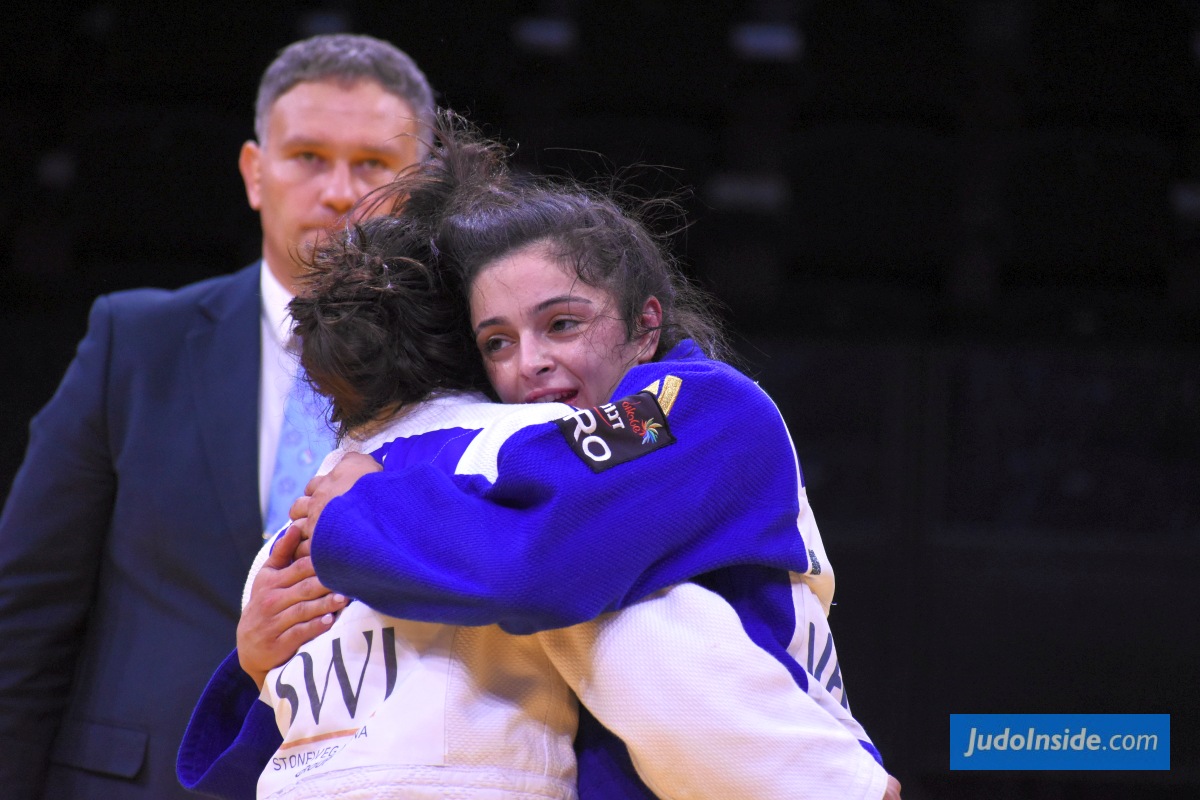
Gefen Primo returned to the top of a Grand Slam podium in Lausanne, defeating France’s Blandine Pont in a demanding U52kg final that was decided only after both athletes had been pushed to the brink in golden score. The Israeli showed the greater staying power in the closing stages and collected her fourth Grand Slam title when Pont received a third shido.
For Primo, the victory was significant after a period in which podium places had come more frequently than victories. The 26 year old arrived at the Ecole Mont Olivet Lausanne Grand Slam with an impressive résumé that already included World Championships bronze from Budapest in 2021 and a European title. She had also taken bronze at the Tbilisi Grand Slam earlier this season, but Lausanne provided the feeling that only gold can deliver.
Pont had every reason to believe that the title could be hers. The Frenchwoman has transformed herself since moving from U48kg, the category in which she enjoyed a remarkable run of three consecutive Grand Slam victories in Paris, Tel Aviv and Antalya in 2023. Her development at U52kg has been equally convincing. Wins in Tbilisi and Astana this year had taken her Grand Slam collection to five titles and established her among the leading contenders in her new category.
Primo finds the extra reserves
The final became a tactical battle almost immediately. Pont, fighting right handed, and the left handed Primo repeatedly denied each other the conditions required to launch their strongest attacks. Both were capable of creating danger, but neither could establish sustained control and they entered golden score with one shido each.
The pressure increased further when both received a second penalty after another minute. One mistake would now decide the gold medal. As the contest became increasingly physical, Primo appeared to retain slightly more energy while Pont was forced to dig deeper to maintain the intensity. Eventually the Frenchwoman was penalised for a third time.
There was no spectacular winning throw, but Primo had earned the victory through persistence, concentration and her ability to remain competitive deep into golden score. For an athlete who already had three Grand Slam victories and seven bronze medals at this level before arriving in Switzerland, it was another important addition to an extensive international record.
“I’m so happy. I really missed this feeling,” Primo said afterwards, explaining that winning gold brought an emotion very different from collecting another bronze medal. She also embraced her Lausanne experience away from the tatami, revealing that she had already made three visits for ice cream beside the lake, while praising an arena atmosphere she compared with a World Championships.
With the new qualification cycle creating an increasing battle for ranking points and positions within national teams, Primo was also looking ahead rather than treating Lausanne as an isolated success. Her message was simple: collect victories whenever possible.
Toro Soler and Rodrigues complete the podium
Ariane Toro Soler secured the first bronze medal for Spain against Japan’s Rin Takeuchi. In a contest requiring patience rather than force, Toro Soler found the decisive opening through a subtle change of direction and scored the yuko that separated the pair.
Brazil’s Rafaela Rodrigues had to work considerably longer for her reward against Uzbekistan’s Sugdiyona Rafkatova. Their bronze medal contest stretched deep into golden score and became increasingly a test of physical and mental reserves. Rodrigues eventually prevailed through penalties to celebrate the first Grand Slam medal of her career.
The day, however, belonged to Primo. Against one of the most successful Grand Slam competitors of recent seasons, she found a way through a final in which neither woman could afford a significant technical error. Lausanne gave the Israeli another Grand Slam title, and perhaps more importantly, restored a feeling she had clearly been missing: standing on top of the podium.