
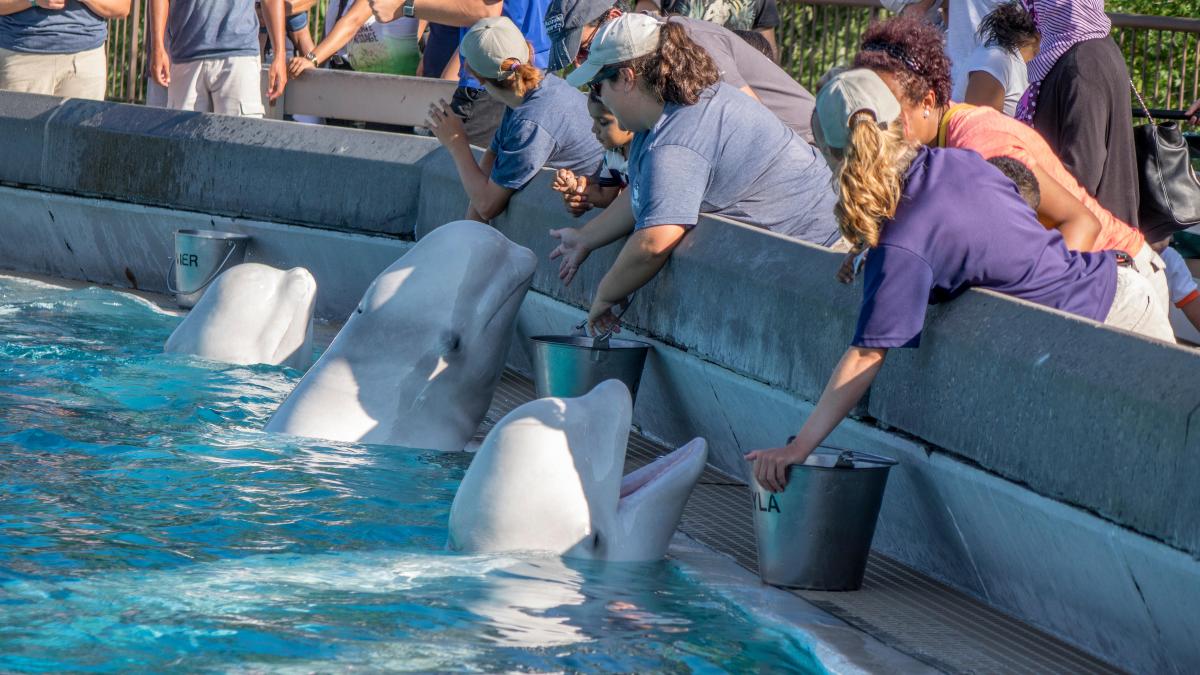
Marineland, the once-popular Canadian attraction that closed last year after six decades of operation, said it was working with the Ontario provincial government after threatening to euthanise its 30 remaining beluga whales.
The park, located in Niagara Falls, had claimed last week that a bailout from the federal government was the only option to save the animals.
Joanne Thompson, Canada’s fisheries minister, rejected a petition by the park’s administration to send the whales to Chimelong Ocean Kingdom, an aquarium in Zhuhai, China. Thompson said that she “could not in good conscience approve an export that would perpetuate the treatment these belugas have endured”.
• Sign up for The Times’s weekly US newsletter
The park then said in a letter last Friday: “Our only option at this point is to either relocate the whales or face the devastating decision of euthanasia. If we do not receive a response by [October 7], we will have no choice but to presume that the answers to our inquiries are negative.”
The fisheries minister denied the park’s funding request on Monday night, according to The New York Times. Thompson described the request as “inappropriate”.
“The fact that Marineland has not planned for a viable alternative despite raising these whales in captivity for many years does not place the onus on the Canadian government to cover your expenses,” Thompson wrote.
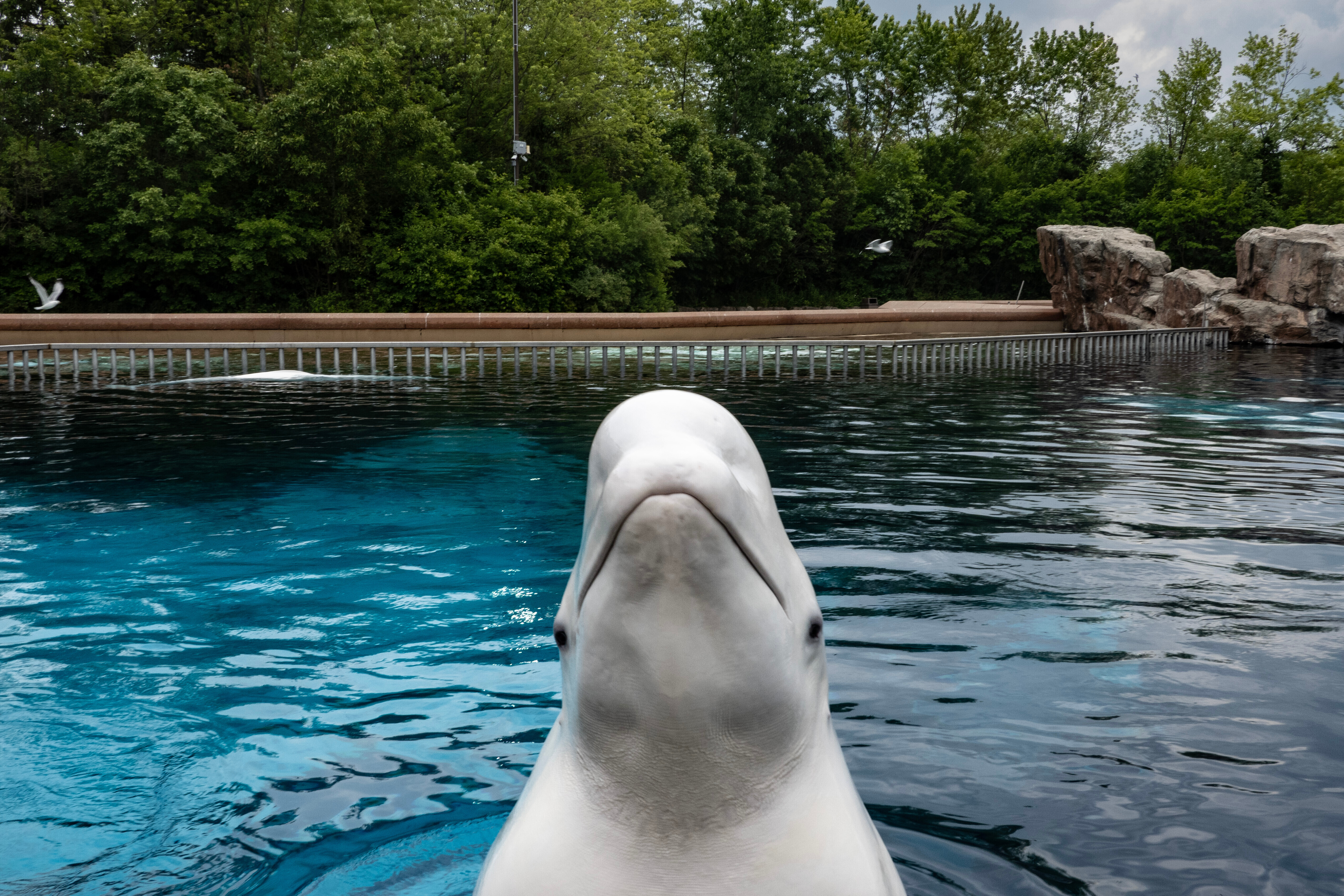
Keeping animals such as belugas in captivity was banned in Canada six years ago
CHRIS YOUNG/THE CANADIAN PRESS/AP
After the federal government’s denial, a representative for the park said in a Tuesday evening statement that it “is actively working with the provincial government to find a suitable solution that ensures the health and wellbeing of our 30 beluga whales”. It’s unclear whether the province will fund the park or seize the belugas.
Marineland, which has been up for sale since 2023, said it was “fully indebted” and running out of resources to care for the 30 mammals.
Camille Labchuk, executive director of Animal Justice, a Canadian animal advocacy organisation, told The Times she suspected Marineland’s crisis was “manufactured” and that it intended to pass the responsibility to taxpayers.
“Marineland has known for years that this day was going to come,” she said. “Canada banned whale and dolphin captivity in 2019, and attendance at places like Marineland has been declining steadily for a long time. It would also be obvious that they would have to do something with the whales, but, so far as I can tell, they failed to put away any funds for the care of those animals, despite sitting on property worth probably half a billion dollars or more, and also having made tens of millions of dollars, probably hundreds, over the years.”
• Humpback whales blowing bubble rings may be ‘greeting’ humans
Labchuck said that although they were hoping the province of Ontario might intervene, animals are, by law, considered property in Canada, and Marineland has the right to kill the remaining whales. The park could be prosecuted, however, if authorities suspect the mammals are subjected to unnecessary suffering.
“In the situation with belugas, they’re only in two tanks,” she said. “There’s potentially a chance to bring one at a time [to be euthanised], but I believe that experts will say that belugas would know what’s happening. They would know that their friends, their relatives, are being killed, and it would cause them significant distress.”
Andrew Trites, a marine mammal professor and researcher at the University of British Columbia, agreed that, considering the environment the belugas are being housed in, they would be aware they were being killed and would suffer greatly.
“They’re social animals that have relationships with other animals. They know each other, it’s like one big family. There’s no doubt that, if one goes missing, they would all notice.”
The park was famous for its choreographed routines featuring orcas and dolphins, but allegations of mistreatment had grown over the past decade. According to the Canadian Press twenty whales, one killer whale and nineteen belugas have died since 2019.
• The under-the-radar Canadian lakes region the A-list want to keep secret
A seaside sanctuary is being built in Nova Scotia but is yet to be finished. Trites said it was critical to find a way to save the whales even if that meant moving them to another country.
“The bottom line is the animals cannot remain in Canada,” he said. “There is no sanctuary available to care for belugas, and releasing them into the wild is just a death sentence.
“There is a need to be able to study and learn more from belugas. They are threatened in the wild. The Arctic is quickly changing, and this population of belugas can be studied to obtain information. These animals serve a very important role as ambassadors for their species. In fact, for everyone who’s living in the Arctic.”