
Get Rhode Map
A weekday briefing from veteran Rhode Island reporters, focused on the things that matter most in the Ocean State.
Waimon said she was drawn to nursing when she was about 12 or 13 years old and saw hospice nurses care for her grandfather, who had pancreatic cancer.
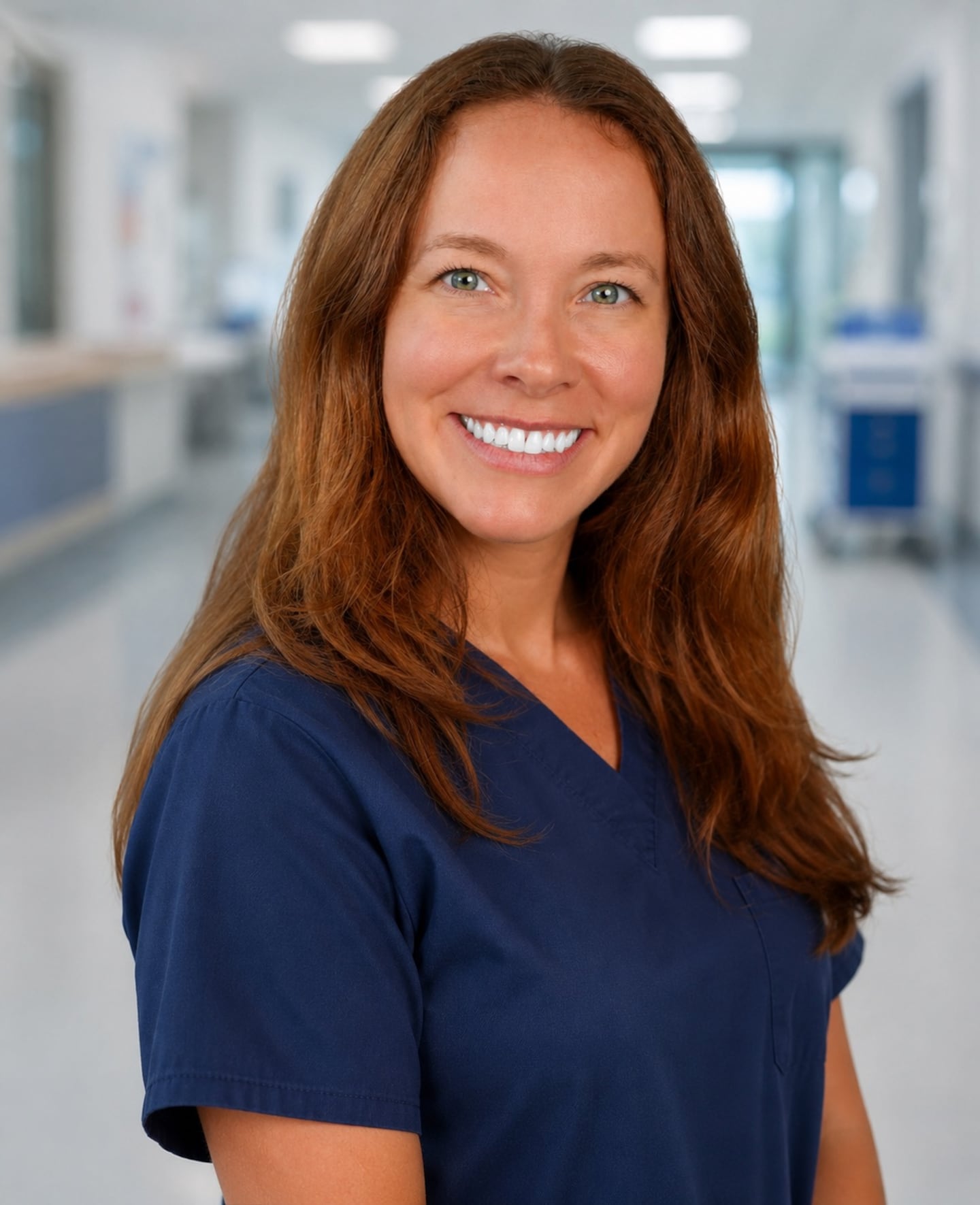 Sarah Waimon, a nursing supervisor at South County Hospital in South Kingstown, R.I., has invented a splash guard design to reduce exposure to biohazardous fluids during patient care tasks. Looey was inspired and created with the help of Rhode Island research and development companies and patented locally. Sarah Waimon
“I saw the nurses come in and take care of him and I thought, ‘You know what? What an amazing thing for a person to be able to. What what an honor really for somebody to be able to care for somebody in those really vulnerable moments and provide comfort to not only the patient but the family.’”
Waimon talked to the Globe about her invention, the research and development process, of the inspiration for Looey, patenting her invention, and implementing it around Rhode Island.
Q: What are some daily threats that you encounter on the job?
Waimon: We’re exposed constantly to patients who are in a very vulnerable state, both physically and mentally, and that can put us at risk for violence. We have had nurses who have been injured on the job, whether that be verbally abused or physically abused. That’s a big issue in healthcare. I went through COVID working in the ICU. It started six years ago, but it’s still kind of lingering in our memories as nurses.
What do nurses do to make the job safer?
I think that a lot of nurses create workarounds for different things that they’re doing in the hospital, and I think by default we all are little innovators in our own ways, and we’re all creative in our own ways. I honed in on that and took my own experiences to create a business that was going to protect caregivers and patients.
How is Looey designed to protect caregivers?
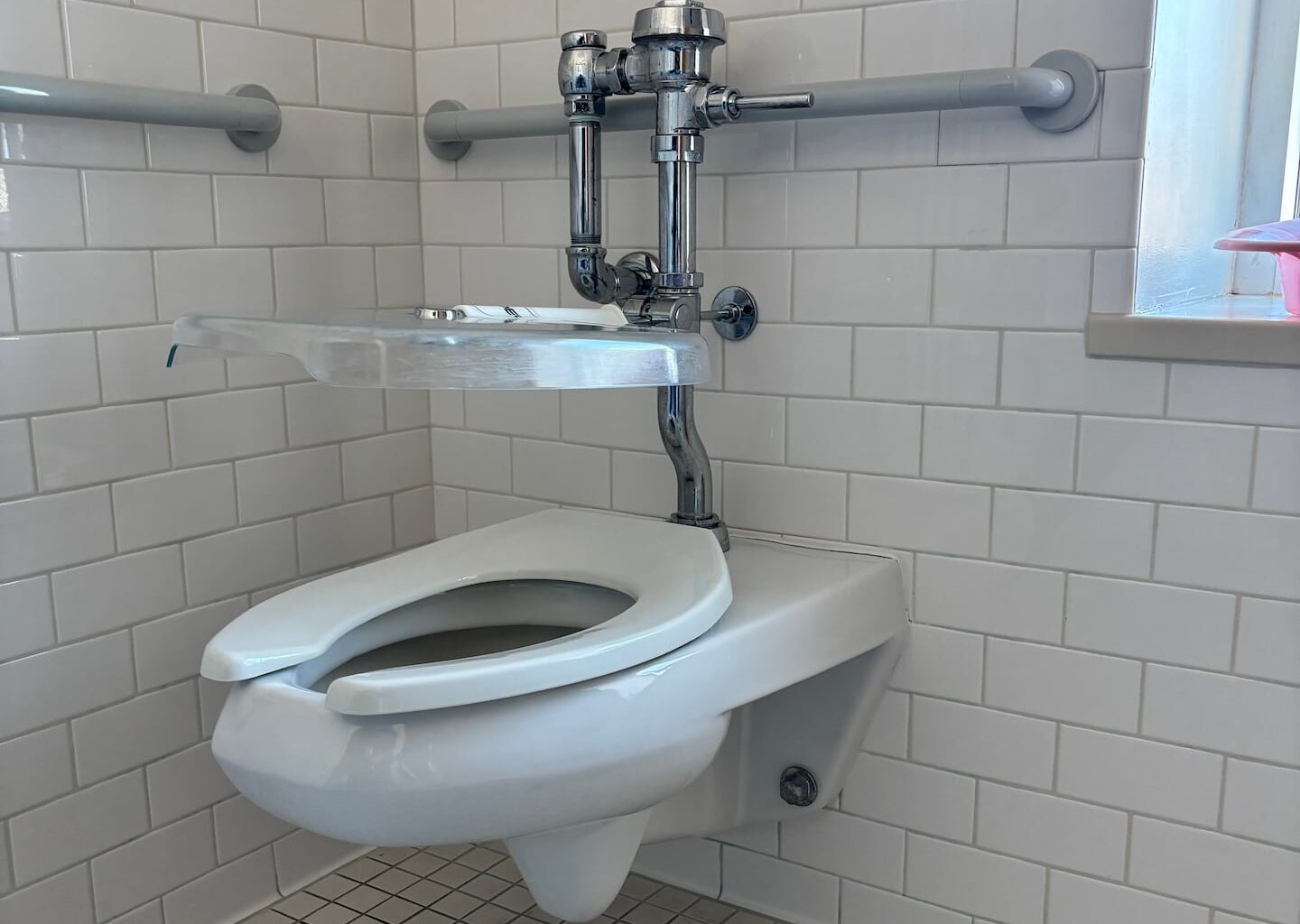
Looey is a clear splash guard that prevents splashback from reaching caregivers when they’re rinsing bedpans or commodes. In hospitals and nursing facilities, there are bedpan washers that are attached to the toilets and they are basically a faucet that comes down and sprays at like 80 psi, so double the pressure of your kitchen sink. So, as you can imagine, you’re rinsing something that is really shallow and that can create a lot of splashback and spray.
When I was working on a colorectal unit, I was assisting a patient with emptying their colostomy bag, and after rinsing the container in a regular (tall, narrow) cylinder, which is actually fairly pretty deep compared to a bedpan, I was sprayed in the face. I thought to myself, you know what, we we deserve better than this.
How does Looey attach to the washer or toilet?
Looey attaches with a gasket and then a little mounting plate, and has some little hex screws, that mount in place. It’s made out of plastic so it’s highly durable and also resistant to a lot of the harsh chemicals that we use in the hospitals. You can simply wipe the the Looey down with just regular bleach wipes that you’re using for cleaning toilets. It’s reusable.
What was the research and development experience like as you worked to create Looey?
I went home and I created like a cardboard cutout of my first prototype and then ended up getting connected with with R&D Technologies in Quonset. I brought my two young children in with me to meet them and my little janky cardboard cutout. We were still sandy from the beach and they created my first prototype.
From there, I was put in touch with the folks at New England Medical Innovation Center in Providence, and I enrolled in their Med Tech Leadership Program, so I was able to learn how to bring a medical device or medical equipment to market. I was accepted into their accelerator, which helped me with funding and my patent. I was able to work with Hinckley Allen in Providence and work with some engineers to advance my prototype. I tested the prototypes at South County Hospital, and now I’m working on moving into large-scale manufacturing with MARS Plastics in Providence, so this is like a real Rhode Island company. …
I’m going to be attending the Magnet Pathways Conference in October in Chicago, and I’ll be in the nurse innovator row with with Looey bringing awareness to the product. Now at this point, people can go on the website, stopthesplash.com, and click the order now button put in an inquiry for the product.
When will it be available?
We’ll have product by September. … We’ve had over 50 different hospitals reach out to get more information or samples for trials.
Was it difficult to navigate the process?
I got help with it. The really nice thing about med tech in our little state of Rhode Island is you have so many resources and you have people here who really want to help and see Rhode Island businesses succeed. So between NEMIC and RIHub (a group that turns ideas into fundable startups), they’ve been very like instrumental in helping me to bring this to market.
What was it like for your kids to see their mom become an inventor?
I think that it’s really important for them. I have really tried to make them part of what I’m doing, mostly because it’s hard to get the childcare to do it all. I’m still working as a nurse. I’m a mom of two small children, ages 6 and 3, and I’m starting a business from the ground up. So, I really hope that as I’m growing my business, they can look back when they’re older and say, “Hey, you know what? Like my mom was kind of like a badass.” And, “I’m inspired to maybe have my own business one day.”
The Boston Globe’s weekly Ocean State Q&A features Rhode Islanders who are starting new businesses or nonprofits, conducting groundbreaking research, or reshaping the state’s economy. Send tips and suggestions to rinews@globe.com.
Carlos Muñoz can be reached at carlos.munoz@globe.com. Follow him @ReadCarlos and on Instagram @Carlosbrknews.