
(UroToday.com) The 2026 ProsTIC annual meeting featured a Lutetium-177 session and a presentation by Dr. Arun Azad discussing appropriate use of 177Lu-PSMA-617 in 2026. Rather than focusing solely on the positive randomized trials of 177Lu-PSMA-617, Dr. Azad framed his discussion around three increasingly challenging clinical settings:
Post-docetaxel and post-androgen receptor pathway inhibitor (ARPI) metastatic castration-resistant prostate cancer (mCRPC)
Chemotherapy-naïve post-ARPI mCRPC
Metastatic hormone-sensitive prostate cancer (mHSPC)
The strongest evidence for 177Lu-PSMA-617 remains in later-line mCRPC, where the pivotal VISION1 and TheraP2 trials established 177Lu-PSMA-617 as an active and generally well-tolerated therapy. Dr. Azad highlighted four principal findings from these trials: (i) 177Lu-PSMA-617 is active and well tolerated, (ii) the PSA50 response rate in TheraP was 66%, (iii) treatment provides symptomatic improvement, and (iv) VISION demonstrated an overall survival benefit, with a median overall survival of 15.3 months with 177Lu-PSMA-617 + standard care compared with 11.3 months with standard care alone (HR for death 0.62, 95% CI 0.52–0.74; p < 0.001). TheraP demonstrated the substantially greater depth of PSA response achieved with 177Lu-PSMA-617 compared with cabazitaxel. A ≥50% reduction in PSA occurred in 66% of patients treated with 177Lu-PSMA-617 compared with 37% treated with cabazitaxel.
Is there really an overall survival benefit? This concern relates primarily to the comparator arms and treatment sequencing in the pivotal trials. Dr. Azad noted that the control arm in VISION was modest at best, and permitted standard care included an ARPI switch, bisphosphonates, radiation therapy, denosumab, or glucocorticoids at any dose. Although VISION demonstrated a statistically significant overall survival benefit, 177Lu-PSMA-617 was not being compared with another highly active cytotoxic therapy such as cabazitaxel.
TheraP provides a different perspective because cabazitaxel was the active comparator. Although TheraP was underpowered for overall survival, no overall survival benefit was demonstrated with 177Lu-PSMA-617 compared with cabazitaxel. Restricted mean survival time was 19.1 months (95% CI 16.9–21.4) with 177Lu-PSMA-617 and 19.6 months (95% CI 17.4–21.8) with cabazitaxel. Dr. Azad also emphasized that durable responses to 177Lu-PSMA-617 remain limited and that there are no randomized data supporting 177Lu-PSMA-617 rechallenge. Thus, it remains critical that we still expose patients to cabazitaxel to derive maximum survival. 177Lu-PSMA-617 should therefore not be interpreted as eliminating the need for other established life-prolonging therapies in mCRPC.
Can PET improve patient selection and outcomes? TheraP required an SUVmax of at least 20, whereas VISION used PSMA uptake greater than liver as its principal threshold.
However, other quantitative PSMA biomarkers may predict greater benefit from 177Lu-PSMA-617. These include PSMA SUVmean, evaluated in TheraP and VISION, and PSMA total tumor volume, evaluated in ENZA-P.
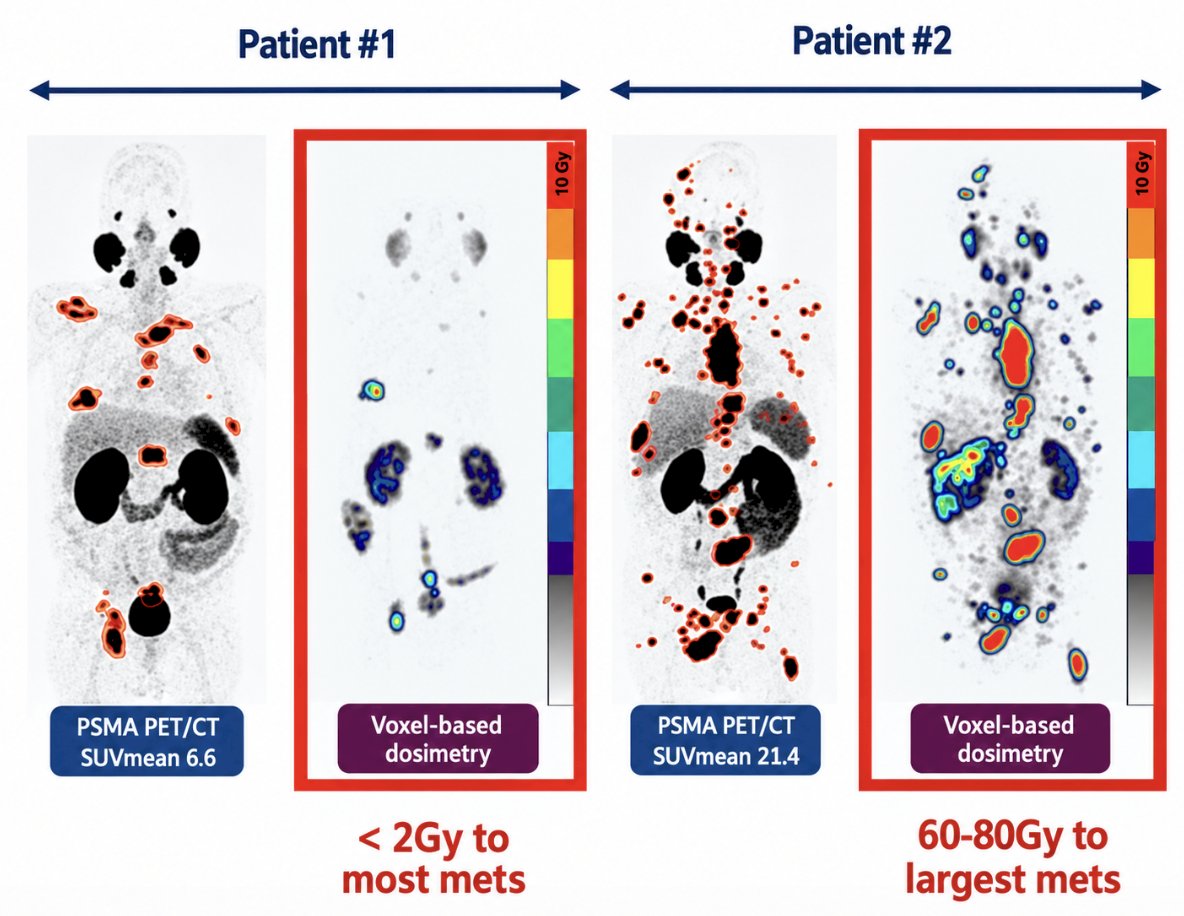
The biological explanation is intuitive: greater PSMA uptake within tumors results in greater radiation absorption and, consequently, greater tumor cell death. Two patients illustrate this concept. Patient #1 had a PSMA PET/CT SUVmean of 6.6, with voxel-based dosimetry demonstrating <2 Gy delivered to most metastases. Patient #2 had substantially greater PSMA expression, with SUVmean 21.4, and voxel-based dosimetry demonstrated approximately 60–80 Gy delivered to the largest metastases: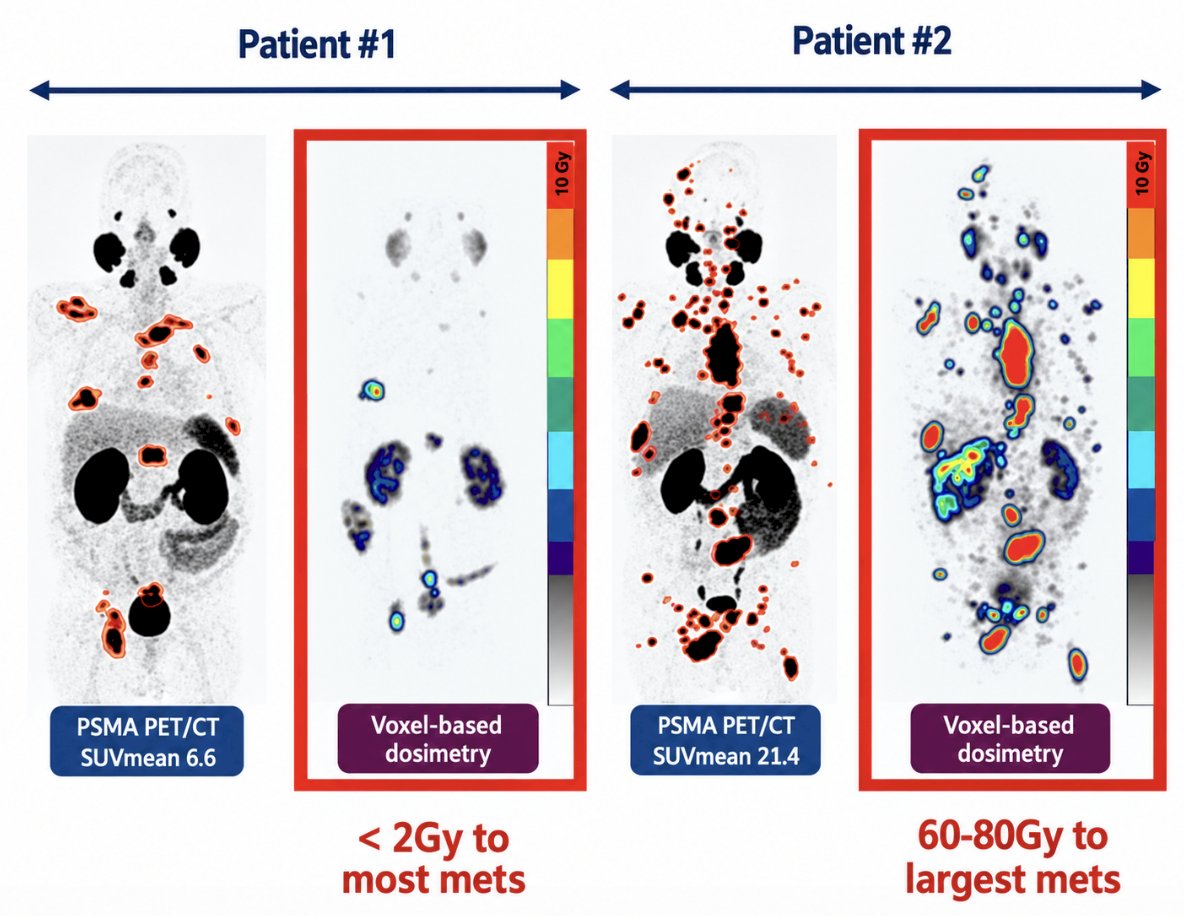
Thus, two patients may technically have PSMA-positive disease while receiving dramatically different tumor absorbed radiation doses from PSMA-targeted radioligand therapy.
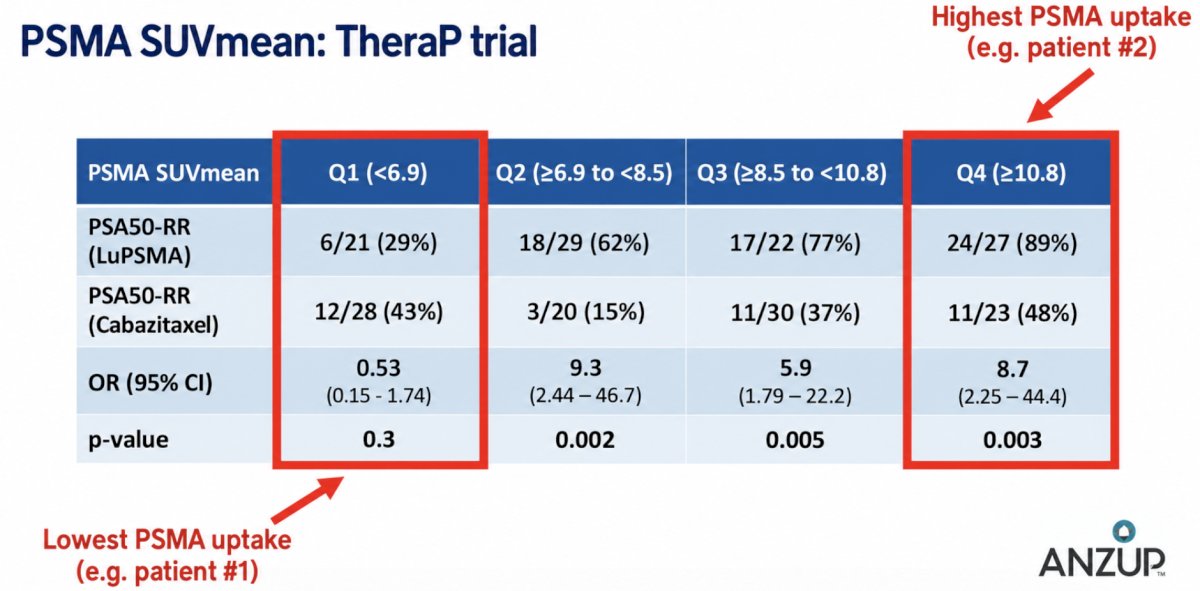
Dr. Azad next used the TheraP PSMA SUVmean analysis to illustrate how quantitative PET might refine treatment selection.3 Patients were divided into quartiles according to PSMA SUVmean:
For patients in Q1, defined as SUVmean <6.9, PSA50 response with 177Lu-PSMA-617 was 6/21 (29%) compared with 12/28 (43%) with cabazitaxel (OR 0.53, 95% CI 0.15–1.74; p = 0.3)
For Q2, SUVmean ≥6.9 to <8.5, PSA50 response was 18/29 (62%) with 177Lu-PSMA-617 compared with 3/20 (15%) with cabazitaxel (OR 9.3, 95% CI 2.44–46.7; p = 0.002)
For Q3, SUVmean ≥8.5 to <10.8, PSA50 response was 17/22 (77%) with 177Lu-PSMA-617 versus 11/30 (37%) with cabazitaxel (OR 5.9, 95% CI 1.79–22.2; p = 0.005)
For Q4, SUVmean ≥10.8, PSA50 response was 24/27 (89%) with 177Lu-PSMA-617 compared with 11/23 (48%) with cabazitaxel (OR 8.7, 95% CI 2.25–44.4; p = 0.003)
Dr. Azad specifically highlighted the contrast between the lowest and highest PSMA uptake groups. In the lowest quartile, 177Lu-PSMA-617 did not outperform cabazitaxel for PSA50 response, whereas patients with very high PSMA expression had an extremely high probability of PSA50 response with 177Lu-PSMA-617. These data support moving beyond a simple PSMA-positive/PSMA-negative paradigm toward quantitative evaluation of the target itself:
Dr. Azad then discussed the second clinical question: chemotherapy-naïve, post-ARPI mCRPC. The key issue is whether 177Lu-PSMA-617 should be used as first-line treatment for mCRPC rather than preserving docetaxel as the initial treatment. Two trials were central to this discussion: PSMAfore and PR21. PSMAfore4 demonstrated a significant improvement in radiographic progression free survival when 177Lu-PSMA-617 was compared with an ARPI switch: the median radiographic progression free survival was 9.30 months (95% CI 9.30–14.19) with 177Lu-PSMA-617 compared with 5.59 months (95% CI 4.21–5.95) with an ARPI change (HR 0.49, 95% CI 0.39–0.61). However, this improvement in radiographic progression-free survival did not translate into an overall survival difference in the intention-to-treat analysis, in the setting of 91% crossover. The median overall survival was 23.66 months (95% CI 19.75–NE) with 177Lu-PSMA-617 and 23.85 months (95% CI 20.6–25.55) with ARPI change (HR 0.98 (95% CI 0.75–1.28; p = 0.44).
Dr. Azad then contrasted these findings with PR21, which addressed sequencing relative to docetaxel. The progression-free survival analysis showed no significant difference between the two strategies (HR 1.01, 95% CI 0.77–1.31; 2-sided p = 0.91), with a median progression-free survival of 8.6 months with 177Lu-PSMA-617 and 10.7 months with docetaxel. More importantly, treatment sequence appeared relevant for overall survival. The sequence of docetaxel followed by 177Lu-PSMA-617 produced significantly longer overall survival than 177Lu-PSMA-617 followed by docetaxel, despite 54% crossover. The median overall survival was 14.3 months for 177Lu-PSMA-617 → docetaxel compared with 18.2 months for docetaxel → 177Lu-PSMA-617 (HR 1.64, 95% CI 1.14–2.35; 2-sided p = 0.02).
Next, Dr. Azad transitioned to the earliest of the three disease settings: mHSPC. This question has become increasingly relevant following PSMAddition,5 which evaluated 177Lu-PSMA-617 in combination with ADT + ARPI. The primary endpoint of radiographic progression-free survival was improved with 177Lu-PSMA-617 + ADT and ARPI compared with ADT + ARPI alone (HR 0.72, p = 0.02). At the first interim analysis, however, the overall survival HR was 0.84 and was not statistically significant. Importantly, there was also no improvement in quality of life. Moreover, moving 177Lu-PSMA-617 into this earlier setting came at the cost of increased adverse events. The 177Lu-PSMA-617 arm experienced greater hematologic toxicity, including both any-grade and grade ≥3 hematologic adverse events, as well as increased any-grade dry mouth and gastrointestinal toxicity. Second primary malignancies and renal events are also safety considerations in this earlier treated population. Thus, the PSMAddition results establish improved radiographic progression-free survival, but Dr. Azad cautions that the appropriate interpretation requires consideration of overall survival maturity, quality of life, treatment duration, and the consequences of exposing patients to radiation earlier in the natural history of their disease.
Do all patients need 6 cycles of Lu-PSMA-617? If there is no disease to see, there may be little disease remaining for PSMA-directed radioligand therapy to treat. Of note, there can be impressive responses observed after only two cycles of 177Lu-PSMA-617, as noted in UpFrontPSMA6 among patients with de novo high-volume disease. Paired PSMA PET/CT and FDG PET/CT images demonstrate extensive baseline disease followed by a remarkable reduction in visible disease after two treatment cycles:
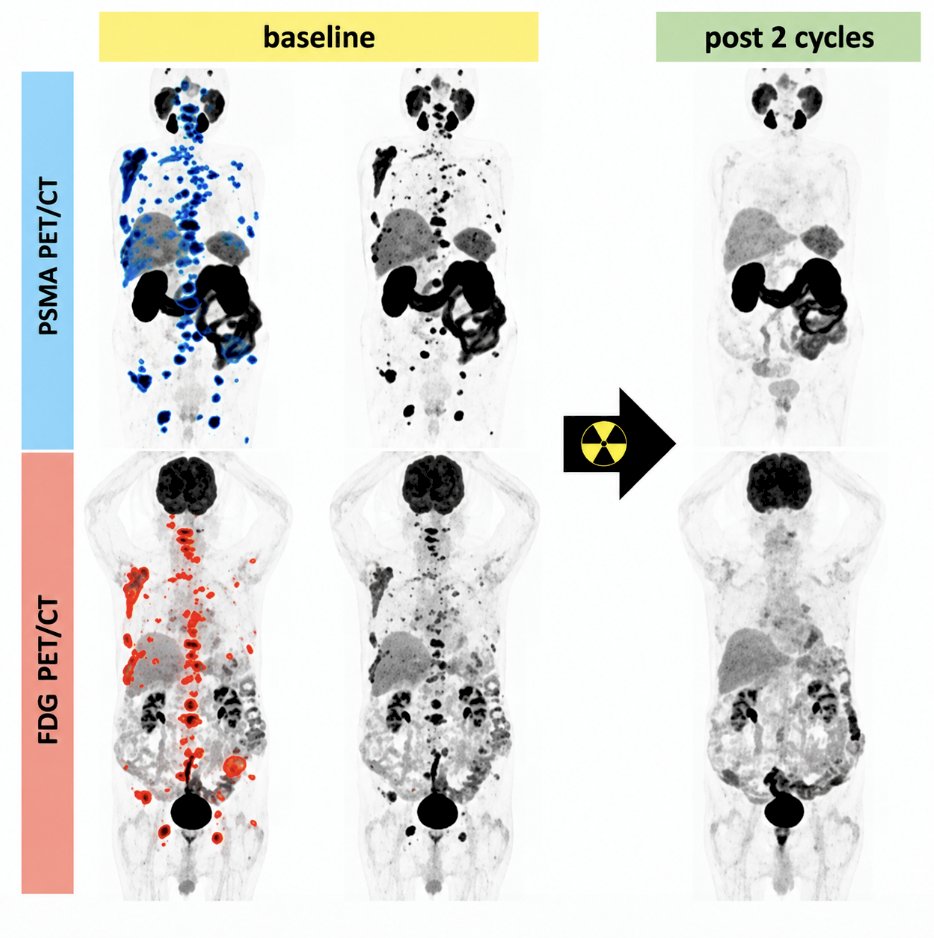
Dr. Azad argued that the potential for overtreatment may be even greater in patients with lower-burden disease. Patients in earlier-stage trials could enroll with only one PSMA-positive lesion, and ADT + ARPI is itself highly effective in this population. Consequently, routinely administering six cycles regardless of treatment response may not be biologically necessary for every patient.
Dr. Azad proposed a practical strategy for individualizing treatment duration: performing a PSMA PET after two to four cycles to identify complete metabolic responders who may not benefit from additional 177Lu-PSMA-617. This approach is a potentially cost-effective and patient-centered approach, noting that SPECT could provide an alternative to PET. Importantly, the rationale for stopping therapy in a complete metabolic responder is not simply to reduce inconvenience or cost. Continuing 177Lu-PSMA-617 in a patient with minimal or no residual PSMA-positive disease may potentially increase radiation exposure to normal tissues. In the following figure, the patient on the left had an estimated total disease volume of approximately 250 cm³, whereas the patient on the right had approximately 3,600 cm³ of disease.7 Importantly, increasing total disease volume is associated with decreasing radiation dose delivered to the parotid glands per administered GBq (p=0.0056):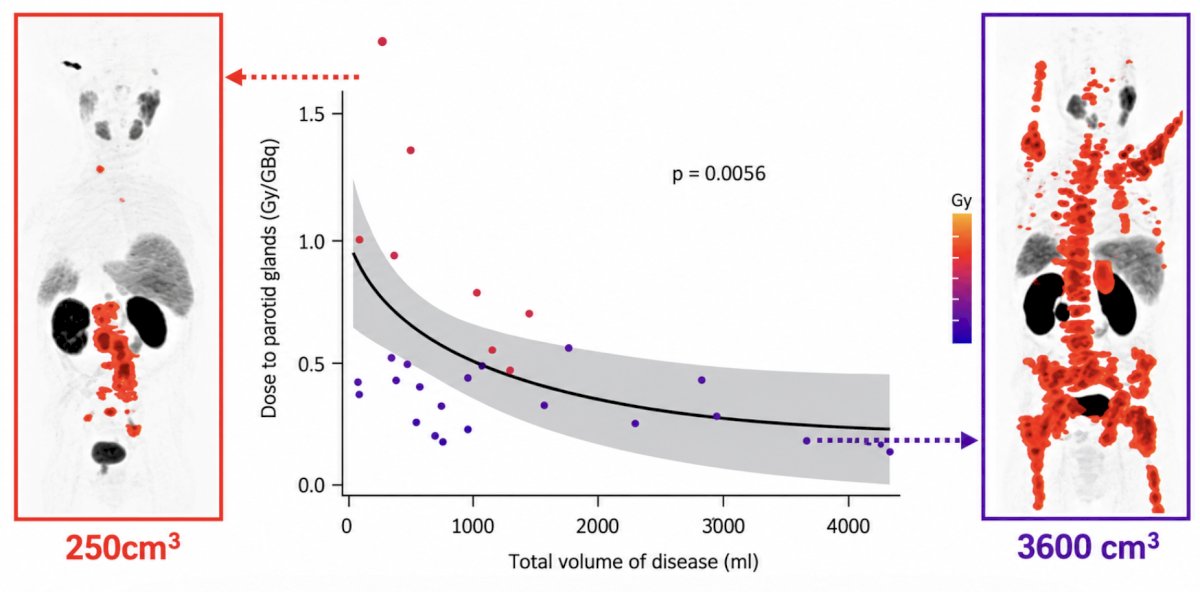
The final safety discussion focused specifically on the implications of administering 177Lu-PSMA-617 earlier in the disease course. In PSMAddition, hematologic adverse events were consistently more common with 177Lu-PSMA-617 + ADT and ARPI than with ADT + ARPI alone. Anemia occurred in 28% of patients in the 177Lu-PSMA-617 combination arm, including grade ≥3 anemia in 5%, compared with 14% and 2.8%, respectively, with ADT + ARPI. Neutropenia occurred in 14.7% versus 4.2%, with grade ≥3 neutropenia in 3.7% versus 0.9%, respectively. Thrombocytopenia occurred in 11.2% versus 3.4%, including grade ≥3 events in 1.8% versus 0.5%, respectively. The differences in non-hematologic toxicity were also notable. Dry mouth occurred in 45.7% with 177Lu-PSMA-617 + ADT and ARPI compared with 3.7% with ADT + ARPI, although no grade ≥3 dry mouth occurred in either group. Nausea occurred in 34.2% versus 9.4%, including grade ≥3 events in 0.2% versus 0%, respectively: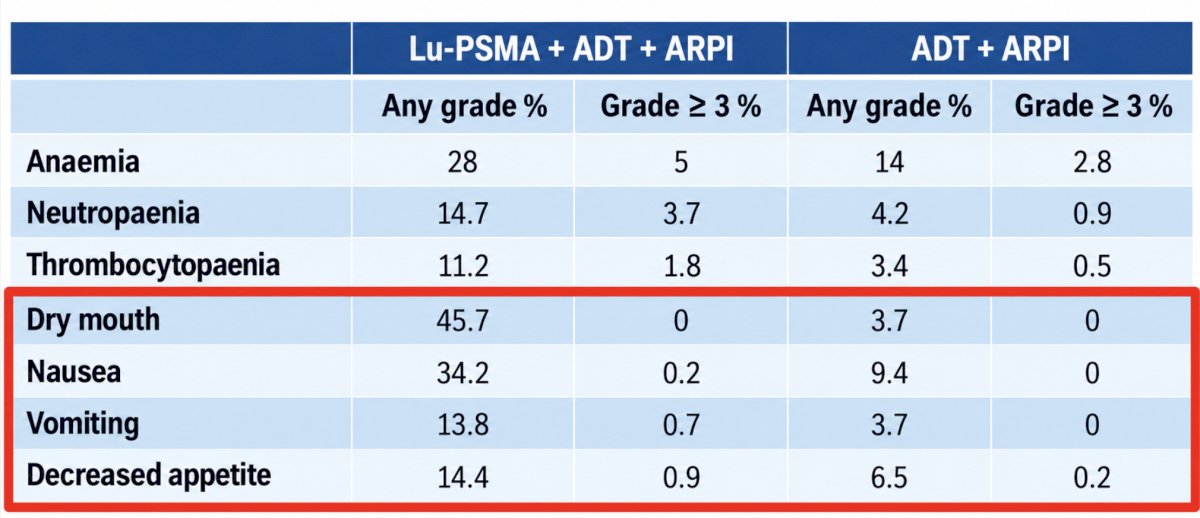
These toxicities are placed in the context of health-related quality of life. For the FACT-P total score, the HR was 1.14 (95% CI 0.98–1.33), and the median time to deterioration was 11.33 months (95% CI 8.84–14.03) with 177Lu-PSMA-617 + ADT and ARPI compared with 17.12 months (95% CI 13.80–19.91) with ADT + ARPI. Dr. Azad highlighted the persistent separation of the curves beginning at approximately 8 months, corresponding to roughly four cycles of 177Lu-PSMA-617:
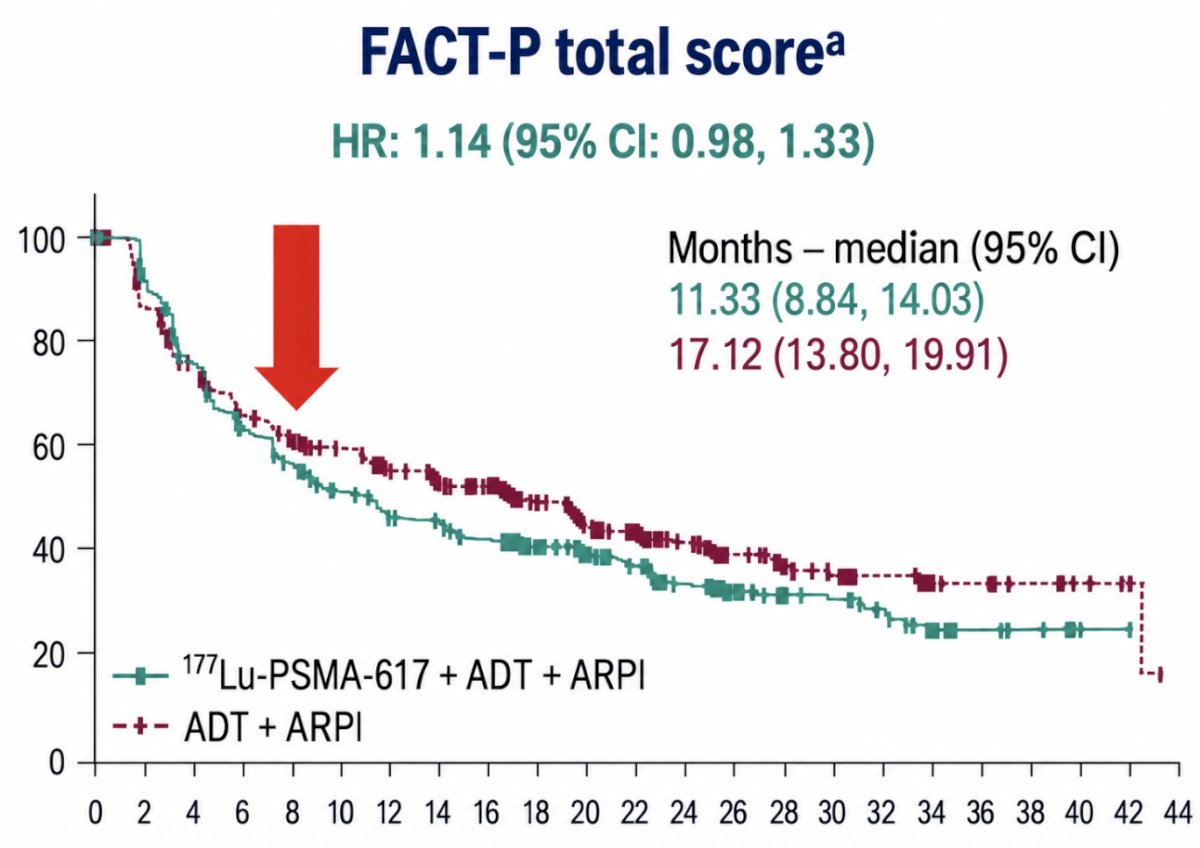
Could this separation reflect disappearance of PSMA-positive tumor during the earlier cycles, followed by increased radioligand uptake in normal tissues such as the parotid glands and small bowel during later cycles? This possibility further supports his argument for response-adapted rather than automatically fixed-duration treatment.
Dr. Azad concluded his presentation discussing appropriate use of 177Lu-PSMA-617 in 2026 with the following take-home messages:
Post-docetaxel and-post-ARPI mCRPC? ✅
– Overall survival benefit is uncertain (but was significant in VISION)
– We need prospective evaluation of PSMA parameters beyond SUVmax
– There is still a key role for cabazitaxel (before or after 177Lu-PSMA-617)
Chemo-naïve, post-ARPI mCRPC? ❌
– Pragmatic to use in elderly, chemotherapy-unfit patients
Metastatic hormone-sensitive prostate cancer (mHSPC)? ❓
– There are major questions around overall survival benefit, treatment duration and toxicity/quality of life
– We can consider treatment if it is “bad” disease (ie. de novo high volume) or the patient has ”bad” scans (ie. very high PSMA SUVmean and/or total tumour volume)
– We must use PSMA PET to assess disease burden and the need for 6 cycles
Presented by: Arun Azad, MBBS, PhD, FRACP, Medical Oncologist, Associate Professor, Peter MacCallum Cancer Centre, Victoria, Australia
Written by: Zachary Klaassen, MD, MSc – Urologic Oncologist, Augusta, GA, @zklaassen_md on Twitter during the 2026 ProsTIC Annual Meeting, Melbourne, Australia, Fri, Sept 3 – Sat, Sept 4, 2026.
References:
Sartor O, de Bono J, Chi KN et al. Lutetium-177-PSMA-617 for Metastatic Castration-Resistant Prostate Cancer. N Engl J Med. 2021 Sep 16;385(12):1091-1103.
Hofman MS, Emmett L, Sandhu S, et al. [(177)Lu]Lu-PSMA-617 versus cabazitaxel in patients with metastatic castration-resistant prostate cancer (TheraP): A randomized, open-label, phase 2 trial. Lancet. 2021 Feb 27;397(10276):797-804.
Buteau JP, Martin AJ, Emmett L, et al. PSMA and FDG-PET as predictive and prognostic biomarkers in patients given [177Lu]Lu-PSMA-617 versus cabazitaxel for metastatic castration-resistant prostate cancer (TheraP): A biomarker analysis from a randomized, open-label, phase 2 trial. Lancet Oncol. 2022 Nov;23(11):1389-1397.
Morris MJ, Castellano D, Herrmann K, et al. 177Lu-PSMA-617 versus a change of androgen receptor pathway inhibitor therapy for taxane-naïve patients with progressive metastatic castration-resistant prostate cancer (PSMAfore): A phase 3, randomized, controlled trial. Lancet 2024 Sep 28;404(10459):1227-1239.
Tagawa ST, Sartor O, Pjulats JM, et al. [177Lu]Lu-PSMA-617 in patients with PSMA-positive metastatic androgen pathway modulator-naïve/sensitive prostate cancer (PSMAddition): A phase 3 randomized, controlled trial. Lancet. 2026 Aug 29;408(10557):793-807.
Azad AA, Bressel M, Tan H, et al. Sequential [(177)Lu]Lu-PSMA-617 and docetaxel versus docetaxel in patients with metastatic hormone sensitive prostate cancer (UpFrontPSMA): A multicentre, open label, randomized, phase 2 study. Lancet Oncol. 2024 Oct;25(10):1267-1276.
Jackson PA, Hofman MS, Hicks RJ, et al. Radiation dosimetry in 177Lu-PSMA-617 therapy using a single posttreatment SPECT/CT scan: A novel methodology to generate time- and tissue-specific dose factors. J Nucl Med. 2020 Jul;61(7):1030-1036.