
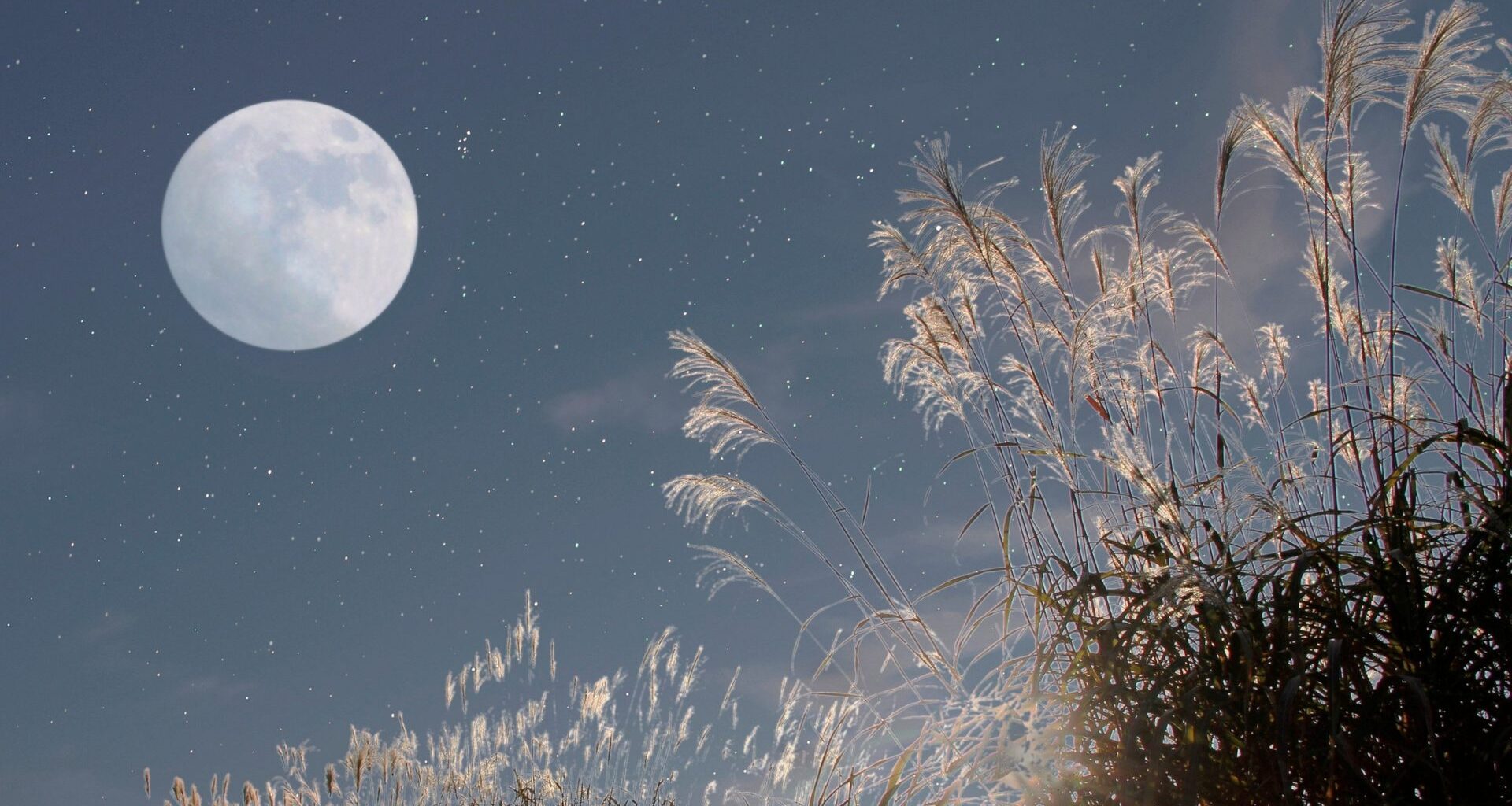
September brings brilliant Venus, the Harvest Moon, an equinox, and several easy-to-spot celestial sights in the night sky.
September 2026 offers several good reasons to look up, and many of them are easy to find.
Over the course of nearly two weeks, the Moon will point toward familiar stars, Venus will become especially bright, the seasons will change, and the Harvest Moon will rise near Saturn and Neptune.
The National Aeronautics and Space Administration (NASA) has highlighted these dates in its September skywatching guide.
Several sights can be seen with the eyes alone, making the month especially welcoming for people who are new to watching the night sky.
The Moon becomes a guide
From September 14 through 20, the Moon can help people find several landmarks in the southern evening sky.
About an hour after sunset, the Moon will be easy to locate, and its position will shift from night to night against the background stars.
One of those landmarks is Antares, a bright reddish star in the constellation Scorpius.
Antares marks the heart of the constellation and provides a noticeable point to look for near the Moon.
The Moon will also pass near a group of stars called the Teapot in the neighboring constellation Sagittarius. The pattern really does resemble a teapot, with stars forming something like a handle, lid, and spout.
Under a particularly dark sky, observers may notice a hazy glow that seems to rise like steam from the Teapot’s spout. Following that glow toward its thickest part points the eye toward the center of the Milky Way galaxy.
Venus shines at its brightest
On September 18, attention shifts to the western sky. Venus reaches peak brilliance for this evening appearance, meaning it will be at its brightest during this period of visibility after sunset.
Shortly after sunset, Venus will appear as a brilliant point of light low above the western horizon. NASA says it will outshine every star around it, so identifying the planet should not require much searching.
Its low position in the sky is the main challenge. A clear view of the western horizon will give observers the best chance to see Venus before it sets.
For beginners, Venus can also clear up a common bit of skywatching confusion.
A bright point in the evening sky is not always a star, and planets such as Venus can easily stand out among the stars around them.
A night for the Moon
The following evening, September 19, brings International Observe the Moon Night.
People around the world are invited to observe Earth’s nearest celestial neighbor while learning about lunar science, exploration, and the Moon’s importance to cultures around the world.
NASA says people can join the event from wherever they are. That makes the Moon an especially simple starting point for anyone who has never spent much time following objects in the night sky.
The timing also creates a busy few days for skywatchers.
Venus reaches peak brightness on September 18, the Moon takes the spotlight on September 19, and several more changes arrive before the month is over.
Equinox marks season change
For people in the United States, September 22 marks the September equinox. Fall begins in the Northern Hemisphere, while spring begins in the Southern Hemisphere.
An equinox occurs when the Sun is directly above Earth’s equator. Around this time, day and night are close to equal in length across the world.
After the equinox, the amount of daylight continues changing.
Days become shorter in the Northern Hemisphere, while the Southern Hemisphere begins receiving longer periods of daylight.
The event therefore marks a clear turning point in the year. People in opposite halves of the world begin moving toward very different seasons even though the change happens at the same astronomical moment.
Harvest Moon meets planets
Another major sight arrives on September 26, when the Harvest Moon rises in the east shortly after sunset. The bright Moon will have company because Saturn and Neptune will appear nearby.
Together, the Moon, Saturn, and Neptune will form a wide triangle in the sky. However, the three objects will not be equally easy to find.
Saturn is bright enough to see with the unaided eye, so binoculars or a telescope are not needed to spot it.
Starting with the bright Moon should also make it easier to know which area of the sky to watch.
Neptune takes more effort
Finding Neptune will require binoculars or a telescope. Dark skies and good viewing conditions can improve the chances of seeing the distant planet.
That difference makes the September 26 gathering useful for different levels of skywatching experience.
The Moon provides an obvious starting point, Saturn offers an easier planetary target, and Neptune gives observers with optical equipment something more challenging to find.
It also shows that skywatching does not always require expensive or complicated equipment. Some of September’s most noticeable sights, including Venus, the Moon, and Saturn, are visible without a telescope.
September rewards simple watching
NASA’s September guide brings together several different kinds of events.
The Moon helps locate Antares and the Teapot, Venus reaches peak brilliance, the equinox changes the seasons, and the Harvest Moon appears near two planets.
None of these sights requires an advanced understanding of astronomy to appreciate.
Knowing the date, the direction to face, and roughly when to look is enough to start recognizing objects that may otherwise seem like anonymous points of light.
The month also shows how the night sky changes over surprisingly short periods.
The Moon moves against the background stars from one evening to the next, while different objects become easier to find at particular times.
For people who rarely watch the sky, September offers several straightforward places to begin.
A few evenings outside can make Antares, Venus, Saturn, the Milky Way, and familiar star patterns much easier to recognize on future nights.
Video Credit: NASA Jet Propulsion Laboratory
—–
Like what you read? Subscribe to our newsletter for engaging articles, exclusive content, and the latest updates.
Check us out on EarthSnap, a free app brought to you by Eric Ralls and Earth.com.
—–