
Inspectors of the CQC visited the Cumberland Infirmary Emergency Department (ED) in February and March, today downgrading its safety rating to ‘inadequate’ and its caring rating to ‘requires improvement, as a result of the findings.
North Cumbria Integrated Care (NCIC), which runs the Cumberland Infirmary, received an enforcement warning notice in April.
The warning of potential enforcement action was issued as inspectors were not satisfied in March that previous concerns had been addressed.
Issues related to care and supervision of mental health patients and those with deteriorating illnesses in the emergency department.
Continuity of service
The Urgent and Emergency Care Department at the Cumberland Infirmary in Carlisle. (Image: MTX)
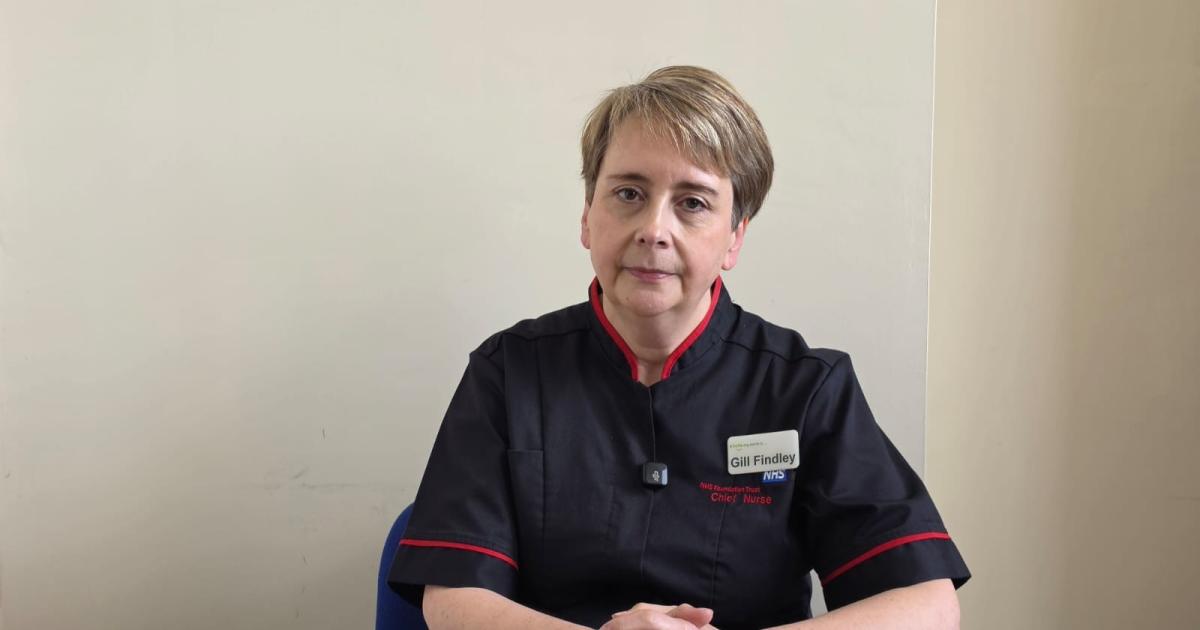
Speaking to Newsquest Cumbria on Thursday, chief nurse Doctor Gill Findley said: “We accept everything that the CQC have said. The CQC saw what they saw on the day and they’ve written it down in their report.
“I don’t think it’s necessarily always like that on every single day. We’ve got lots of positive feedback from patients, we’ve got lots of positive findings and positive patient experiences.”
She referenced the CQC’s recent in-patient survey as an example, which reported that over 90 per cent of patients felt they were respected and received good care.
Dr Findley said: “So it’s a bit of a mixed picture and what we need to do is get that consistently good service throughout our trust. The things that we do see in other departments that we’re working really hard to address is things like being bare below the elbows consistently, so that people can wash their hands.
“The reason we do that is so that people can wash their hands properly. If you’ve got a wrist watch on, you can’t wash your wrists, you can’t wash that part of your hands.”
The Cumberland Infirmary, part of North Cumbria Integrated Care NHS Trust. (Image: Newsquest)
Dr Findley said: “That’s the consistency that we need to see implemented across the organisation, we need to make sure that everybody’s at the good standard that some of our services are currently delivering.”
Safety concerns
Inspectors carried out the assessments of Carlisle’s ED as part of the CQC’s winter pressures programme.
They found that “the triage model designed to direct patients to the most appropriate areas of care was not currently effective.
“Opportunities to stream patients to alternative services were limited,” the CQC report reads. “This meant there were more patients in ED than there was capacity to manage.”
This leads to long waiting times and impacts on patient flow.
As NCIC approaches winter once again, Dr Findley said: “The bit that the CQC picked up that we’re working really hard on is around mental health triage. This is when patients come into the department and they’ve got a mental health condition or they’re feeling unsafe from a mental health point-of-view.
“What the CQC found is we weren’t consistently doing a mental health risk assessment for those patients to determine whether or not they were at risk of suicide while they were in our care. And we know that some patients, sadly, who have a mental health presentation do have quite a prolonged wait while they’re in our department.”
Immediate action
Following the enforcement warning notice in April, leaders made immediate changes, they included:
A healthcare assistant or registered nurse being assigned to the ED waiting room to supervise patients while they wait and identify and support any patients with deteriorating conditions.
The dedicated mental health assessment room has been reviewed and works have been completed including removal of a sink and new furniture.
New processes have been put in place to ensure that mental health risk assessments are carried out quickly when a patient arrives in the ED and any safeguarding measures are put in place to protect that patient during their time in the department.
Ligature risk assessment has been updated.
Emergency Physician in Charge (EPiC) now undertakes senior review of mental health risk assessments each shift.
Updated mental health risk assessment training has been delivered to ED staff.
Dr Findley added that a new electronic system has been implemented, “so that when someone comes in, the staff are going through a series of questions that are prompted on the electronic system, to check that someone feels safe and what to do should they feel unsafe and how to seek help if they need it.
“Because that’s on the electronic system, you can’t go past it until you’ve asked those questions.
“So anyone coming in with that mental health presentation will now get that full risk assessment and we’ll be able to implement safety measures to make sure they’re kept safe in the department.
The chief nurse said: “That’s something that I’d be confident, going into winter, we have got all those assessments in place for patients coming through.”