

The long weekend featured an escalation of the war between the U.S. and Iran. At the same time, the latest peace negotiations between Russia and Ukraine failed miserably. This whipsawed the futures markets for crude oil. This situation was not the only time these conflicts have seen an escalation when the market is closed.
The crude oil market has been dealing with this volatility for many months. The pattern has been quite predictable, with the U.S. administration talking about progress with peace talks during the week. This is typically followed by a breakdown in the negotiations and escalation of the attacks the following weekend. The latest escalation in the U.S.–Iran conflict has driven crude oil futures (WTI) into the low US$90s per barrel.
A larger concern with the hostilities in the Middle East is the price of refined petroleum products, especially diesel. The wholesale diesel price in Canada has been hitting all-time highs with the most recent weekly average just below C$1.90 per litre. Retail diesel prices have averaged more than C$2.00 per litre through the calendar year and are currently approaching the C$2.50 per litre mark. The diesel price has not only been driven by the U.S.–Iran conflict but also the escalation of the Russia–Ukraine war.
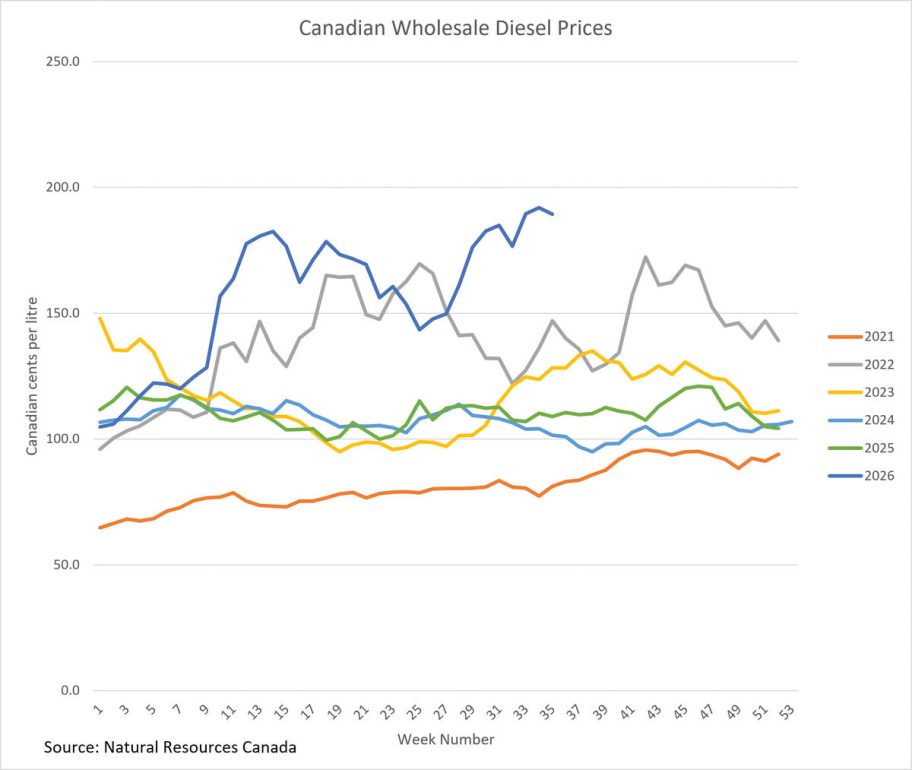
This makes the failure of the talks between Russia and Ukraine on the weekend even more disappointing for diesel prices. Ukraine has targeted Russian refining capacity in order to reduce the availability of fuel for the military. The other objective is to reduce the foreign currency earnings for Russia to support the invasion of Ukraine. This has largely been successful with Russia now importing diesel and gasoline to support their military activities. Ukraine is likely to escalate their attacks on Russian petroleum infrastructure.
Read Also

The situation is even worse when you consider that the Iran–U.S. conflict is nowhere near a resolution. Refineries in the Persian Gulf continue to see reduced capacity from attacks from Iran or their proxies in the region. Although there has been crude oil flowing from this region, petroleum product flow has been very limited.
When will this upward price pressure on the refined fuels end? According to the latest diesel inventory data from the U.S., it appears the answer is not anytime soon. Diesel inventories at the end of August were the lowest in recent history at 104.2 million barrels. This is going into the winter season where we normally see an uptick in fuel oil demand in the U.S. Unfortunately for farmers this means that prices for diesel fuel are likely to move higher in the coming weeks and months.