
NEED TO KNOW
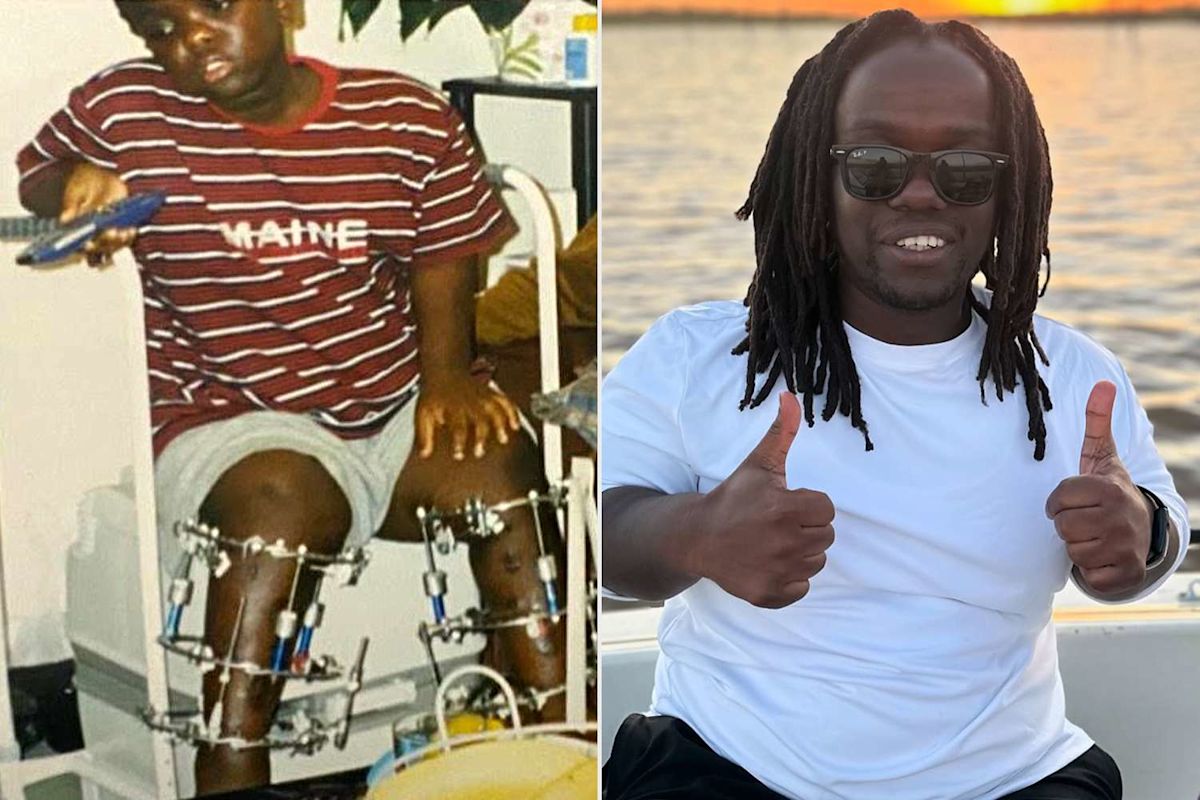
Zvataida “Zah” Chimedza, who was born with achondroplasia and bowed legs, underwent surgery to straighten his legs at age 11
His recovery lasted nearly two years and included daily physical therapy, relearning how to walk and missing an entire year of school
Chimedza was later given the option to surgically lengthen his limbs, but decided he wasn’t willing to sacrifice another formative stretch of his childhood
By the time Zvataida “Zah” Chimedza had the chance to become taller, he already knew how much changing his legs could cost him. At 11, the Zimbabwean-born Chimedza had undergone a painful procedure to straighten his bowed legs, beginning a recovery that stretched nearly two years and left him reluctant to surrender another piece of his childhood.
“I was extremely self-conscious about my bow legs, as you can imagine a 9-year-old would be,” Chimedza, now 35, tells PEOPLE exclusively. “Presented with the chance to get my bow legs corrected, I jumped at the opportunity.”

Zvataida Chimedza when he was young
Credit: Zvataida Chimedza
Chimedza was born with achondroplasia, a form of dwarfism, and says his family first learned about the Ilizarov procedure, used to surgically straighten legs, in 1999 after meeting a couple who belonged to The Little People of Manitoba organization. The wife had previously undergone the procedure and shared her experience with the family, though Chimedza says he was too young to fully grasp what lay ahead.
In 2001, he underwent surgery at Great Ormond Street Children’s Hospital in London, where the first phase addressed the bowing in his legs rather than lengthening them. Looking back, Chimedza says the reality of the experience is still difficult to put into words: “You could be Shakespeare but words truly can’t encapsulate the entire experience.”
Recovery demanded far more than waiting for his legs to heal. Chimedza went through physiotherapy every day and had to relearn how to walk while his bone was still healing, a process he remembers as both physically demanding and painful.
His world also became much smaller for a time. Chimedza spent long stretches on the couch, relied on a wheelchair when he wanted a change of scenery and missed an entire year of school while also being separated from family and friends back home.
“Emotionally, it felt like I missed out on a lot in life while recovering,” he says. Those lost experiences would eventually become an important part of a much bigger decision.
There was another phase available to Chimedza, one that would lengthen his limbs, and he says his surgeon recommended completing it before he turned 16. But after what he had already endured, the teenager approaching those years no longer viewed another procedure the way the 9-year-old who had eagerly wanted his bowed legs corrected once had.

Zvataida Chimedza as a child
Credit: Zvataida Chimedza
“Throughout the almost two-year recovery, it felt as if I missed out on a lot of life experiences that I previously looked forward to,” Chimedza says of his teenage years. “I was reluctant to make a similar sacrifice at what I considered a key phase of my life at the time.”
So Chimedza chose not to move forward with lengthening his limbs, though confidence in that choice did not arrive immediately. He says it took until college for him to feel that he had made the right decision.
What stayed with him from the surgery was not only the pain or the time he lost, but proof of what he could withstand. Chimedza says the experience taught him resilience and forced him to take responsibility for his own recovery at an age when many children were focused on school, friends and sports.
Never miss a story — sign up for PEOPLE’s free daily newsletter to stay up-to-date on the best of what PEOPLE has to offer, from celebrity news to compelling human interest stories.
“There were many a moment I contemplated giving up, but somehow I found a way to stick with it,” he says. Showing up and doing what was required to recover was ultimately his responsibility, something he believes changed the way he approached the challenges that came afterward.
More than two decades later, Chimedza doesn’t separate that difficult chapter from the person it helped him become. “It gave me a new perspective to life, where surely it can’t get tougher than what I already went through with the surgery.”
Read the original article on People