
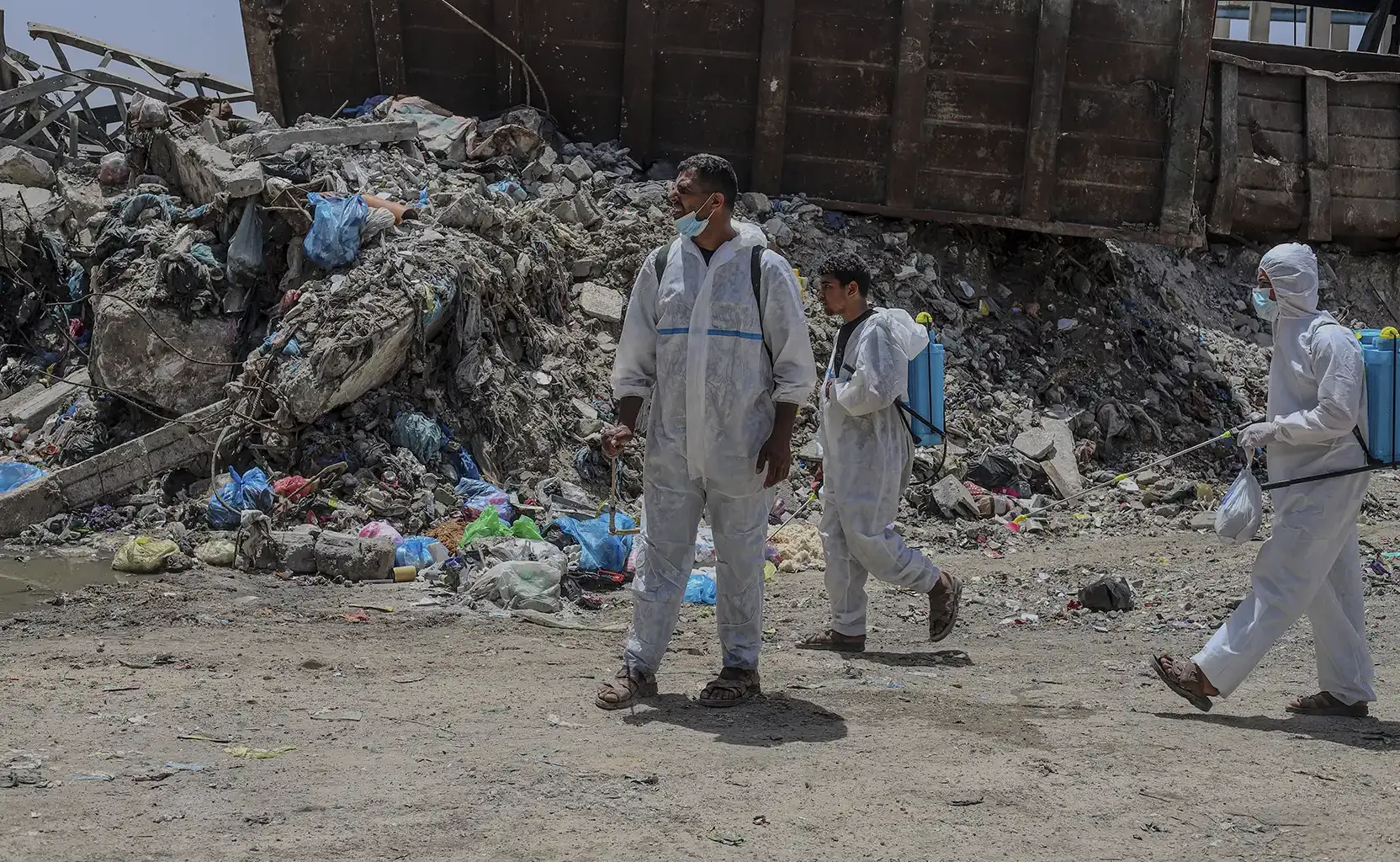
Her family has spent nearly two years moving from one displacement camp to another. Like many families, they do their best to clean their tent daily with minimal resources and use pesticides and traps whenever possible, but the infestations continue to spread.
“At night, they move around us while we try to sleep,” she said. “There is no sense of security.”
Doctors in Gaza warn that conditions inside displacement camps are becoming increasingly dangerous. Dr. Mohammad Qashta, head of the Internal Medicine Department at Al-Aqsa Martyrs Hospital in Deir al-Balah, says overcrowded camps and rodent infestations increase the risk of infections, pneumonia, skin diseases and serious complications, especially among children, pregnant women, elderly people and immunocompromised patients.
“These conditions increase the risk of infectious disease through contaminated food and water,” Qashta explained.
According to the U.N. Office for the Coordination of Humanitarian Affairs (OCHA), more than 1.9 million people remain displaced in Gaza. Qashta described the situation inside many camps bluntly: “It is not humane.”
Public health conditions across Gaza have sharply deteriorated after months of displacement, infrastructure collapse and limited access to clean water and sanitation. For many displaced families, however, the crisis is measured through small daily moments. They include mothers unable to sleep because of scratching sounds near their children, pregnant women repeatedly cleaning the same corner of the tent, just for insects to return hours later or a parent discovering that rats have already contaminated the little food their family managed to secure overnight.
Families say they feel abandoned. “No one is helping us,” Shereen Abed said. The tents meant to provide temporary shelter have gradually become spaces associated with filth, pests, exhaustion and fear.
Ending these inhumane conditions requires holding Israel accountable for the reality it has created in Gaza. The world should be ashamed that Palestinians continue to endure such circumstances while the international community allows this suffering to persist. The longer these conditions are allowed to continue, the more deeply they become woven into the lives of Palestinians who have already endured unimaginable loss and displacement. Silence and inaction cannot normalize what should never be considered a normal or acceptable way of life.
Across Gaza’s camps, many families remain awake long after midnight, listening carefully to the sounds moving through the darkness around them. They deserve to sleep in peace, just as they deserve a real home and an end to all forms of violence inflicted upon them.
The views and positions expressed in this article are those of the author(s) and do not necessarily reflect the views of DAWN.