
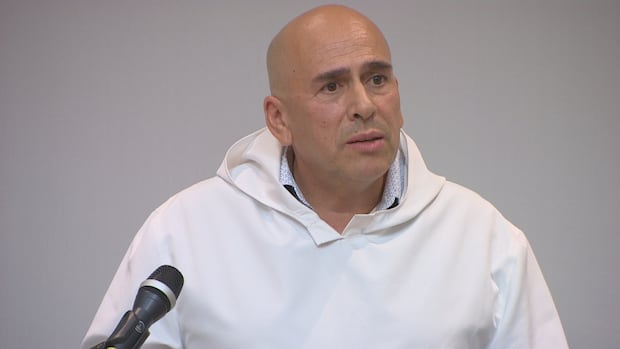
The president of the NunatuKavut Community Council (NCC) remains displeased with the federal government’s choice to terminate its bid for Indigenous rights.
“It never really came as a shock, but certainly it was extremely, extremely disappointing,” Todd Russell said Tuesday, adding he believes the decision was made “at the behest of other Indigenous groups.”
CBC News asked Crown-Indigenous Relations and Northern Affairs Canada (CIRNAC) specifically about Russell’s claim.
In an emailed statement, a spokesperson for the federal department said that the decision to terminate NunatuKavut’s Recognition of Indigenous Rights and Self-Determination process last month was based on a review of information provided by NCC — including “internal historical and legal analysis and expert reviews” that showed the evidence didn’t satisfy court-established tests for Indigenous rights and title.
NunatuKavut represents 6,000 self-identifying Inuit in south and central Labrador. The group identified itself as Métis until 2010, however it is not recognized by national organization Inuit Tapiriit Kanatami.
NCC signed a memorandum of understanding (MOU) with the federal government in 2019 that recognized NunatuKavut as an Indigenous collective capable of holding Section 35 rights under the Constitution Act. That gives constitutional recognition and affirms Indigenous rights for Aboriginal peoples, and includes a framework for Indigenous self-governance.
The MOU was upheld in a federal court in 2024 following a challenge from the Innu Nation.
In a news release on Monday, NunatuKavut referenced a private report from the Laurier Research Group commissioned by Ottawa that the group said showed support for their claim.
That report was leaked by NunatuKavut in July. It said the group was “recognized as the modern descendants of the Inuit of central and southern Labrador.”
In an emailed statement to CBC News at the time of the leak, CIRNAC said the report doesn’t affirm Section 35 rights, but rather “summarizes NunatuKavut’s arguments and evidence.”
N.L. ‘can’t weigh in’ on decision of identity: Minister
Labrador’s Innu Nation and Nunatsiavut government, which have long opposed NunatuKavut’s claim of Indigenous identity, welcomed the move. Innu Nation Grand Chief Jodie Ashini called the termination a “necessary and reasonable decision” when it was announced.
Russell said that was among the most hurtful commentary of the deal’s termination, adding other groups don’t have the authority to determine who is Indigenous.
“We’re still here, and we will remain here,” he said.
Premier Tony Wakeham declined to take a position on the topic on Wednesday.
When asked if NunatuKavut was an Indigenous group, Wakeham told reporters, “That’s something that’s before the courts, that the federal government and they themselves will deal with.”
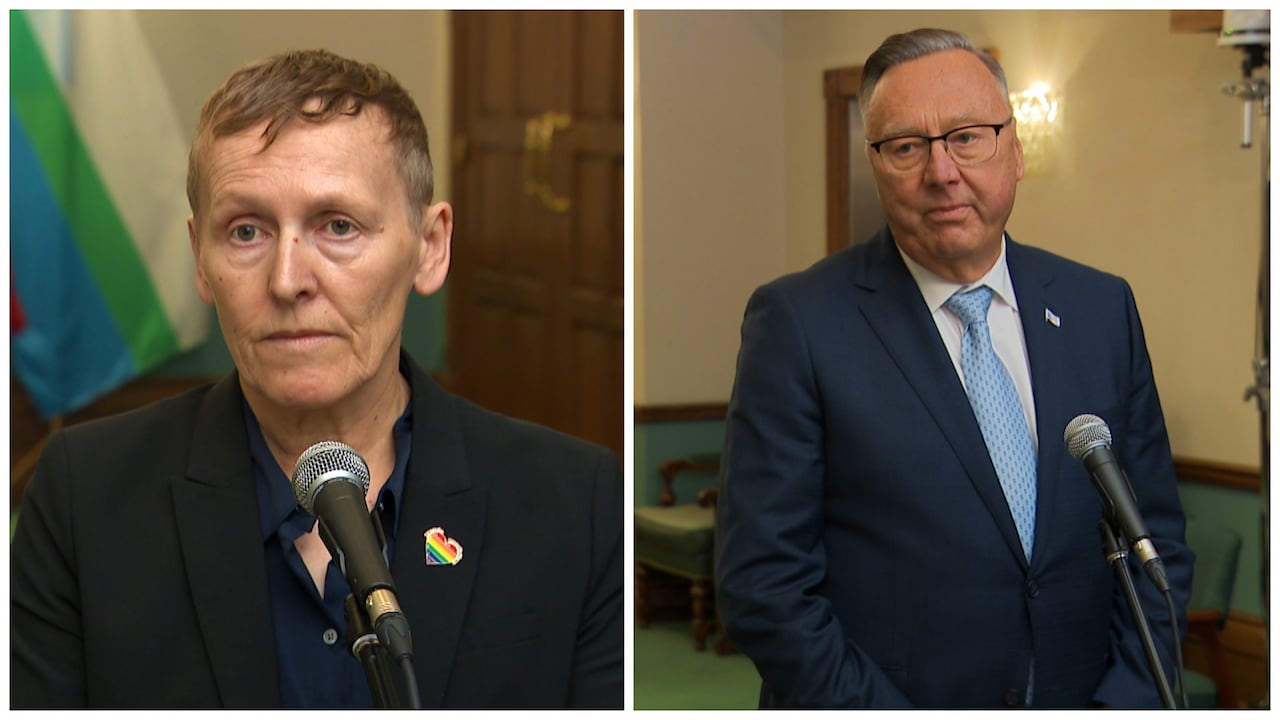 Indigenous Relations Minister Lela Evans, left, and Premier Tony Wakeham said Newfoundland and Labrador can’t weigh in on the federal decision to terminate NunatuKavut Recognition of Indigenous Rights and Self-Determination process. (Mark Quinn/CBC)
Lela Evans is Newfoundland and Labrador’s Minister of Indigenous Affairs and Reconciliation, and also a member of Nunatsiavut.
She said she’s sought clarification from CIRNAC Minister Rebecca Alty about what the termination means for NunatuKavut’s Indigenous status.
Evans didn’t say outright whether or not she believed the group is Indigenous.
“As minister, I mean, we can’t weigh in on that. Like, we look to the federal government to identify and make these decisions, and that’s why we’re waiting on clarification. And until we get it, we will still work and deal with NunatuKavut,” Evans said.
Before the Progressive Conservatives took power in October, the past two Liberal governments recognized NunatuKavut in reconciliation efforts. Former premier Andrew Furey extended an apology to NunatuKavut Inuit for their treatment in residential schools.
Indigenous art from an NCC member has also hung on the wall of the Newfoundland and Labrador legislature alongside art from other Indigenous groups since September 2025.
“Even when I was in opposition, I always said members of NunatuKavut and members of Nunatsiavut are citizens of our province. And they’re, you know, they’re entitled to be treated as such,” Evans said.
“Regardless of, you know, the outcome of this, I know it’s been very hurtful and very painful to the members of NunatuKavut.”
NDP Leader Jim Dinn also commented on the discourse Wednesday, acknowledging the past government’s support while saying the decision of identity isn’t his to make. He called the dispute a “quagmire.”
“As a settler, I guess, I’m not going to be the one to determine that. And nor should I,” he said.
Churchill Falls MOU debate without NCC unwise: Russell
Russell also questioned the timing of the decision, saying he believes the federal government’s support of the Churchill Falls MOU could be playing a factor.
The MOU between Newfoundland and Labrador and Quebec is being debated in the House of Assembly this week. The Innu Nation has been called a key partner in future development, but are holding out on supporting it over a dispute with government on the length of the First Nation’s history in Labrador.
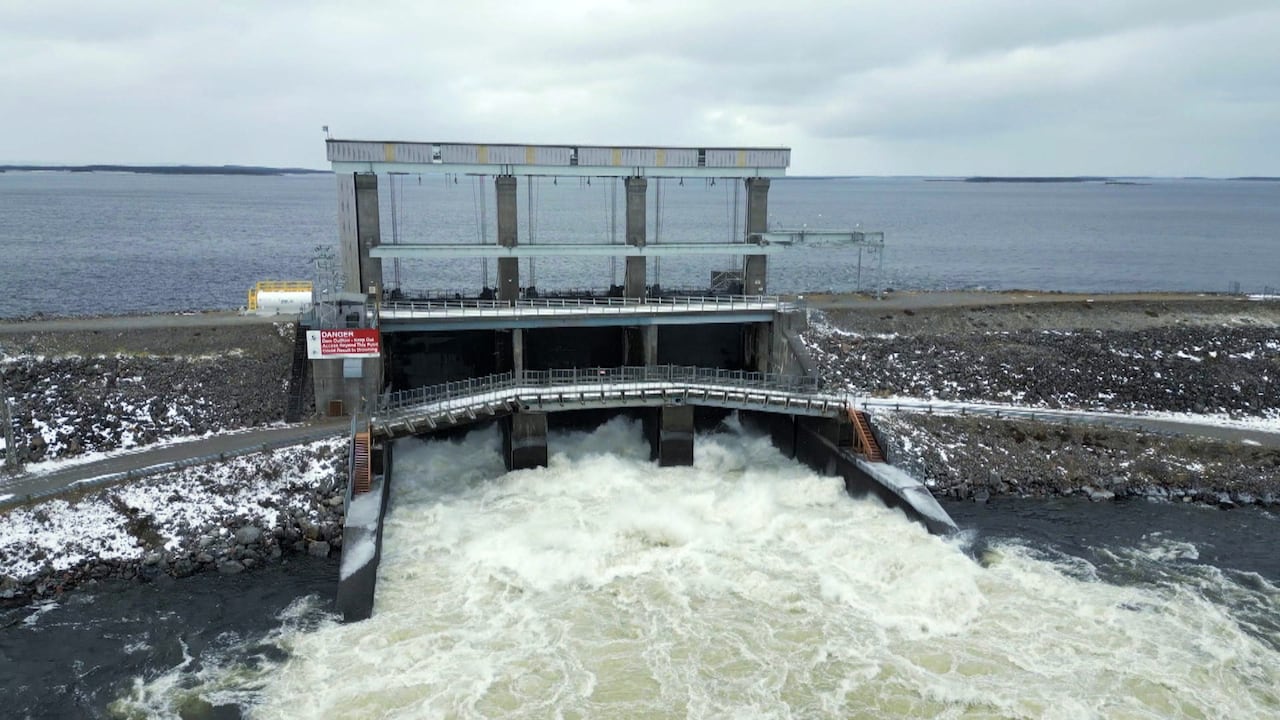 Russell said NunatuKavut should be involved in negotiations for the Churchill River power agreement. (CBC)
“If the purpose here was to remove us, to get us out of the way, that they saw us as, like, an inconvenient truth that had to be dealt with, well they’ve just made a very, very bad mistake,” Russell said.
“I can tell you with great confidence that that decision will only heighten the uncertainty around whether projects like this will ever get built. It heightens the chance that there’s going to be major confrontation.”
In its news release on Monday, NunatuKavut warned the provincial government “not to go down the path of proceeding with Churchill River developments without the engagement and consent of NCC and NunatuKavut Inuit. Nothing about us without us.”
Evans said she’s waiting for clarification from the federal government before involving NunatuKavut in any discussion.
“Churchill Falls and the development would actually relate to land claims. And the correspondence we have received from Minister Alty is that they have denied, you know, they’ve basically denied NunatKavut’s land claims negotiation under the Comprehensive Claims Policy,” she said.
Download our free CBC News app to sign up for push alerts for CBC Newfoundland and Labrador. Sign up for our daily headlines newsletter here. Click here to visit our landing page.