
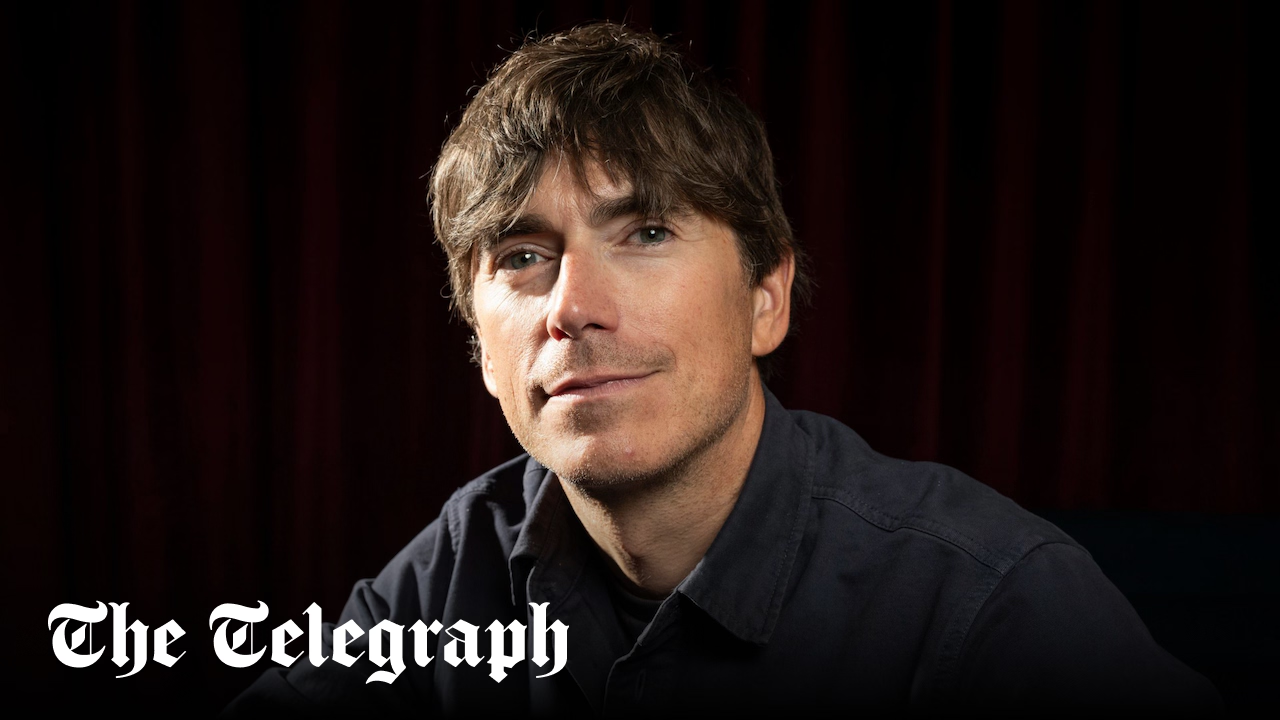
Reeve has been on our screens for more than two decades, travelling across six continents and visiting more than 130 countries. Once, though, his horizons were far smaller. In his memoir, Step by Step, he recalls how his childhood in Acton, west London, was marked by “endless shouting, lots of crashing and banging”; his “tense and violent” relationship with his father occasionally led neighbours to call the police.
This chaos stained other aspects of his life. He began carrying a knife to school, and from age 11, he was “running around with a little gang. We were causing all kinds of trouble, making petrol bombs; we usually got away before the police arrived and no one had mobile phones, thank God”.
Exams were a write-off. “The first f—ing one, I panicked,” he recalls. “It’s so strange, I’m sitting here now aged 54, and I can still remember the feel of the table, the emotion…” He shivers. “I was just overwhelmed with panic, so I walked out and never went back to school.”
He went on the dole, and took to drinking. Utterly lost, he found himself holding on to the wrong side of a motorway bridge railing, staring down at the lorries below, contemplating letting go. “I was just a whisker away from it, and then I stepped back. I went home, got some counselling, earned a bit of money and had some good advice about taking life slowly, step by step, and I’ve tried to live by that ever since.”
He stumbled into a job at The Sunday Times as a post boy, and worked his way up at the newspaper. Eventually he got his break when his debut book, The New Jackals – the first major investigation of Osama bin Laden and al-Qaeda – was published in 1998. After 9/11, it became a bestseller and Reeve parlayed its success into a career in TV. “So you could say Andrew Neil saved my life – and who’s heard that before?”
Today though, his approach to television-making can seem a little quaint. You can, after all, watch YouTubers live-streaming extraordinary feats from your phone while sitting on the bus. Does he worry he’s becoming obsolete?
“Well, I’m not sure anyone is loading a bolt-gun to put me out of my misery yet,” he laughs. “[Presenters like us] might seem a dying breed, but I’m still joyously surprised that at least a few people will gather around the telly to watch us.”
More than a few: the first series of Wilderness was the highest-rated BBC Two show of any genre since 2022. There’s clearly an appetite for his work, and the knotty difficulties it throws up. In this latest series, for instance, Reeve witnesses First Nation hunters bringing down a moose before “harvesting” it to share with the community. He also sees Mexican fishermen de-finning endangered hammerhead sharks, a trade driven by Chinese demand for shark-fin soup. And he meets a reformed grizzly bear tracker, who now works for their preservation after seeing too many trophy hunters desecrating dead animals.
“When people are respectfully hunting something they are going to eat, then it’s wrong to start from a position of pure criticism,” Reeve reflects. “An outsider like me, who doesn’t hunt their own protein, who can buy it pre-packaged in a supermarket… There’s something infinitely more questionable about that than someone who has worked for it, considered it and has a degree of respect and worship for it. I try not to be too judgmental of what folks do on this planet.”
Reeve and his wife, Anya, a half-Danish camerawoman, have a son, Jake, who is now the same age Reeve was when everything began to collapse. “I haven’t hidden [my past] from him,” he says. “And I’ve explained some of the mistakes I’ve made by not listening. But it’s a different time now, and perhaps we’re more open about things than we once were.”