
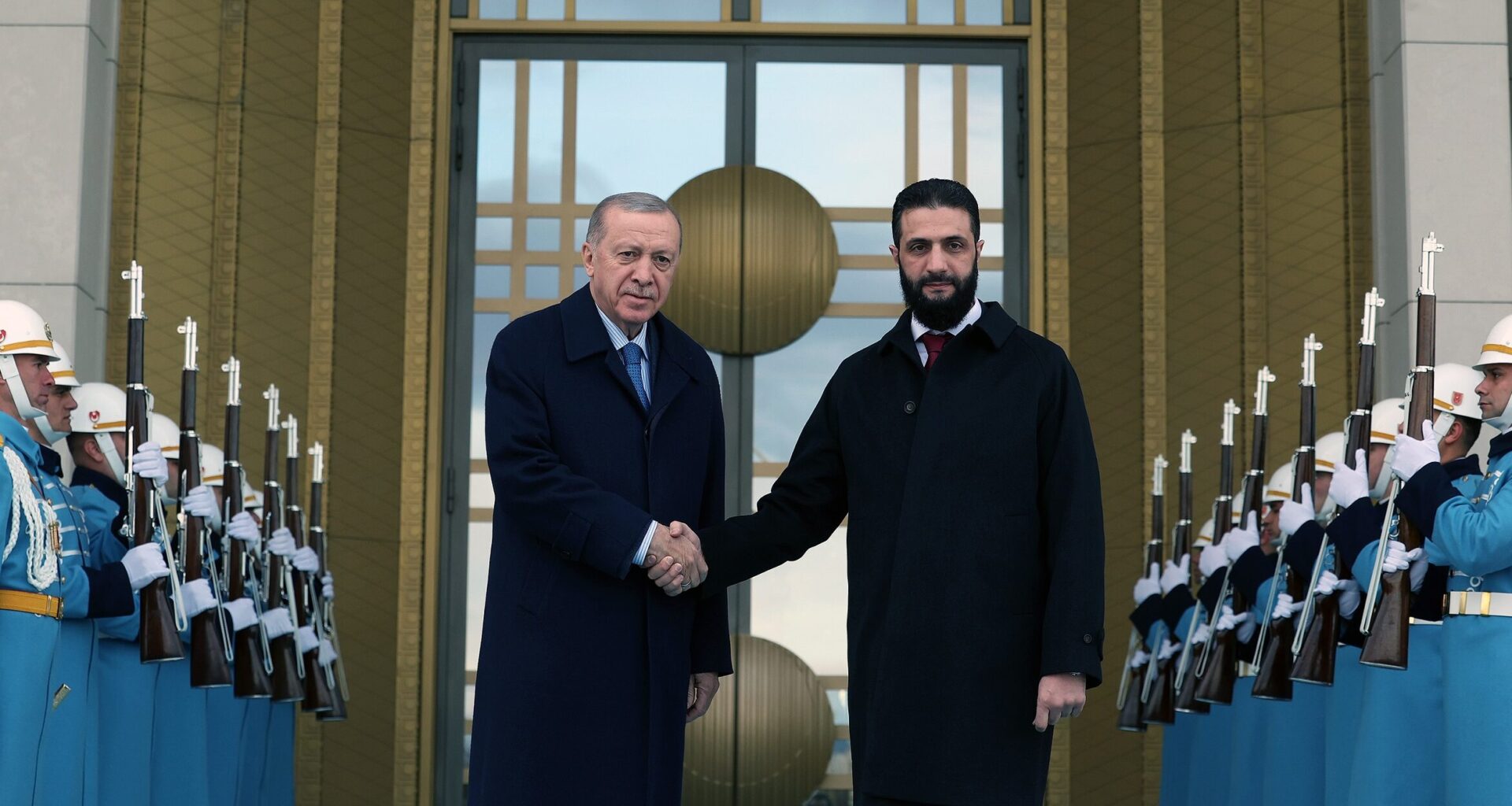
Turkey’s growing influence has alarmed Israel, which views the prospect of entrenched Turkish military power on Syrian territory as a “direct strategic threat,” according to an analysis for the Foundation for Defense of Democracies
Tensions between Israel and Turkey have continued to make headlines, especially since the fall of Bashar Assad’s regime in Syria nearly two years ago and the rise of a new government under President Ahmed al-Sharaa, who has longstanding ties to Turkey.
Since al-Sharaa came to power, Ankara has provided Damascus with military assistance, diplomatic and political backing, and economic support, while expanding its own security footprint inside Syria.
As such, according to Liron Rose, an Israel Defense Forces (IDF) major (res.) and host of The Owl (Ha-Yanshuf) podcast, “the best we can hope for from Turkey is that the situation will not deteriorate even further.”
As long as we are strong and dominant in this region, Turkey will be hostile
He told The Media Line that the train has left the station and that there is little Israel can do today to fundamentally shift the relationship.
“As long as we are strong and dominant in this region, Turkey will be hostile,” Rose said.
Those tensions became more concrete last month after Israel struck the Abu al-Duhur airbase in northern Syria. Israel said the strike was intended to prevent Turkish troops from deploying there, while Turkey rejected Israel’s account of an imminent deployment. The episode nevertheless raised concerns that the confrontation between the two countries could move beyond hostile rhetoric and into the military arena.
Ziya Meral, director of Raven Research and Advisory, a global risk consultancy in London, told The New York Times last month that if tensions continued to increase, even limited military action by one side “could really, really backfire.”
Turkey has emerged as one of the leading patrons of Syria’s new government
In an analysis for the Foundation for Defense of Democracies, Sinan Ciddi, Turkey program director and senior fellow, and Ahmad Sharawi, senior research analyst, wrote that “Turkey has emerged as one of the leading patrons of Syria’s new government.”
“Ankara now provides Damascus with military assistance, political backing, economic support, and international legitimacy, while deepening its own security footprint inside Syria,” they wrote.
But the authors also noted that Turkey’s growing influence has alarmed Israel, which increasingly views the prospect of entrenched Turkish military power on Syrian territory as a “direct strategic threat.”
To keep that threat from spiraling into a confrontation, Rose told The Media Line that “we need to make sure we’re not cutting off all the communication channels with Turkey.”
He said communication continues behind the scenes, including coordination on certain issues, even if it is not publicly discussed.
The relationship also retains practical and economic ties despite the increasingly hostile rhetoric. For example, oil continues to flow from Azerbaijan to Israel through a pipeline that crosses Turkey. Rose also said Israeli airlines continue to fly through Turkish airspace. And while Turkey has officially moved to block bilateral trade with Israel, Rose said goods continue to move through third parties and other arrangements.
“Turkey realizes that the Turkish economy needs this,” Rose said. “So on paper they’re not trading with Israel. Practically, there’s a few billion dollars of trade.”
Since the October 7 Hamas massacre and Israel’s subsequent war in Gaza, the rhetoric from Turkish President Recep Tayyip Erdogan has grown increasingly hostile. Most recently, Erdogan described Zionism as a “genocidal ideology” and accused Israel of operating what he called a “genocide network.”
That rhetoric, combined with Turkey’s expanding regional ambitions and military capabilities, has fueled concern in Israel about where the relationship could be headed.
As Dr. Hay Eytan Cohen Yanarocak, an Israeli expert on Turkey, told Israel’s 103FM in August, “Turkey’s way of warfare is not that of some rickety Arab country, but rather NATO’s way of warfare. We are talking about a very high standard, and we have to think about that.”
Turkey’s way of warfare is not that of some rickety Arab country, but rather NATO’s way of warfare
But Rose said he does not believe Turkey will invade Israel. Turkey, he said, understands that Israel maintains significant military and technological advantages and that Israel has demonstrated its ability to strike senior leaders and targets far beyond its borders, as it did in Iran.
At the same time, he said, Turkey wants Israel to view it “as a very strong country, which means Israel will need to be careful.”
For now, then, the relationship appears caught between two realities: growing strategic competition and hostility on one side, and continued communication and practical cooperation on the other.
“I don’t see Turkey and Israel becoming friendly, especially not under this particular leadership,” Rose concluded.