
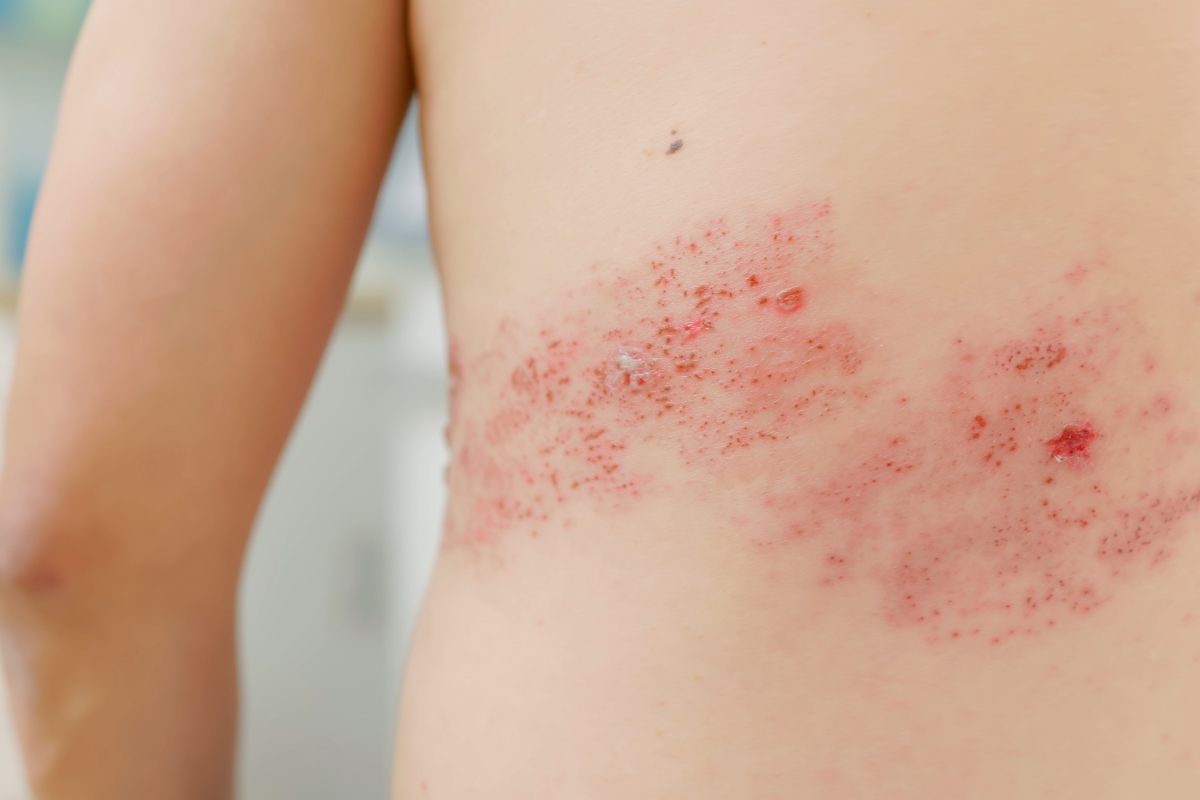
Adults with atopic dermatitis have an increased risk of herpes zoster compared to those without the condition, according to a large study of English primary care records, with the association becoming stronger with increasing disease severity.
Atopic dermatitis has previously been associated with increased susceptibility to infections, while systemic corticosteroids, immunosuppressants and Janus kinase inhibitors used in its treatment have also been linked to herpes zoster.
However, evidence on the association between atopic dermatitis and herpes zoster, independent of systemic treatment, has remained limited. Researchers therefore sought to clarify this relationship and to explore the role of treatment.
Published in JDDG: Journal of the German Dermatological Society, the matched cohort study used Clinical Practice Research Datalink Aurum records from 1997 to 2023.
The study included 14,081,774 observations from 13,426,267 people, comprising 2,445,090 observations from people with atopic dermatitis and 11,636,684 from those without. Individuals could contribute person-time to both groups.
Patients with atopic dermatitis were matched by age, sex and general practice with up to five comparators.
During more than 84 million person-years of follow-up, 329,821 first-recorded herpes zoster events occurred, including 76,990 among people with atopic dermatitis.
Herpes zoster incidence and atopic dermatitis severity
The crude incidence rate of herpes zoster was 4.90 per 1,000 person-years among people with atopic dermatitis compared with 3.68 in those without.
After adjustment for matching factors, comorbidities, age at baseline, obesity, smoking and alcohol misuse, the condition was associated with a 28% higher risk of herpes zoster.
The association increased with disease severity. Compared with people without the condition, the adjusted hazard ratios (aHRs) were 1.22 for mild, 1.28 for moderate and 2.33 for severe atopic dermatitis.
Severity was approximated using treatment patterns rather than clinical severity scores. Moderate disease was defined by prescriptions for potent topical corticosteroids or calcineurin inhibitors, while systemic immunosuppressant use or phototherapy was used to classify severe disease.
Higher relative hazards were also seen among adults younger than 50 years, with the highest hazard ratio of 1.51 in those aged 30–40 years.
Association persisted after systemic treatment adjustment
Adjustment for oral corticosteroid exposure produced only modest changes in the association between atopic dermatitis and herpes zoster, with aHRs ranging from 1.24 to 1.27 depending on the exposure definition. Adjustment for time-updated systemic immunosuppressant use resulted in an aHR of 1.27.
The authors said the findings suggest an elevated baseline herpes zoster risk in people with atopic dermatitis, potentially more pronounced in younger adults, and independent of measured comorbidities and conventional systemic treatment. However, disease severity and treatment effects could not be fully disentangled because treatment patterns were used as a proxy for severity.
Consultation bias may also have inflated the estimates. In a sensitivity analysis restricted to individuals with evidence of healthcare contact in the year before baseline, the aHR fell to 1.15.
Other limitations included possible under-diagnosis or under-documentation of atopic dermatitis and comorbidities, lack of hospital prescribing and treatment adherence data, an inability to adequately assess the impact of loss to follow-up, and potential residual confounding from targeted atopic dermatitis therapies and herpes zoster vaccination status.
The authors called for further research into the underlying biological mechanisms, herpes zoster recurrence, vaccination status and a broader range of treatments to improve understanding of the association between the two conditions.
Reference
Schober AK et al. Atopic dermatitis is associated with herpes zoster in adults – A matched cohort study using electronic health records data in England. J Dtsch Dermatol Ges 2026;24(9):e1282–e1290.