
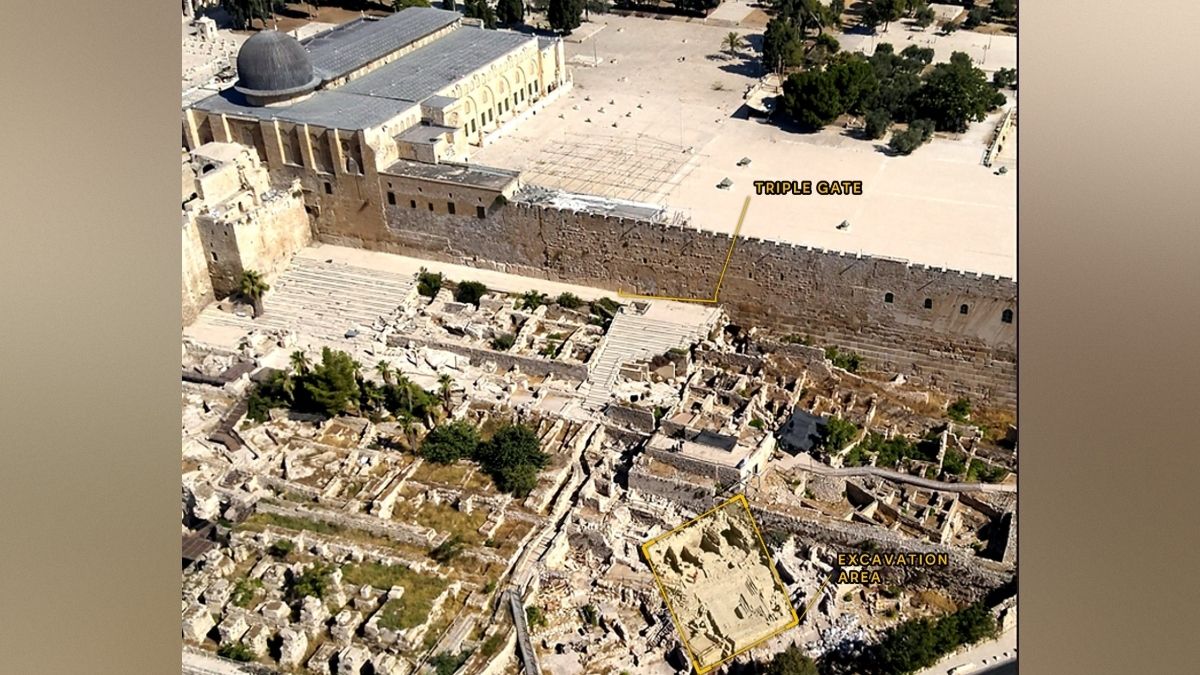
A large complex of ritual baths has been uncovered at the foot of Jerusalem’s Temple Mount, offering a glimpse of how Jewish pilgrims visiting the Second Temple may have prepared for worship nearly 2,000 years ago.
The site, discovered during excavations in the Ophel area, covers about 280 square metres (3,000 square feet). It contains three large public mikvaot, or ritual baths, along with a plastered pool and a network for supplying and draining water. One bath survives to a height of about 4.2 metres (14 feet) and retains a vaulted stone ceiling, a rare feature in Jerusalem.
The complex lies near the Triple Gate at the base of the Temple Mount’s southern wall. Excavation directors Professor Uzi Leibner and Professor Orit Peleg-Barkat of the Hebrew University of Jerusalem say its size, design and location suggest it served pilgrims who immersed before entering the Temple.
They described the discovery of a monumental stone building devoted entirely to purification so close to a Temple Mount entrance as unprecedented. Dozens of coins dating to the Great Revolt against Rome were also found at the site. The researchers say the coins help place the complex’s final period of use around the destruction of the Second Temple in 70 CE.
The discovery follows five excavation seasons led by the Hebrew University in cooperation with the Armstrong Institute of Biblical Archaeology.