
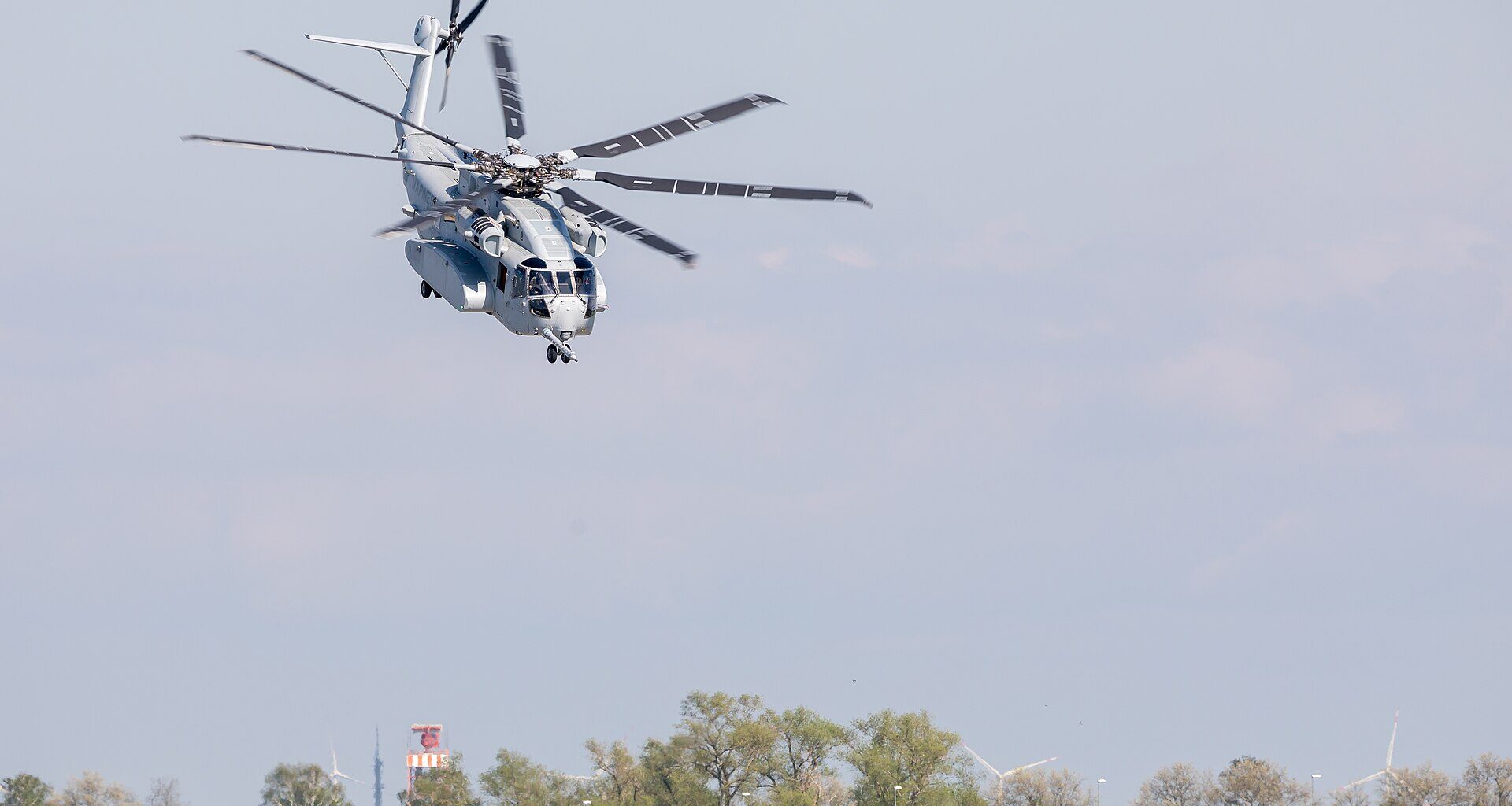
Sikorsky will equip the CH-53K King Stallion heavy-lift helicopter with new data transmission capabilities, an Identification Friend or Foe (IFF) system, jam-resistant radio equipment, and additional operational enhancements under a contract valued at $15.49 million.
These advanced upgrades are aimed at enhancing connectivity on the modern battlefield, bolstering cockpit situational awareness, and streamlining mission coordination in operational environments characterized by significant electromagnetic interference, enabling precise and synchronized operations.
The CH-53K helicopters are slated to arrive in the Israeli Air Force within a few years, gradually replacing the veteran Yas’ur fleet that has served the IDF for decades. In Israeli service, the helicopter will be named ‘Pere’ (Wild). The first aircraft built for Israel is already in an advanced stage of production at Sikorsky’s manufacturing facilities. Israel has ordered 12 helicopters to date, with an option to acquire six more in the future, significantly boosting the IDF’s airlift capabilities for years to come.
In the United States, the K model is designated as a next-generation transport helicopter, primarily designed to transport troops, vehicles, artillery systems, fuel, and general cargo between naval vessels at sea, bases, and military forces dispersed across expansive land and maritime areas.
According to a report by Army Recognition, one of the most significant upgrades included in these aircraft is the communications equipment specifically hardened against hostile electronic jamming. This capability is considered critical, as the helicopters are designed to operate in high-threat environments where adversaries continuously attempt to disrupt communications between aircraft, ground forces, and rear headquarters.
In terms of payload and range, the CH-53K can carry a 12.2-metric-ton payload over an operational radius of 110 nautical miles, performing reliably even in extreme weather conditions and high temperatures. In addition, the aircraft is capable of lifting nearly two metric tons of specialized payloads. The helicopter achieved official operational capability status in 2022, following an extensive series of trials demonstrating heavy-lift capacity, aerial refueling, and integrated operations with naval vessels—a vital capability for U.S. Marine Corps missions.