
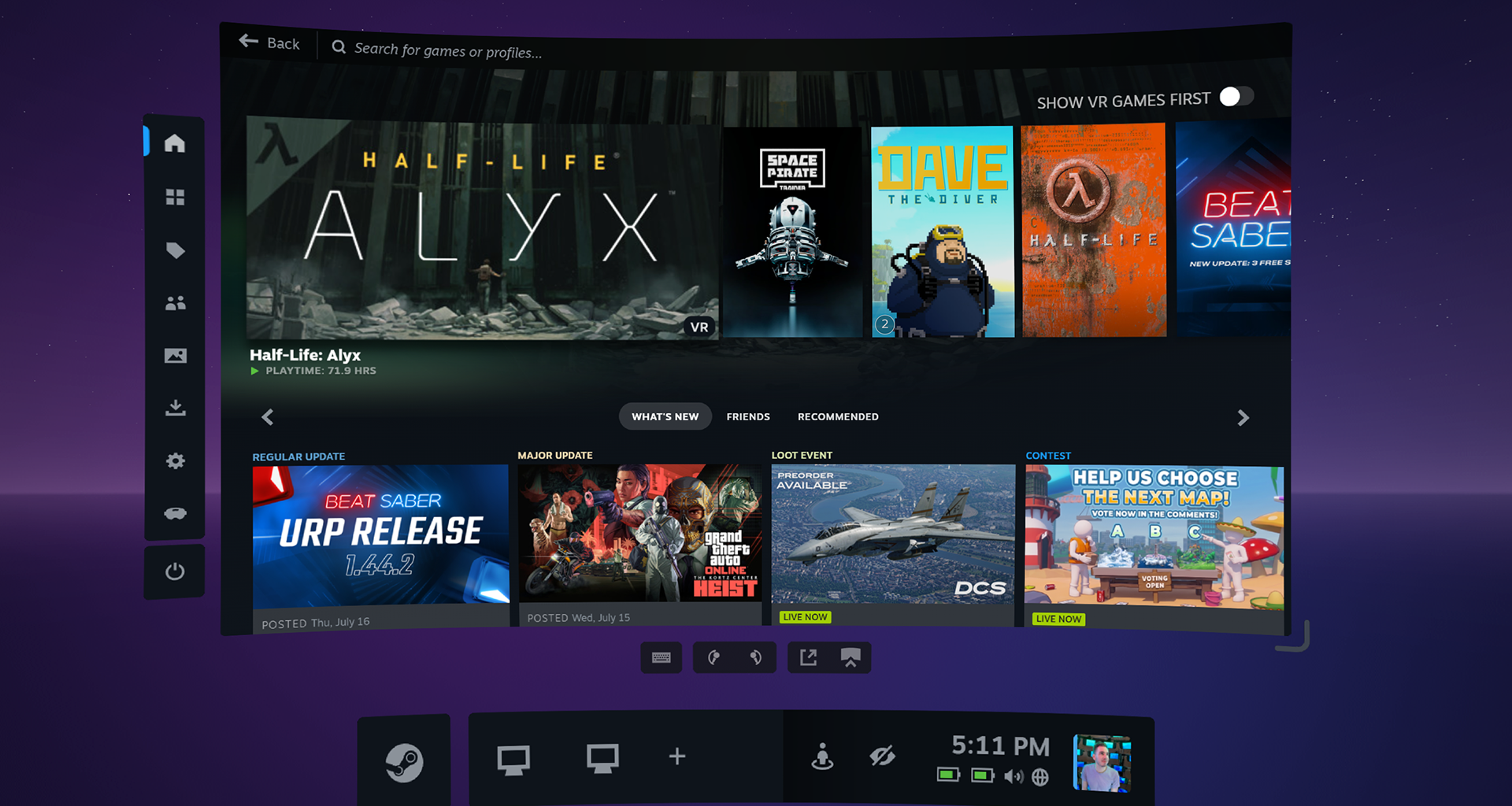
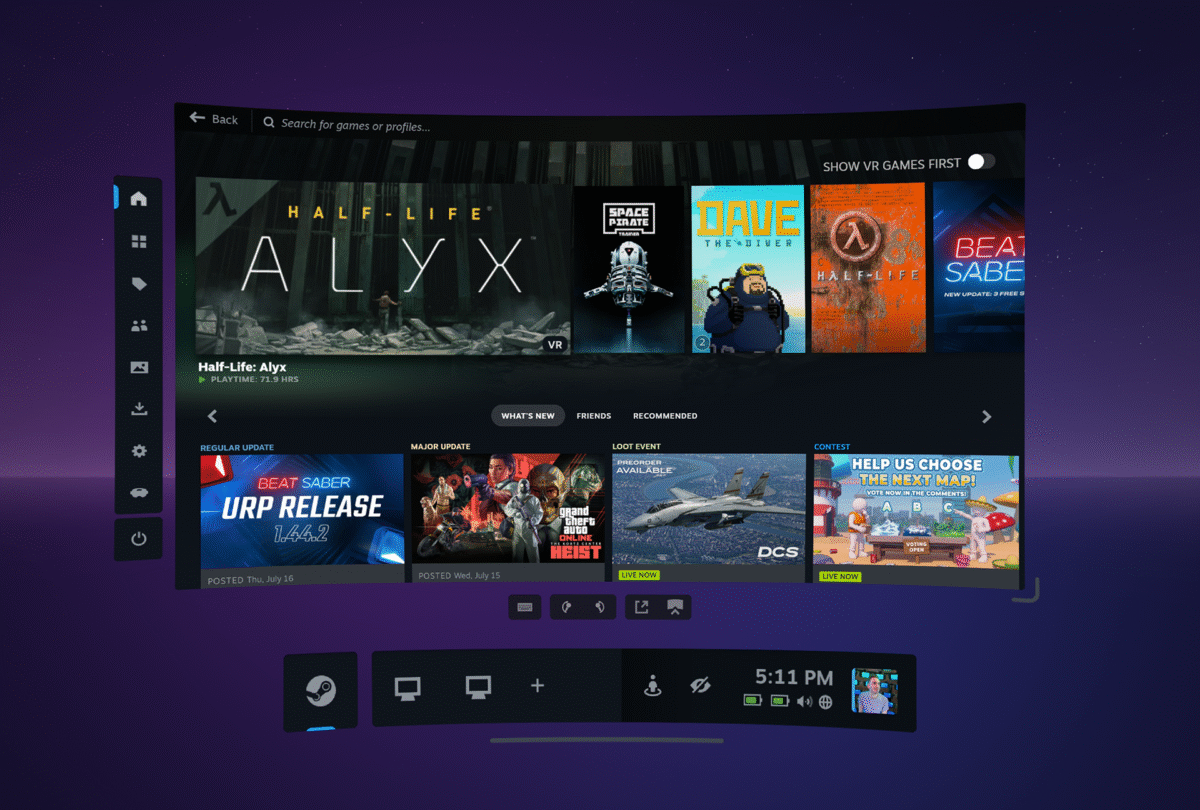
SteamVR’s newest beta hands Steam Frame eye-openness data to apps over OSC, which is what an avatar needs in order to blink when you blink. Valve shipped it in SteamVR Beta 2.18.2 on October 1 at 18:22 UTC, and it works only while streaming from a Steam Frame running SteamOS 0.4.3 or higher.
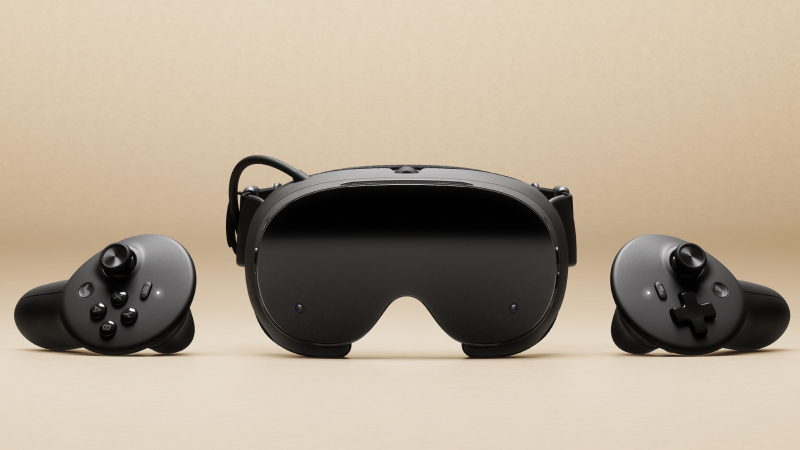
The Steam Frame and its controllers. The headset’s own eye tracking supplies the openness values while it streams from a PC. Image: Valve
Valve’s wording is “Expose eye openness information when streaming from Steam Frame, via OSC. (This requires Steam OS 0.4.3, or higher). In an upcoming release, eye openness will also be available via the OpenVR SDK.” Both sides of that requirement are betas, and SteamOS 0.4.3 is on the Frame’s Beta channel.
Eye openness is not gaze, and not foveated rendering
Openness is lid data: how open or shut each eye is from one moment to the next. It is not where you are looking, and nothing in Valve’s note connects it to foveated rendering, which is the use Steam Frame’s eye tracking usually comes up for.
For social VR, lid data on its own does a lot of work. Blinks, squints and a half-closed eye carry much of what makes an avatar’s face read as alive, and none of that needs gaze direction.
Valve is also specific about the path. The change covers streaming from a Steam Frame and says nothing about apps running standalone on the headset, so what Valve has opened up is the PC side.
OSC is the only route Valve names for now
OSC, or Open Sound Control, is a message format an application listens for over the network, and it is what social VR tools use to pass values such as tracker data and avatar parameters between programs. An app has to be built to read those messages, because there is no OpenVR call for eye openness yet.
Valve says that call is coming “in an upcoming release”, with no version number and no date attached. Valve names no app that reads the OSC output either, so the audience for eye openness today is developers rather than owners.
What the SDK does carry is gaze. Valve’s public OpenVR header defines an eye-tracking structure with a gaze origin and a gaze target and nothing for lid position, so an app reading that interface can work out where a wearer is looking but not whether the eye is open.
SteamVR’s OSC output comes from its Steam Link driver, and Valve changed what that driver sends out in the previous beta. Anything built against the old output has to keep up with those changes, which is the cost of OSC being the route rather than a versioned SDK call.
Both ends have to be on a beta
On the PC, 2.18.2 sits on the SteamVR beta branch, which anyone can opt into. On the headset, SteamOS 0.4.3 sits on the Steam Frame Beta channel, which Valve says you switch on under Settings > System > System Update Channel.
Steam Frame went on sale on September 14, and Valve has pushed three OS betas for it in six days, including the 0.4.1 build that fixed the streaming keyboard. The 2.18.2 beta also carries a hotfix Valve added at 23:00 UTC on October 1 for green and black screen issues with Steam Link on Linux.
Until the OpenVR release Valve mentions turns up, an app that wants your blinks has to listen for them over OSC.
Note: Links to online stores in articles can be so-called affiliate links. If you buy through this link, MIXED receives a commission from the provider. For you the price does not change.