
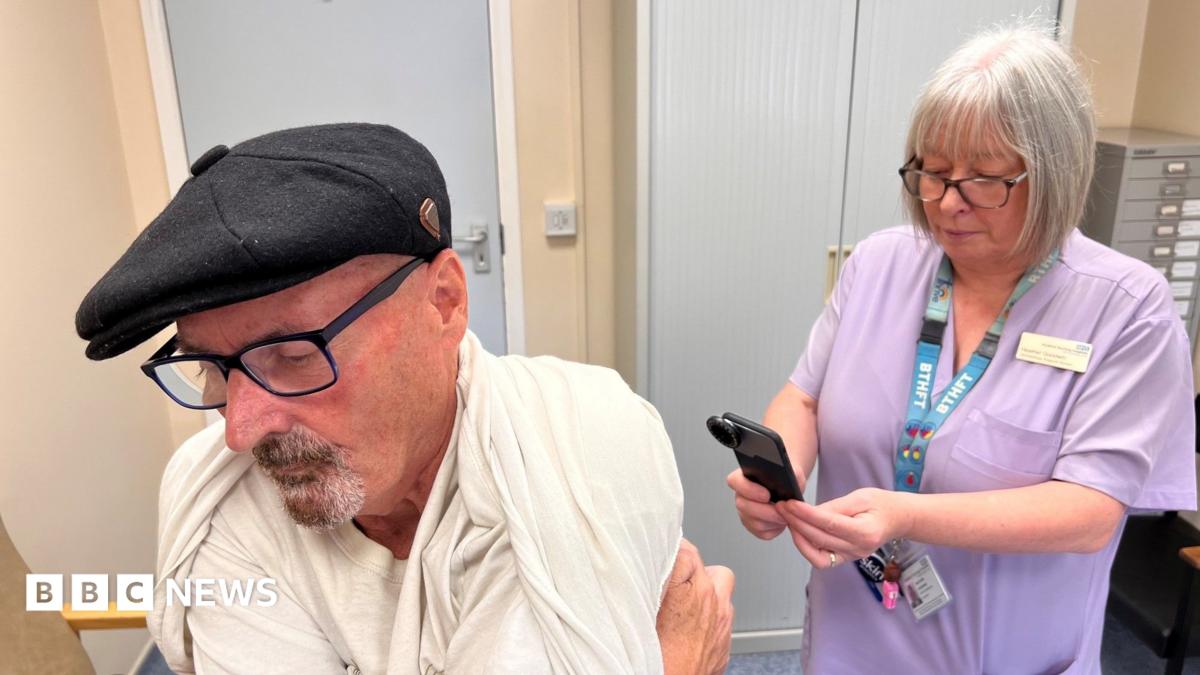
In Bradford, every image is double-checked by a clinician to make sure the diagnosis is correct.
“This has had a big impact on all the bottlenecks – right from waiting times for patients to unnecessary investigations being done and to being seen by a clinician,” Shariff said.
“It’s amazing, I mean it’s excellent, at giving non-cancerous diagnosis quite quickly, within minutes.
“It’s had an impact for patients and for the department.”
The number of unnecessary biopsies has dropped by about 10% since the AI was introduced, according to the trust.
Lawrence Patten was urgently referred to the clinic by his GP because of a suspicious mole on his back.
The 73-year-old has multiple myeloma and a previous history of skin cancer on his right forearm, known as squamous cell carcinoma.
Images of his mole were flagged as suspicious by the AI but a subsequent examination by a specialist doctor suggested it was likely benign.
The mole will be removed and tested to confirm the diagnosis.
Patten, a former builder, said he was pleased to have been seen so promptly.
“It’s very good news,” he said. “It’s not ticking away in my mind, which is one of the biggest things with cancer.
“The sooner they find things, the quicker they can sort it.”