

Listen to this article
Estimated 5 minutes
The audio version of this article is generated by AI-based technology. Mispronunciations can occur. We are working with our partners to continually review and improve the results.
Edmontonians have been throwing out fewer disposable bags since a single-use item bylaw came into effect three years ago, but many residents are also filling garbage bins with compostable and recyclable items, according to a recent report from the city.
City staff presented the results of a waste characterization study at city council’s utility committee meeting on Monday morning.
The study examined 100-kilogram samples taken from waste trucks around the city and throughout the year. The city then scrutinized the types of materials that residents in houses, apartments and condos had put out for collection.
Edmonton implemented its single-use item reduction bylaw in July 2023, banning plastic bags, foam plates, cups and containers, and regulating the use of other items.
The study presented to the city committee on Monday found that since 2022-23, which was before the bylaw came into effect, the number of disposable bags the average Edmontonian throws out in their garbage at home has dropped by 77 per cent.
“That’s a huge result,” Ward O-day’min Coun. Anne Stevenson told reporters.
“We’ve seen an answer to whether this bylaw is working and that answer is yes.”
City staff also said they consider the bylaw a success, telling councillors they had a goal of reducing single-use item consumption by 20 per cent per person by 2027, and that they had already seen a 30 per cent reduction by the time 2026 began.
Dropping bag fees for drive-thrus?
During Monday’s meeting, Coun. Jon Morgan, who represents Ward Ipiihkoohkanipiaohtsi, proposed pursuing the idea of exempting restaurants from the bag and fee requirements for takeout and delivery services.
He said he believes Edmontonians have gotten used to bringing their own bags to grocery stores but paying for bags from fast-food restaurants remains a sticking point.
Currently under the bylaw, businesses must charge at least 25 cents for a paper bag and $2 for a new reusable bag. The businesses get to keep the bag fees they charge.
Ward Karhiio Coun. Keren Tang told reporters she is open to bylaw changes.
She said Edmontonians expressed their frustration with the bylaw to her while she was campaigning before the municipal election last year.
Tang said some Edmontonians told her that — on principle — they circumvent the bag fee by going out of the city to buy fast food, even though the cost of gasoline makes the excursion cost more.
Tang also raised a concern about compliance.
“I personally have encountered going to drive-thrus where I’m not even asked for a fee or charged on my bill and businesses are handing [bags] out,” she said.
Councillors heard Monday that 311 inquiries about the bylaw have decreased significantly, from hundreds in July 2023 alone to just 53 so far in all of 2026.
The city report also summarized results from a June 2026 survey of 196 restaurant owners and operators.
Many respondents reported they were either generating a profit or recovering some costs through the city’s bag fees, the report said, though some respondents said the fees weren’t high enough to cover their purchasing costs.
Respondents also reported to the city that customers have expressed frustration about the bag fees.
The committee did not make any recommendations to city council about the bylaw, referring it to city council for future discussion.
Sorting problems
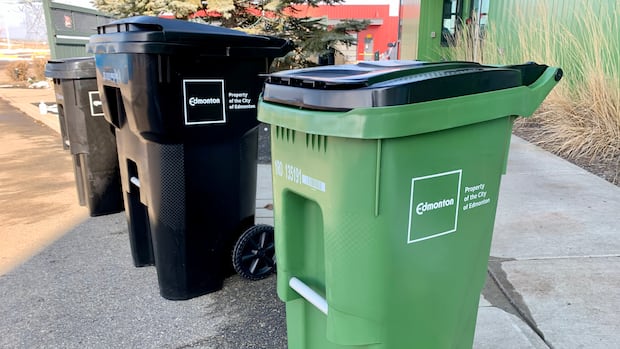
The city report said while Edmontonians are generally putting the right items in their green bins and recycling bins, they are still not properly sorting their garbage. This was true for residents with curbside bins and those using bins at apartments or condos.
The report said food scraps and yard waste took up about 34 per cent of the space in curbside garbage bins. Recycling took up 24 per cent of garbage bin space, while garbage meant for garbage bins only took up 34 per cent of space in the bins. The remaining eight per cent of what was put in garbage bins were materials that should have been disposed of at eco stations, the report said.
When it comes to waste collection at apartment or condo buildings, the results were similar but showed compostable materials and eco-station items ended up taking up a higher percentage of space in garbage dumpsters than they did in curbside garbage bins.
In their report, city administrators said they plan to incorporate the study’s findings into public education and communication campaigns and to continue promoting tours of the Edmonton Waste Management Centre.
“Ultimately, I think Edmontonians want to be doing right by this, and so really understanding what the barriers are and providing education materials to help will make the difference,” Stevenson said.