
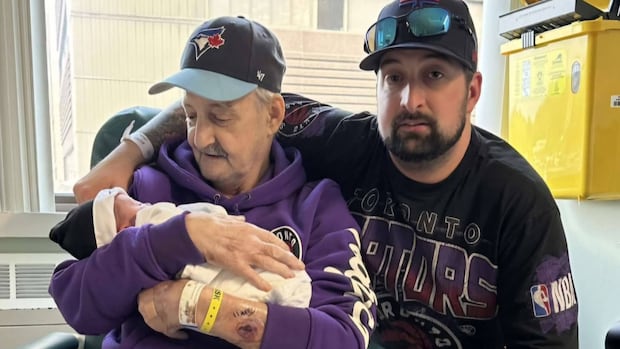
A man from Grand Bay-Westfield says his father stared at the wall and became shaggy and scrawny while waiting eight months in hospital for a long-term care placement that he’s no longer convinced was necessary.
Now, nine months after getting into a special care home, Terry Power, 67, has regained weight and resumed normal activities, including bathing and shaving himself, talking on the phone and going out with friends, says his son.
“He’s back almost to his pure normal self. … He probably could have kept his house and had someone in there to check on him a few days a week,” Joe Power said.
Joe’s comments underline what health-care officials have been saying for years — that hospitals are not the right place for people waiting for long-term care.
About 560 New Brunswickers are currently in that situation.
“If you have relatives in there, keep an eye on them,” Joe advised. “It’s worse than what you hear.”
Joe’s father was taken to Saint John Regional Hospital in May 2025 for what was initially thought to be a stroke but was then determined to be seizures from alcohol withdrawal.
He used to have about eight beers a day, said Joe, but stopped drinking the day he went to the hospital.
Terry was also diagnosed with dementia.
Joe said it was clear during an assessment done shortly after Terry was hospitalized that he wasn’t thinking right, believing, for example, that the year was 2016.
When social workers asked what home he’d like his father to go to, Joe didn’t know much about his options but chose Seely Lodge in Saint John, because he knew operator Jan Seely.
During the wait for a spot to open up there, Terry initially spent a lot of time sitting in front of the hospital, smoking, Joe said.
But he soon lost that privilege because he kept getting lost on the way back to his room.
Joe believes this was at least partly because of how often Terry was relocated from one hospital room or unit to another.
“Someone with dementia, it’s pretty much like spinning them around and saying, ‘Here, you go try to find your way back now,’” Joe said.
It was common during these moves for items to be left behind or misplaced, Joe added.
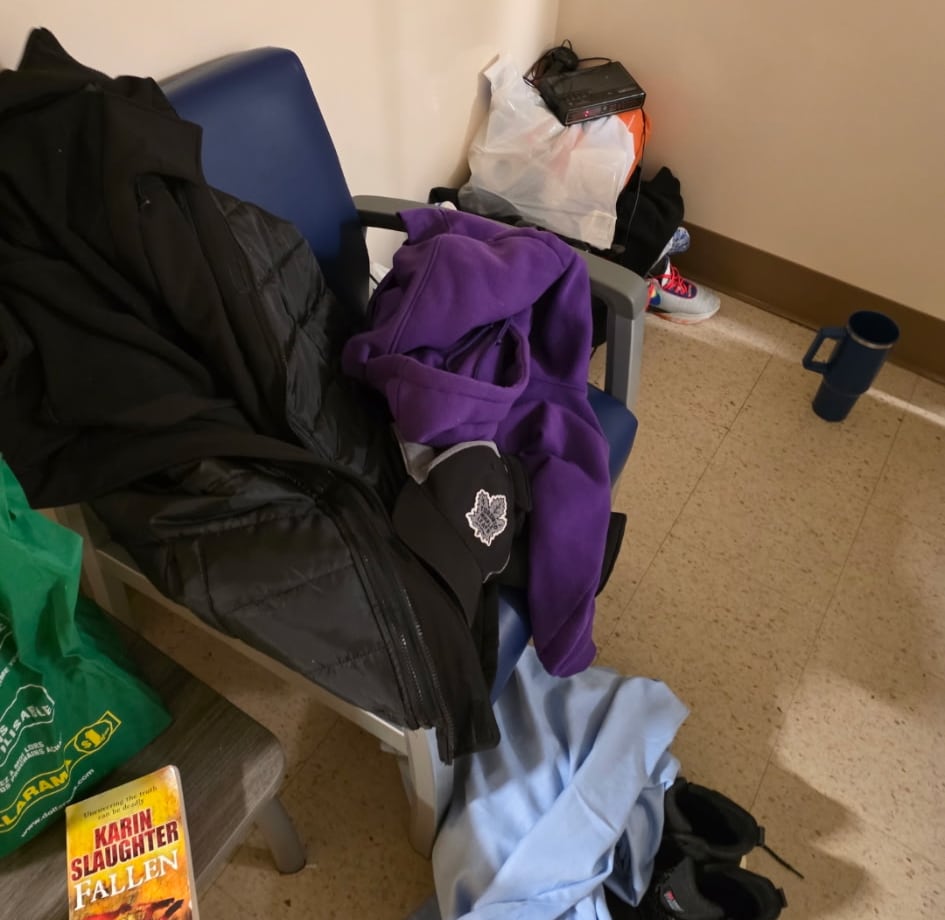
The contents of Terry’s night stand, his reading glasses and his photographs of family members would be left sitting in bags in the corner of the new room, Joe said. (Submitted by Joe Power)
“I walk in three days later, and there he would just be sitting there looking at the wall.” I’d be like, ‘Where’s your TV, man?’”
Joe works day and night shifts in an industrial plant and said he would stop in to see his father when he had a gap in his schedule.
Sometimes he’d find him with nothing to drink or with dirty bed sheets, he said.
“It was inhumane, like he was just a number,” said Joe, who admits to losing his temper with hospital staff a couple of times.
Joe started taking a tranquillizer before going to the hospital and thought he might have to go on stress leave.
Horizon Health Network couldn’t comment specifically on the issues raised by Joe about his father’s experience in hospital, but in an emailed statement said its staff “always strive to ensure patients are treated with compassion and dignity.”
Horizon is dealing with “significant capacity pressures” with about 40 per cent of acute-care beds occupied by medically discharged patients, many of whom are seniors awaiting placement in a long-term care home, said Tricia Murray, clinical executive director of medical and neurosciences.
Dealing with this issue is a top priority, Murray said.
“Our physicians, nurses and allied health teams are managing these challenges to the best of their abilities.”
Murray encouraged anyone with concerns about their care to reach out to Horizon’s patient relations department.
Joe said he contacted the patient advocate, but that didn’t help matters.
What finally did help, he said, was Terry getting into a special care home.
That happened in January, after a referral by Seely to Serenity Cove in Grand Bay, which had a vacancy.
Joe said their experience there has been “great.”
And after about a month, Terry started to get a little better, he said.
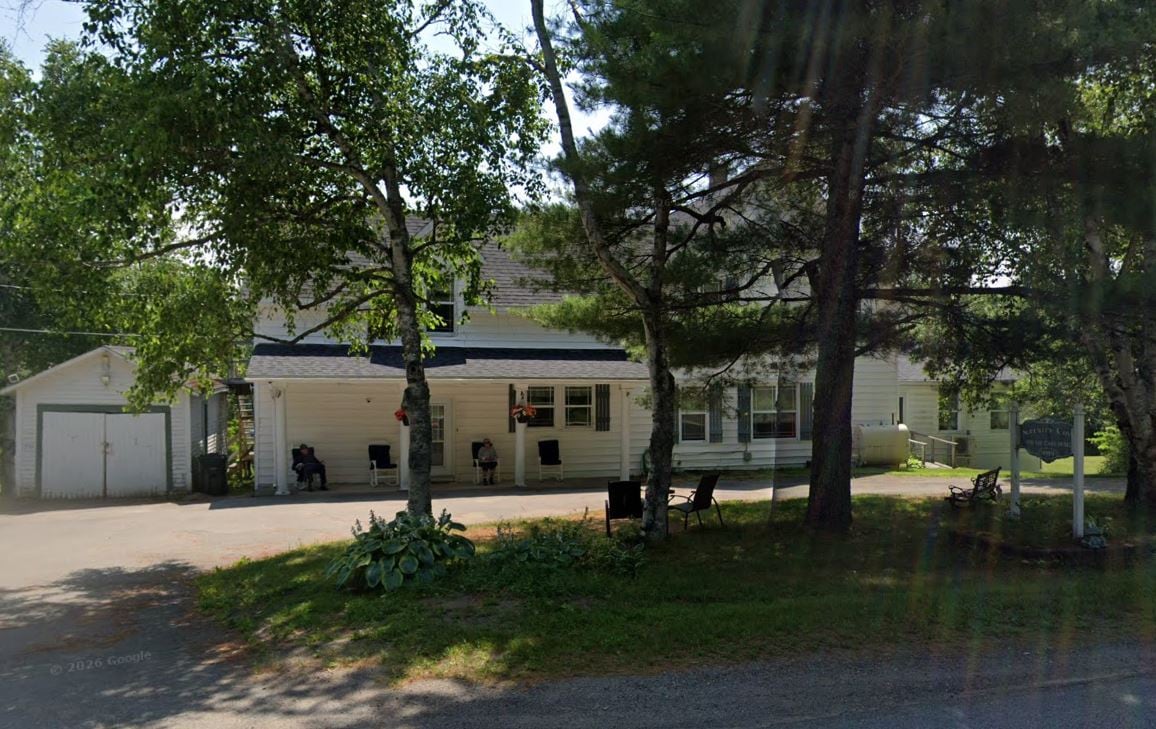
Joe says Terry is thriving at the Serenity Cove special care home, a nine-bed Level 2 home in Woodmans Point, serving seniors and people with intellectual disabilities or developmental delays and minimal to moderate personal care needs. (Google Street View)
Improvement continued to the point that Terry is now in better shape than he was before entering the hospital, said Joe, who questions whether his father even has dementia.
“It’s good that he has a little bit of care, someone to do his laundry, someone to cook for him, someone to make sure he takes his meds. But other than that, he’s independent as hell.”
Jan Seely, who is also CEO of the New Brunswick Special Care Home Association, said it’s common for a person to get “sucked into” a long wait for a nursing home spot after going to the hospital “in crisis.”
She and a few others from the association are contacting families on a partial, prioritized long-term-care waitlist that has been shared with them by the Department of Social Development.
Many people aren’t aware of all of their options, she said, such as 10 weeks of home care or a special care home with a lower level of care, like the one Terry is now living in.
As of Monday, Seely and her colleagues had contacted 20 families and connected several to special care homes with vacancies, of which there are only about 30 provincewide.
At best, they might make a small dent in the waitlist, which has a total of 1,245 names.
Assessments indicate 790 of those waiting need specialized memory care, known as Level 3B, or generalist care for frailty, known as 3G, which can also be provided in certain special care homes, Seely said.
The provincial government invited expressions of interest in August from people interested in creating up to 360 new long-term care spaces.
Meanwhile, Seely’s advice to people about navigating the long-term-care system is to make a plan before things get to a crisis point.
“Get out in your community,” she said. “Go and visit. Talk to operators. There’s people that know the system. They know it well and they can help you.”