
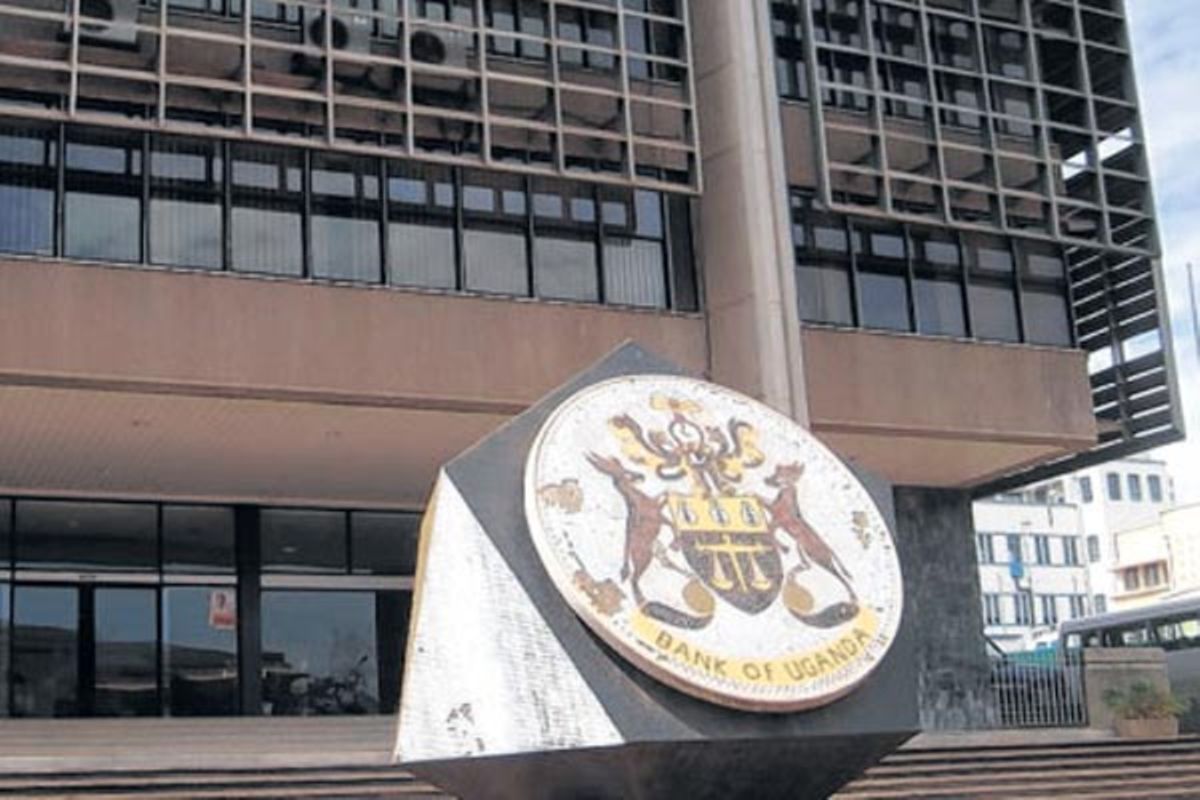
Economists have warned that Bank of Uganda (BoU)’s emergency decision to make money more expensive will hit businesses, jobs and household incomes hard — and may not fix the inflation it is meant to cure.
When Governor Michael Atingi-Ego called his Monetary Policy Committee to an emergency sitting on October 14, two weeks ahead of its scheduled November meeting, it was an admission that the shilling’s slide to Shs4,100 and rising fuel prices had forced the Central Bank’s hand.
While the Central Bank argues that tighter monetary policy is necessary to prevent inflation from becoming entrenched, economists question whether higher borrowing costs can effectively address pressures largely driven by external supply disruptions and government borrowing.
The decision follows another tightening measure on September 24, when BoU increased the Cash Reserve Requirement from 11 percent to 13.5 percent, requiring commercial banks to hold more deposits at the central bank.
Together, the measures are expected to constrain liquidity, increase borrowing costs and moderate domestic demand.
The tightening comes as BoU has downgraded its economic growth forecast for the 2026/2027 financial year to 6.0–6.5 percent, from its earlier projection of 7.0–7.5 percent.
Mounting pressure
According to the October Monetary Policy Statement, Uganda faces growing pressure from geopolitical tensions, rising international oil prices, disrupted shipping routes and higher freight costs.
The country’s current account deficit widened by $1.4 billion to $4.6 billion in the 12 months to August, reflecting increased external financing pressures.
The goods trade deficit increased to $2.8b from $2.4b, while the services deficit widened to $3.3b from $2.2b, largely because of rising freight costs.
Meanwhile, declining coffee and cocoa prices, alongside weaker tourism receipts, have constrained foreign exchange earnings at a time when importers require more dollars.
These developments have intensified pressure on the shilling, which traded around Shs3,650 in June before weakening beyond Shs4,100 in October.
Inflation has also accelerated, with headline inflation reaching 4.6 percent in September, compared with 4.1 percent in August, while core inflation increased to 3.7 percent.
BoU now projects headline inflation of 7.0–7.5 percent over the next 12 months, with core inflation expected to reach 5.5–6 percent, exceeding its medium-term target of five percent.
Governor Michael Atingi-Ego warned that persistent fuel price increases, exchange rate depreciation and adverse weather could further intensify inflationary pressures without decisive intervention.

DR SUSAN KAVUMA
Credit concerns
Dr Susan Kavuma (PhD), an economist at Makerere University School of Economics, said yesterday the Central Bank has adopted contractionary measures intended to reduce inflation by restricting credit and spending.
However, she warned that businesses and households will bear high costs.
“The immediate impact on the economy will be an increase in the cost of capital, that is, interest on loans, and a reduction in private sector credit since the cost of loans will have increased. This will reduce investments, leading to a reduction in incomes and consumption,” she said.
“In the medium term, it is likely to slow down economic growth,” she added.
Higher borrowing costs could particularly affect manufacturers, traders and small businesses that depend on commercial bank financing for working capital and expansion.
Makerere University Business School lecturer Fred Muhumuza was more critical, arguing that higher interest rates cannot adequately address inflation arising primarily from supply disruptions.

Dr Fred Muhumuza, an economist, says Uganda has set a national objective of living above the dollar-a-day threshold per person. If a civil servant is the breadwinner for five dependents, their household needs at least six dollars (Shs22,495) a day. PHOTO/ IBRAHIM KAVUMA
“That is not the right thing to do,” he said, arguing that Uganda’s inflationary pressures reflect constrained supply rather than excessive consumer demand.
Mr Muhumuza maintained that tightening monetary policy risks worsening an already difficult operating environment for businesses.
He also attributed persistently expensive credit to government’s substantial domestic borrowing requirements, which compete with private businesses for available financing.
According to Muhumuza, reducing government borrowing would create more room for private sector investment, strengthen productive capacity and support exports.
“We need not use this short-term measure to kill the private sector,” he warned.
Limited options
However, Mr Stephen Kaboyo, a foreign exchange expert and managing partner at Alpha Capital, argued that raising interest rates was among the few practical options available to the Central Bank.
He said direct intervention through selling foreign exchange reserves would be costly and potentially ineffective against sustained depreciation pressures.
“In assessing the policy choices, the probability of direct forex intervention is near zero. Bank of Uganda is, therefore, left with one main option: raising the policy rate aggressively,” Mr Kaboyo said.
He explained that higher interest rates could improve returns on government securities and other shilling-denominated investments, encouraging foreign investors to retain or increase their Ugandan holdings. This could strengthen demand for the local currency and help stabilise the exchange rate.
Higher rates would also constrain credit growth and domestic spending, potentially limiting inflationary pressures. However, Mr Kaboyo acknowledged that monetary tightening carries considerable economic costs.
“While this seems to be Bank of Uganda’s game plan, they must weigh the trade-offs of high-cost borrowing and the economic slowdown that comes along with a hawkish monetary policy,” he said.
Economic consequences
The implications extend beyond commercial lending. Higher interest rates could increase government’s domestic borrowing costs as investors demand better returns on Treasury securities.
Businesses with variable-rate loans could face increased repayments, while prospective borrowers may postpone investment decisions, while savers holding fixed deposits and money market investments could benefit from improved returns.
For households, expensive credit could constrain consumption and reduce disposable incomes, particularly where loan repayments increase.
Should depreciation persist alongside rising global energy costs, Uganda risks confronting both elevated inflation and slower economic growth.
Household income to expand
Ms Jane Nalunnga, the SEATIN Country Manager-Uganda Chapter, said the immediate impact will be on commercial banks raising lending rates, making it more expensive for businesses to finance working capital, machinery and expansion.
“Households with variable-rate loans could also face higher repayments, leaving less money for other expenditure,” Ms Nalunga explained.
Agriculture and manufacturing deserve particular attention. Farmers, agro-processors and small businesses often need credit before they can generate revenue. More expensive borrowing can discourage investment in irrigation, storage, processing, technology and value addition.
A more stable shilling could reduce the cost of imported inputs, but that benefit may be offset if the businesses using those inputs cannot afford credit to invest and expand.
The policy trade-off is clear: tighter monetary conditions may help contain inflation, but they can also constrain productive investment, employment and domestic value addition.
UTILITY
What to watch.
The BoU’s decision is about controlling inflation. As the shilling weakens, imports such as fuel and machinery become more expensive. Eventually, this drives prices for consumer goods higher. The typical response is to raise interest rates, to make saving more attractive and borrowing more expensive thereby easing pressure on prices. In turn, higher interest rates strengthen local and international demand for Ugandan treasury bills and bonds…’’ – Uthman Mayanja, Country Senior Partner, PwC Uganda