
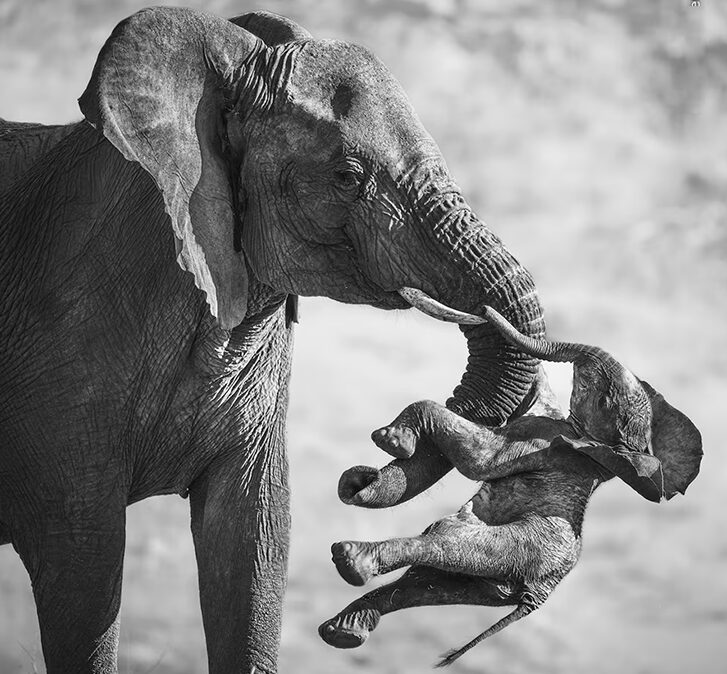
Federico Veronesi was following a family of elephants in the Huab River Valley of Namibia when he came upon a strange and tragic sight. A female elephant was carrying the stiff body of a deceased calf. The Italian wildlife photographer’s shocking image has become the Grand Title Winner of the 2026 Wildlife Photographer of the Year award.
Earlier, we reviewed the runner-up entries for this year, released back in September. One of those entries included Vegard Byrkjeland Aasen’s photo of an orca carrying a deceased calf, which it repeatedly lifted up out of the water. These striking images of animals mourning speak to the contest’s mission. Dr. Doug Gurr, Director of the Natural History Museum, says it strives to “demonstrate the extraordinary power of wildlife photography to help us see nature differently.”
Other category winners explore the relationship between the wild and urban worlds, document natural beauty, and capture more playful wildlife moments.
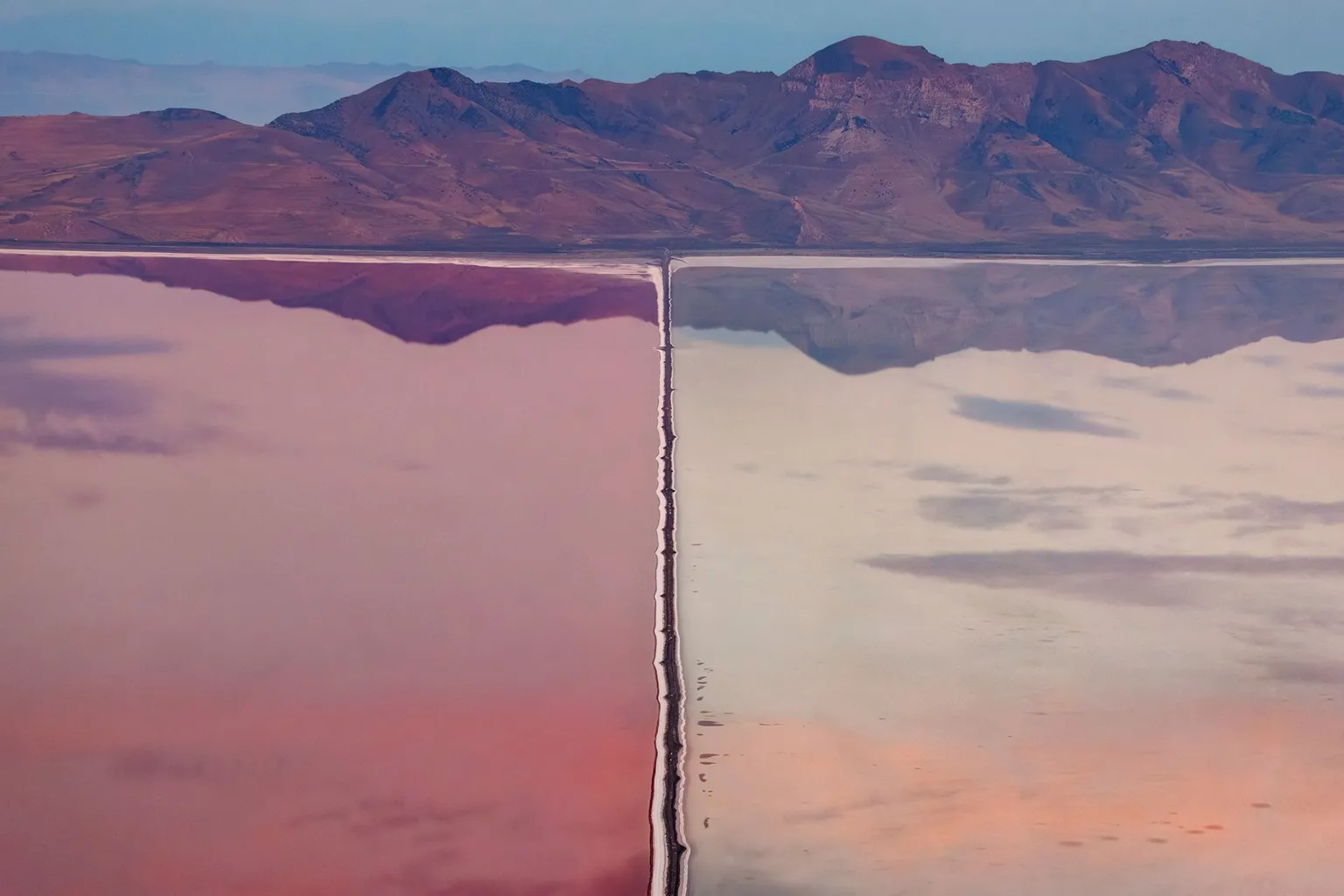
Winner of the Wetlands: The Bigger Picture category, Alex Visbal’s image shows how artificially dividing a Utah wetland has cut part of it off from freshwater, resulting in pink-producing, high-salinity microbes. Photo: Alex Visbal/Wildlife Photographer of the Year
From elephantine to microscopic
While images like Visbal and Veronesi’s capture large scenes and massive animals, other winners focus on tiny, hidden natural worlds. Alexis Tinker-Tsavalas of Germany won the Rising Star Portfolio Award for his series exploring the smallest and least noticed animals.
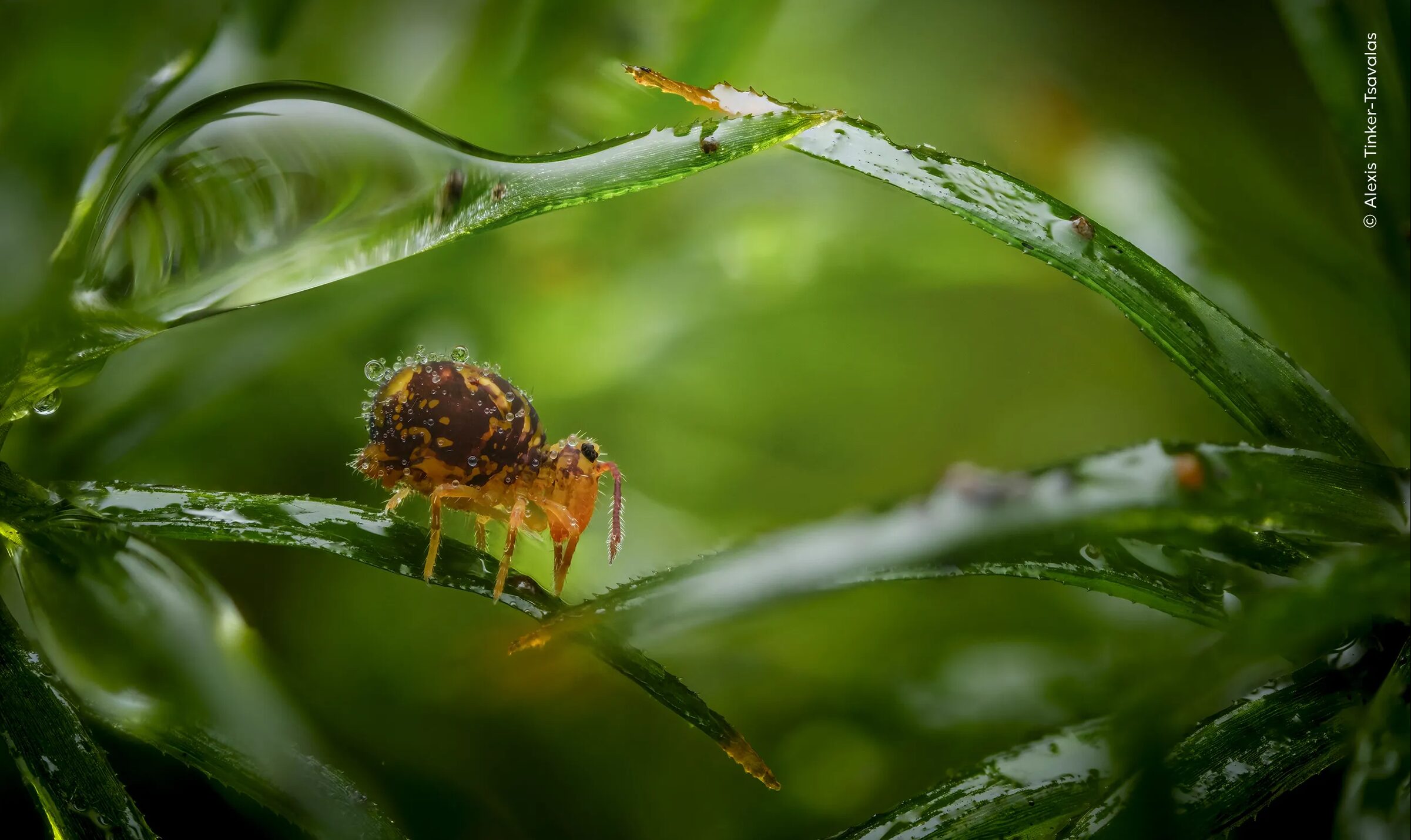
As not all of our readers are as fond of arachnids as I am, we feature Tinker-Tsavalas’ whimsical image of a teensy springtail exploring moss, rather than his portraits of ground crab spiders or harvestmen. Photo: Alexis Tinker-Tsavalas/Wildlife Photographer of the Year
Below even the insect level are the works of macro photographer Kutub Uddin. He won the Portfolio Award for his series of surreal slime mold landscapes. Like Tinker-Tsavalas, Uddin uses focus stacking to achieve incredible fine detail.
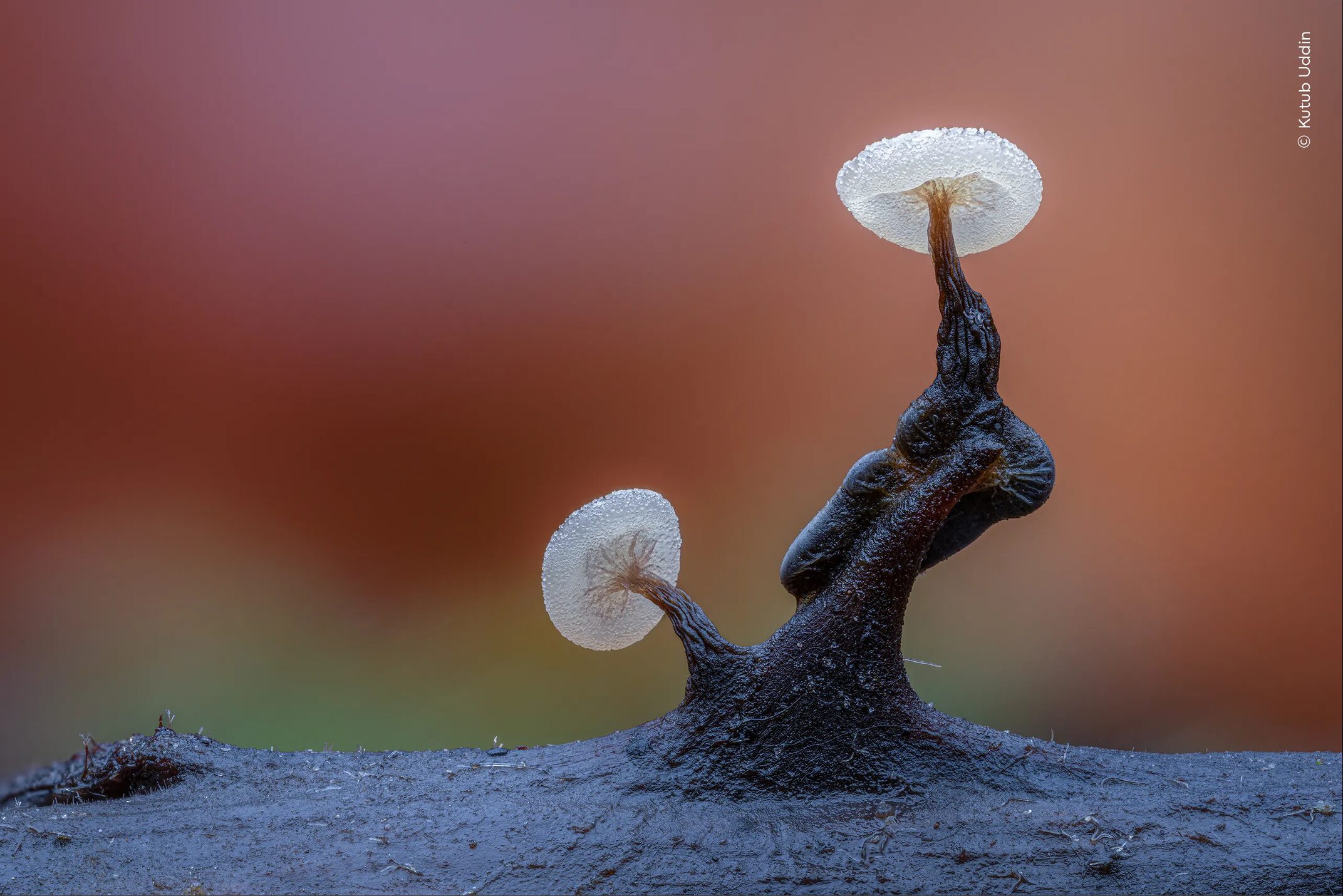
This fruiting slime mold looks like some sort of whimsical, slightly grotesque bonsai. Photo: Kutub Uddin/Wildlife Photographer of the Year
City dwellers
Several winners focused on wildlife in non-wild settings. Loren Elliott won the Photojournalist Story Award for his series following the coyotes of San Francisco. There are around 100 coyotes living in and around San Francisco, and their relationship with human residents is close, but fraught.
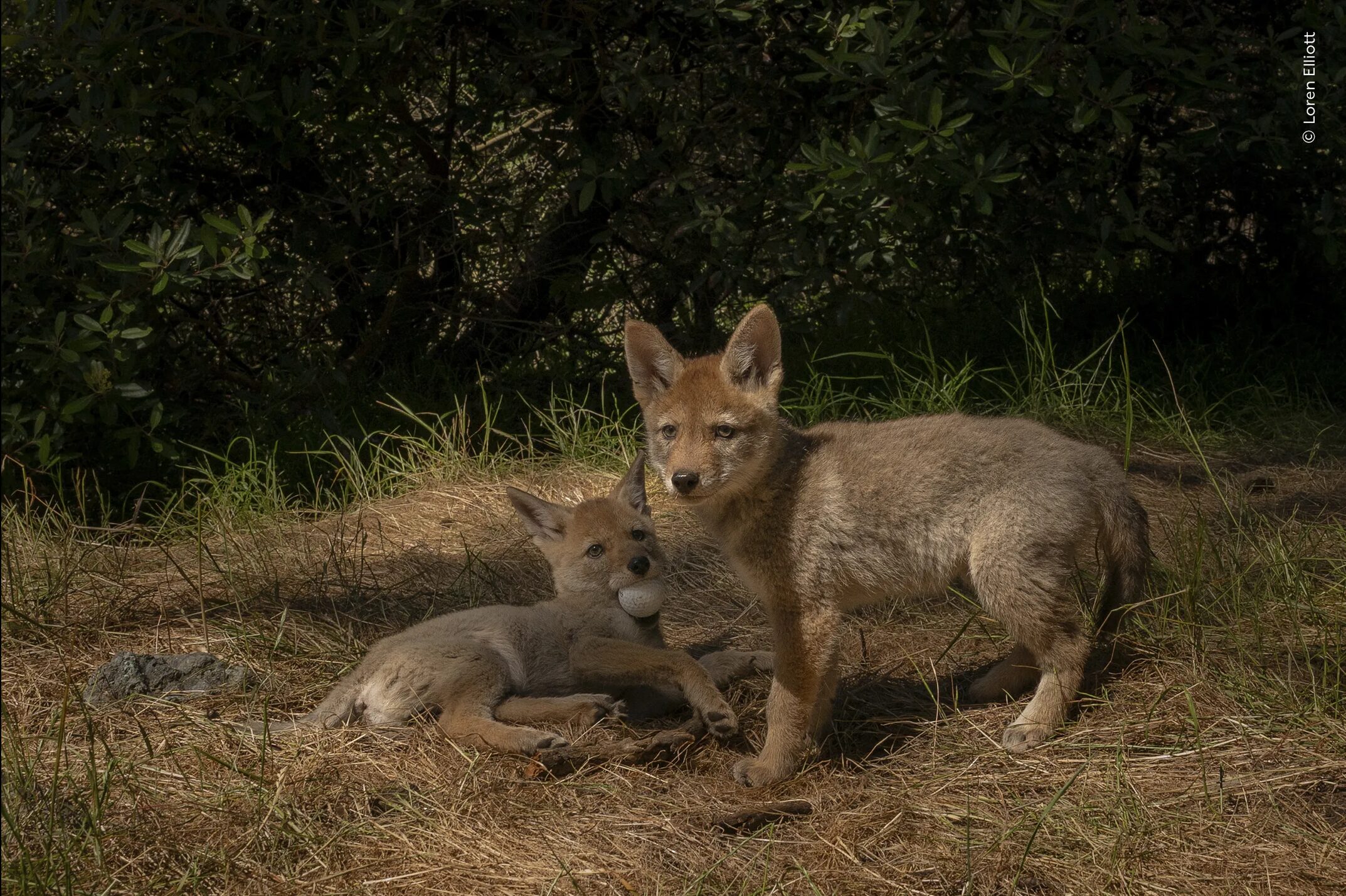
There were several excellent shots in this series, but I would be failing you if I didn’t highlight this one. These two coyote pups live in a den on a golf course, leaving them plenty of golf balls to play with. Photo: Loren Elliott/Wildlife Photographer of the Year
Across the world in Bangkok, common water monitors have also become city dwellers. Seth Forestson won in the Urban Wildlife category for his image of a lizard triumphantly bearing a fish through a public park. In the background, the city skyline rises in dramatic contrast.
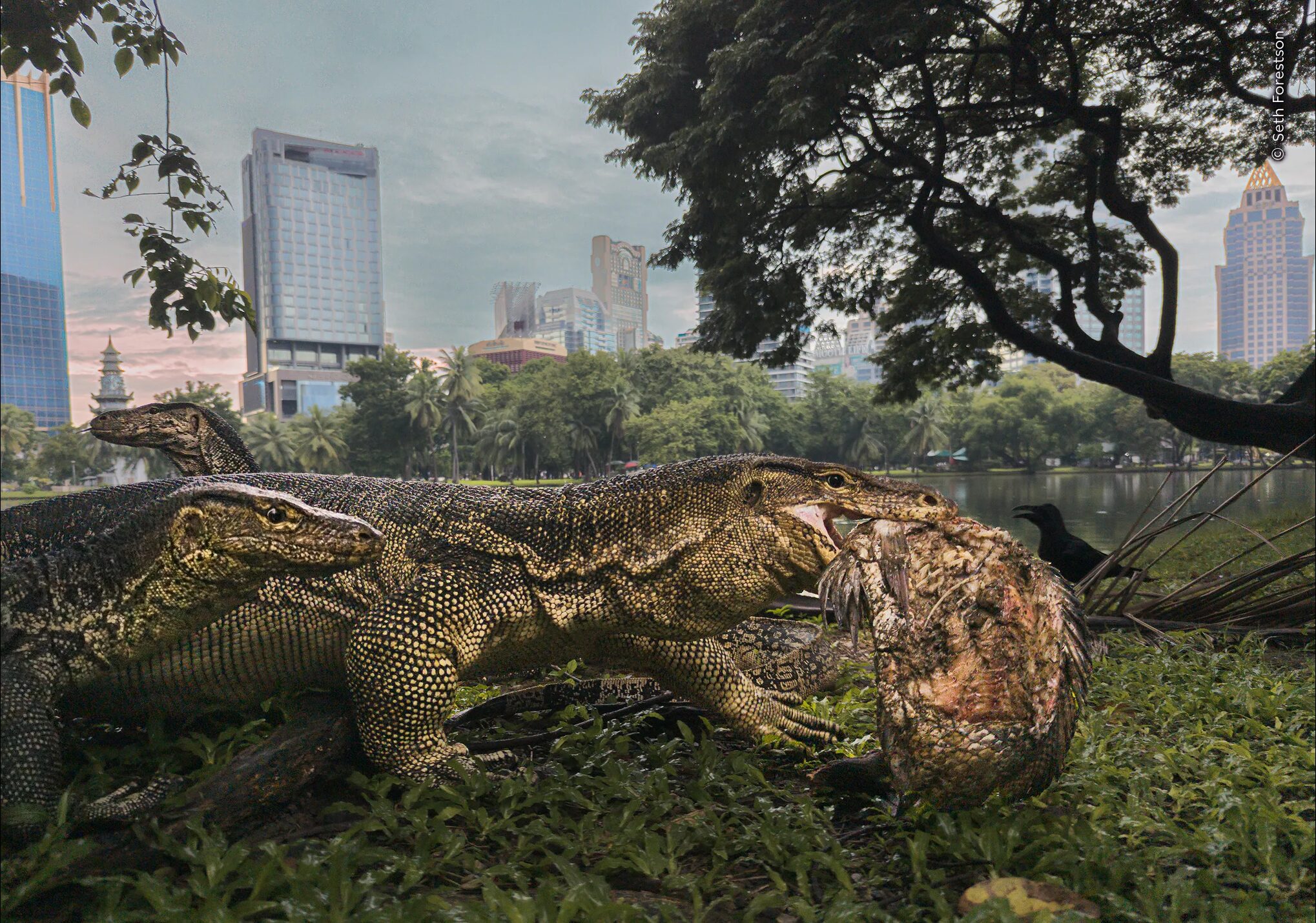
Photo: Seth Forestson/Wildlife Photographer of the Year
Meanwhile, the Plants and Fungi category winner comes from the weird world of mushrooms. On Mount Olympus, Agorastos Papatsanis used ultraviolet light to reveal the luminescence of Mycena renati. Commonly known as beautiful bonnet, the stems of these mushrooms glow a neon yellow.
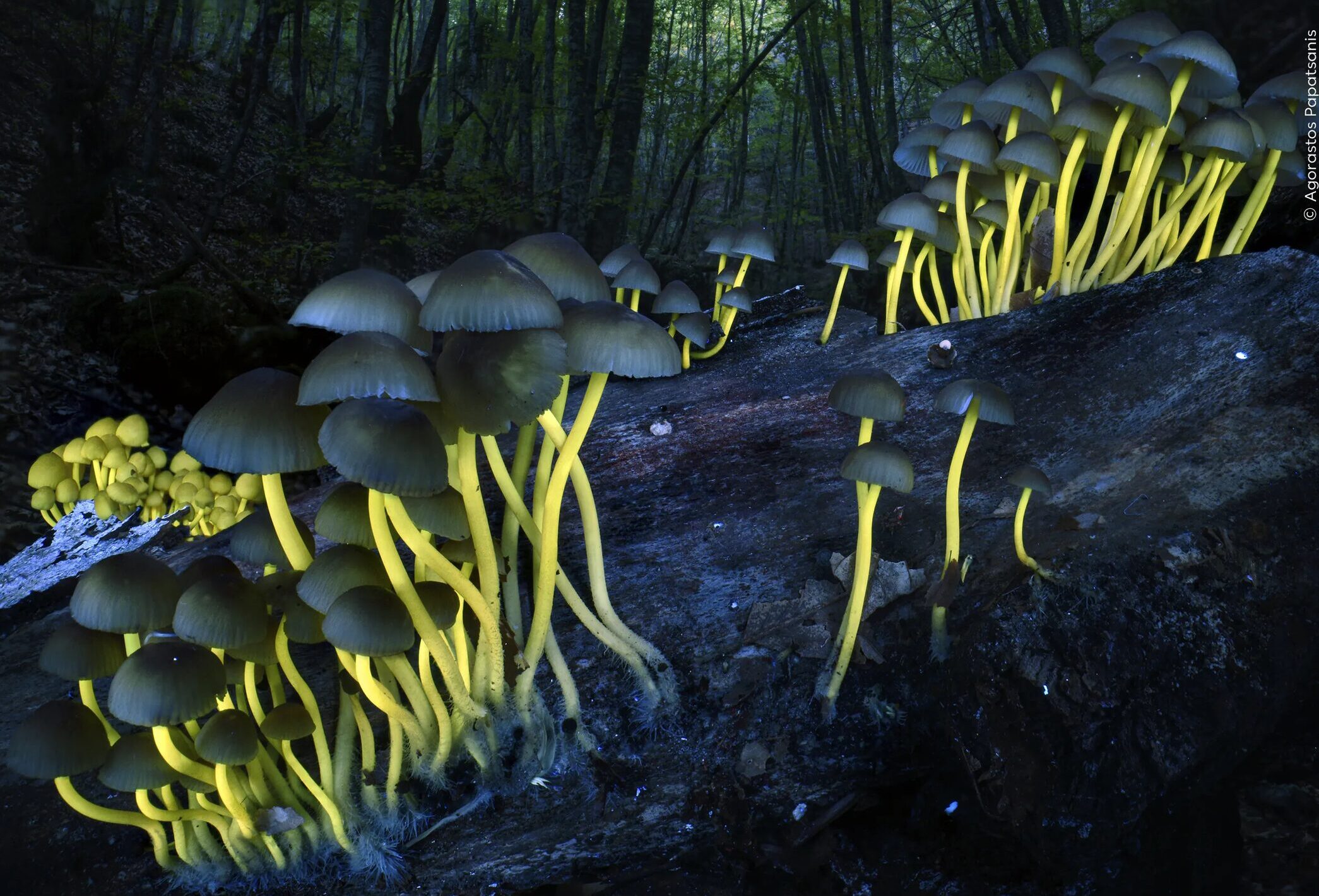
Photo: Agorastos Papatsanis/Wildlife Photographer of the Year
The Young Grand Title Winner, who entered in the 11-14 year-old category, is Oscar Whitfield. In Zimbabwe’s Zambezi National Park, Whitfield captured the efforts of a dung beetle.
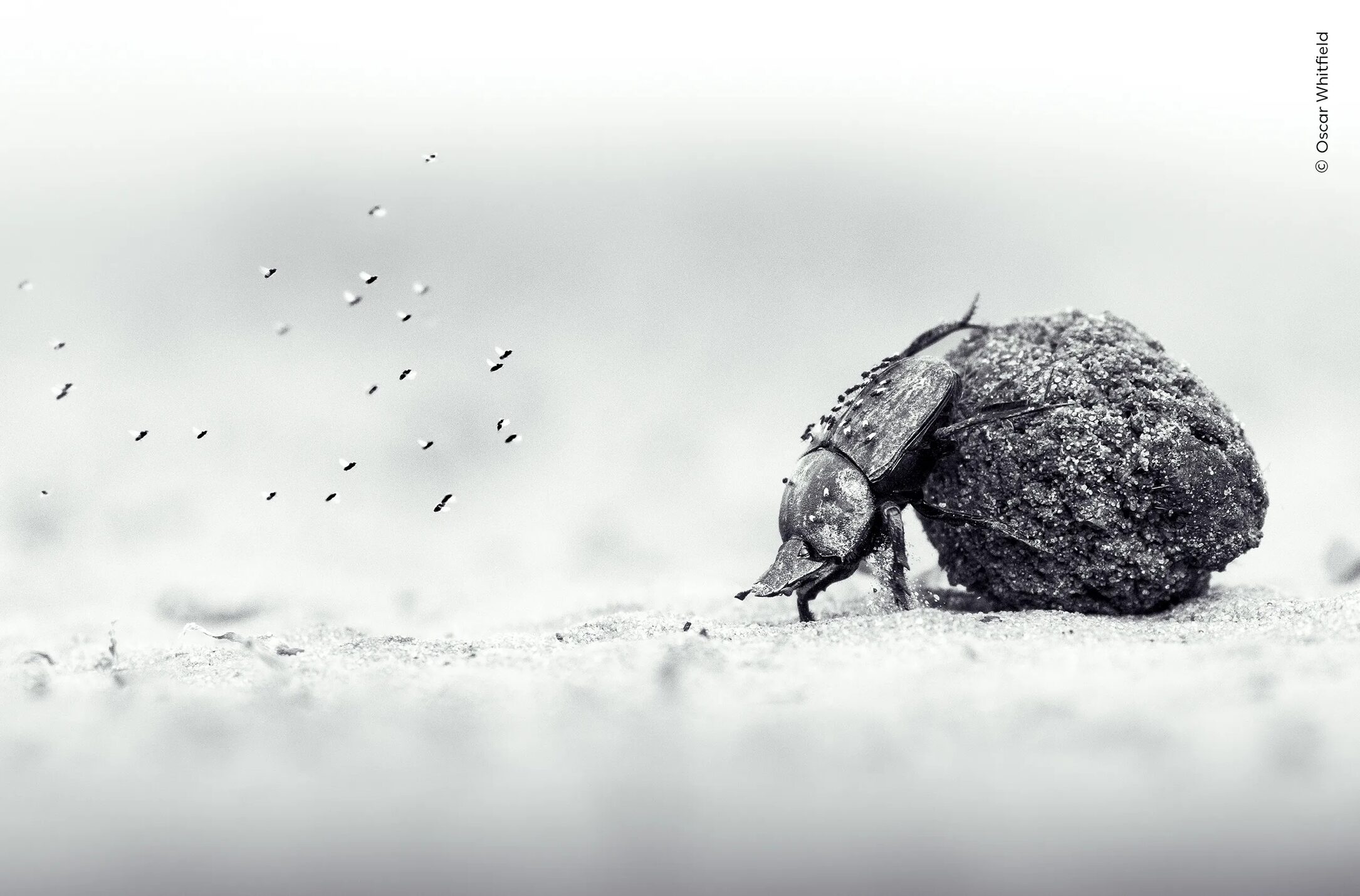
Ancient Egyptian cosmology drew parallels between the scarab beetle, pushing a ball of dung, and Khepri, the scarab-headed deity, pushing the sun across the sky. The dung beetle also plays a vital role environmentally. The way they process and bury dung reduces methane production and helps speed decomposition. Photo: Oscar Whitfield/Wildlife Photographer of the Year
You can view the full gallery on the Natural History Museum website. Tickets to the full exhibition in London, England are available here.
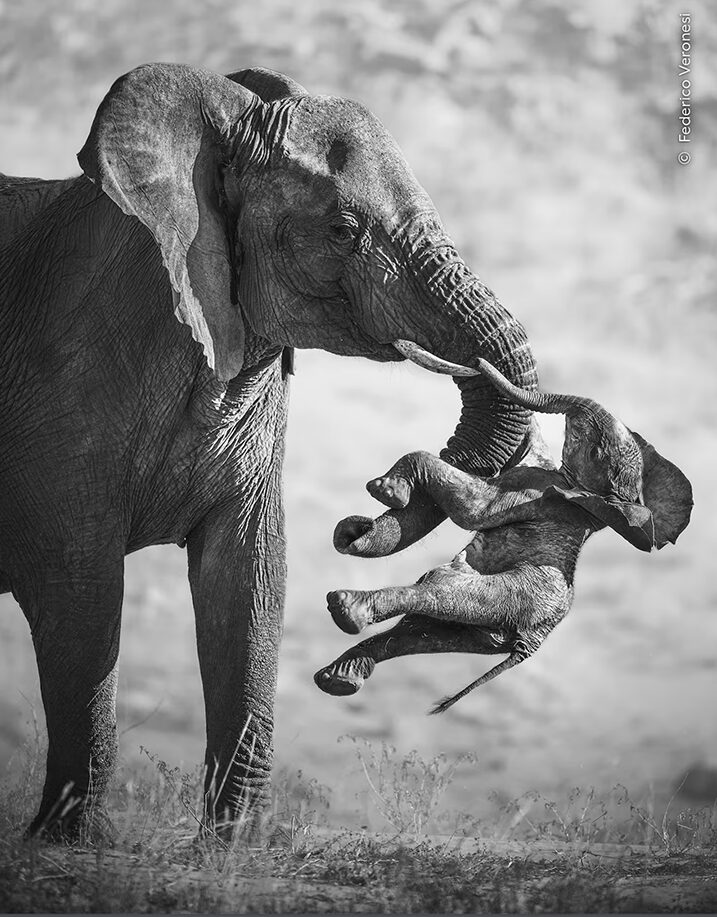
The full view of Federico Veronesi’s contest-winning image. Photo: Veronesi/Wildlife Photographer of the Year