
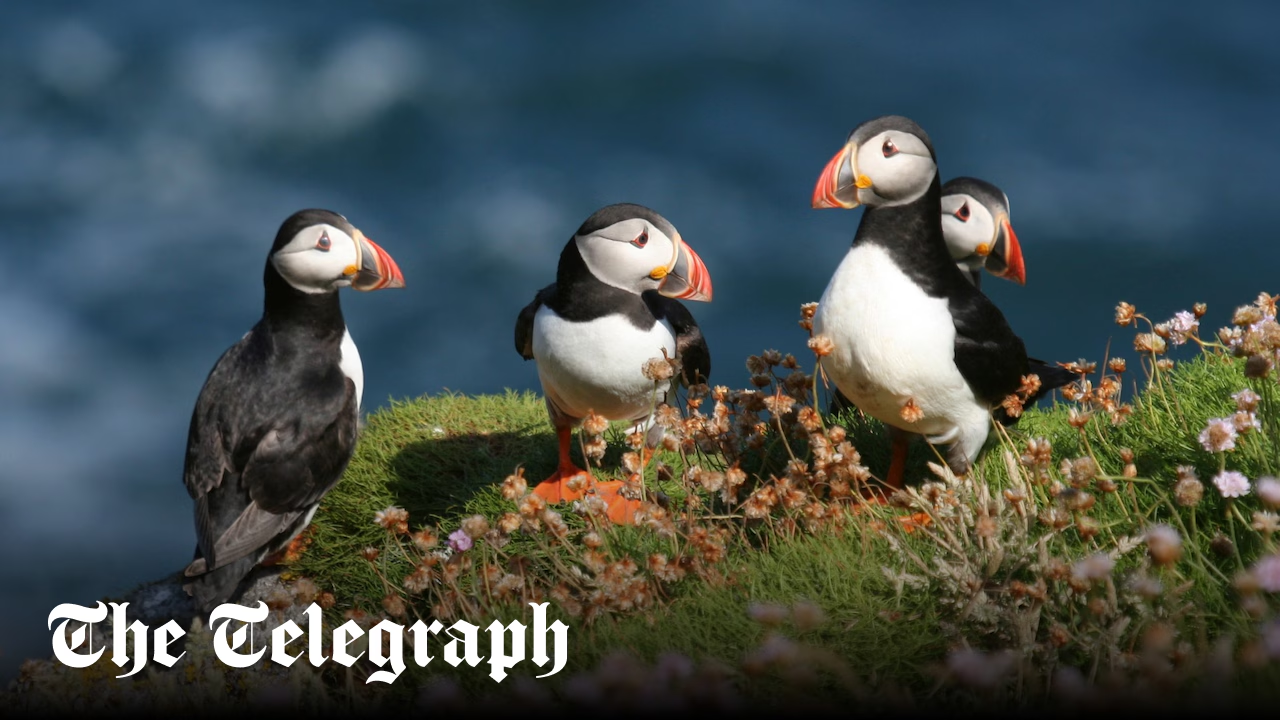
The UK holds around 10 per cent of the world’s Atlantic puffin population, with many of the largest breeding colonies found in Scotland.
The Atlantic puffin is one of 10 seabird species predicted to suffer long-term effects on their populations as a result of climate change, as warming air and sea temperatures reduce food availability and drive extreme weather events.
Recent declines have been linked to increasingly frequent marine heatwaves and intense storms, which led to thousands perishing at sea last winter.
Puffins spend up to eight months of the year at sea, only returning to land to breed in early spring.
They often mate for life, and pairs return to the same nesting spot each year where the female lays a single egg.
Habit management programmes in place
A new book, The Puffin: A Biography, written by Stephen Moss, the renowned naturalist and best-selling author, follows the lifecycle of the puffin throughout a calendar year and examines the bird’s place in popular and literary culture.
Mr Moss said: “The Puffin is a real paradox: it rivals the robin as Britain’s best-loved bird, yet most people have never seen one in the flesh.
“In spring and summer they gather in large, noisy colonies to breed, but spend the autumn and winter far out to sea in the North Atlantic.
“Despite their small size, and gentle, clown-like appearance, puffins will fight to save their precious catch of sandeels from being seized by an opportunistic – and much larger – skua or gull.”