
(Oct. 22, 2026 / JNS)
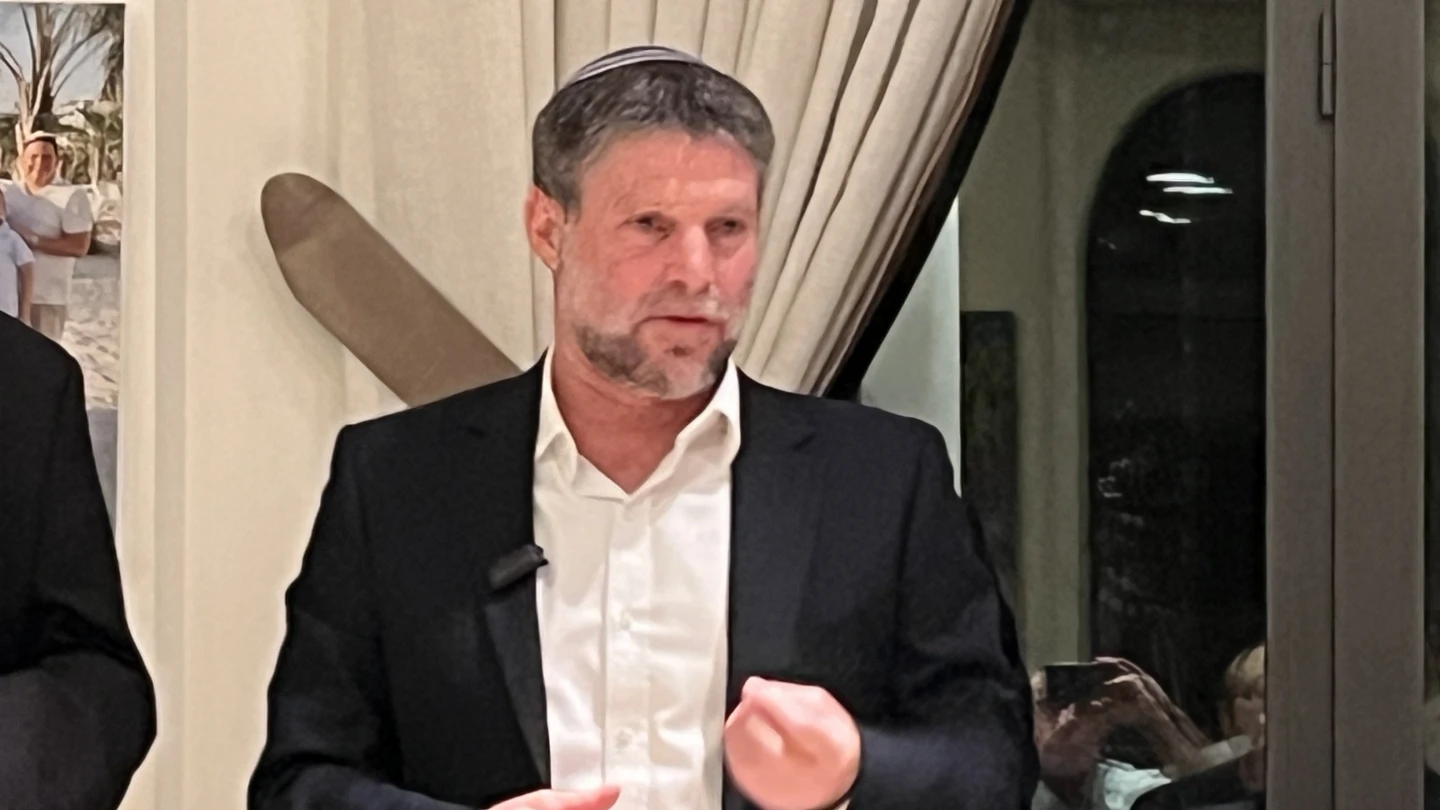
Israeli Finance Minister Bezalel Smotrich on Tuesday described Israel’s upcoming elections as a “historic crossroads.”
The Religious Zionist Party leader spoke with JNS at a private parlor meeting in Jerusalem, before addressing the gathering alongside fellow party MK Ohad Tal, one week ahead of Israel’s elections for the next Knesset.
Smotrich stressed that Netanyahu and U.S. President Donald Trump share a high degree of mutual trust, citing Trump’s endorsement of Netanyahu earlier this week as evidence.
“The president said he wouldn’t do this with just anyone. And rightly so, because he is taking a very big risk at home, within the United States. He is willing to take such a risk only with someone he has complete trust in [to finish the job in Iran],” said Smotrich.
He criticized Israel’s left-wing bloc over its approach to the war and to Judea and Samaria, which he said would undermine Israel’s security.
“We cannot allow those who, for two years, have done everything they could to make us surrender and stop the war, and to make the Israel Defense Forces withdraw from all fronts, to take the reins of the State of Israel,” he said. “The same applies to continuing our policy in Judea and Samaria. Judea and Samaria are essential to the security of us all. This is the mountain range that dominates Israel’s population centers geographically and topographically.” he added.
Smotrich addressed a range of issues raised by those attending the gathering, including the economy and cost of living, haredi conscription and Israel’s policies in Judea and Samaria.
Across these issues, he returned to a central argument: Meaningful change requires sustained, methodical work behind the scenes rather than public declarations promising immediate results.
“If I were in Judea and Samaria talking loudly and making a lot of noise, I wouldn’t be able to accomplish anything. The world would stop me,” Smotrich said, extending the same principle to economic policy and efforts to strengthen Israel’s Jewish character.
During Smotrich’s tenure as a minister in the Defense Ministry, the government has approved the establishment or retroactive legalization of 103 Jewish communities in Judea and Samaria.
He argued that politicians often prioritize quick, headline-grabbing achievements over long-term reforms whose effects take time to appear. Citing economic reforms and efforts to lower the cost of living, he said real change requires patience and consistent work, even when the results are not immediately visible.
Smotrich applied that argument to haredi IDF conscription as well, saying the challenge was not whether haredim should enlist, but how to bring about enlistment in a way that would succeed in practice. He argued that pressuring the community could harden opposition, while lasting change would require addressing the practical and social challenges involved.
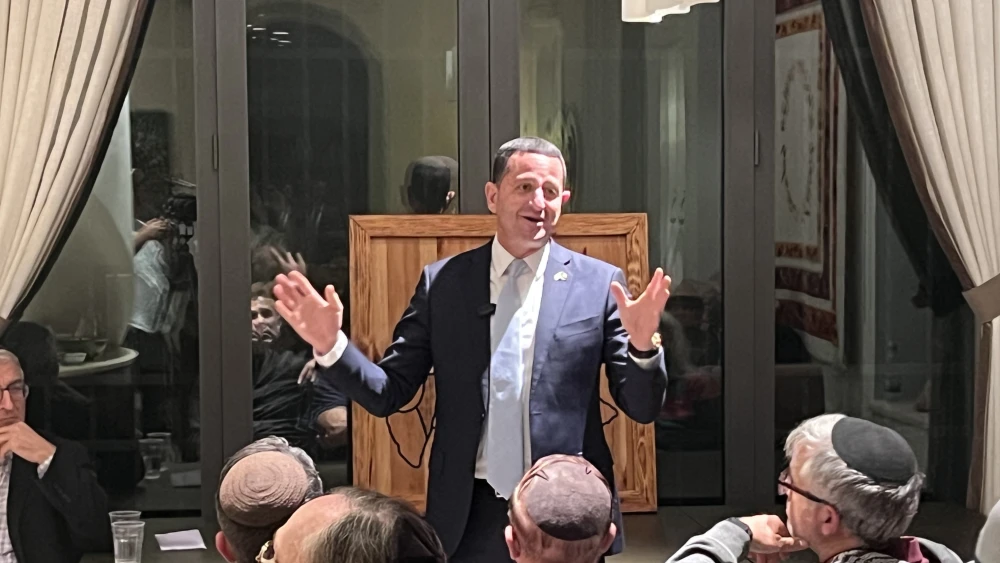
Religious Zionist Party MK Ohad Tal speaks at a parlor meeting in Jerusalem ahead of Israel’s elections, Oct. 20, 2026. Photo by Josh Hasten.
‘We’re actually fighting for the soul of this country’
Religious Zionist Knesset member Ohad Tal also described the upcoming elections as critical, telling JNS that Israel’s Jewish identity and democratic character were at stake.
“We are actually now fighting for the soul of this country,” Tal said. “The main question of these elections is if Israel would stay a Jewish state, but also if it will stay a democracy.”
Tal accused the left of seeking to undermine democracy, saying, “What the other side is trying to do is to basically steal the democracy.” He urged voters to listen carefully to what left-wing politicians are saying in parliamentary meetings.
The MK also expressed concern about the candidacy of former general Ofer Winter and his Amcha Yisrael Party, arguing that the party was unlikely to clear the electoral threshold and could thus waste right-wing votes.
“I don’t know Winter personally. He’s maybe a great guy. He was a great general, as people are saying,” Tal said. “But it’s not a question about who is a good guy or not a good guy. It’s a question about the future of this country.”
Tal argued that Winter’s campaign could jeopardize the right’s chances of winning the election, claiming that the party was not polling close to the threshold required to enter the Knesset. He described Winter’s candidacy as a significant risk to his political camp.
Turning to the audience, Tal asked attendees what they considered the greatest challenge facing the Jewish people in their generation, offering his own answer: “Jewish identity.”
“Realizing who we are, why we are here, what does it even mean to be a Jewish state,” he said, arguing that the question extends beyond Israel to Jews around the world.
Drawing a parallel between the Six-Day War and the current conflict, Tal argued that despite Israel’s significant military achievements and sacrifices, the country was still struggling to achieve a decisive victory. He linked that difficulty to what he described as the central challenge facing the Jewish people: a clear sense of identity, including an understanding of who they are, why they are in their homeland and what it means for Israel to be a Jewish state.