
p]:text-cms-story-body-color-text”>
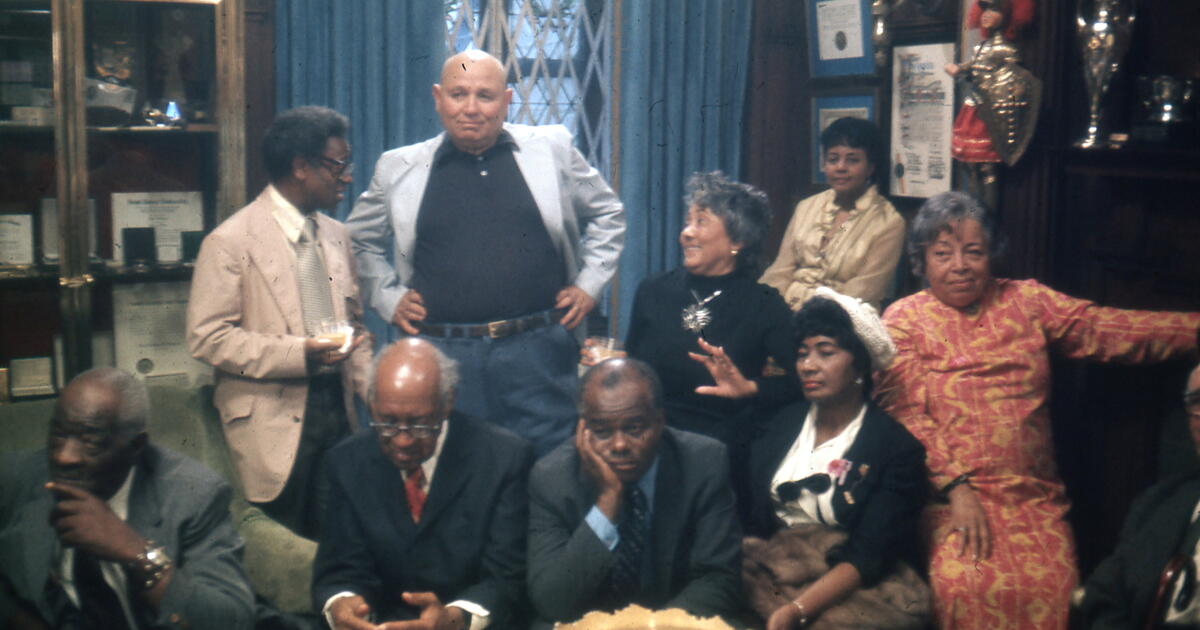
A record of a gathering that revived a golden age, “Once Upon a Time in Harlem” is both an archival triumph and a celebration. It takes us into a 1972 party at Duke Ellington’s New York City townhouse, where invited Harlem Renaissance luminaries encountered a lively reunion arranged by nonfiction filmmaker William Greaves. As the talk flies and arguments re-emerge, a vital era of Black political and artistic liberation suddenly materializes in a packed living room — as if waiting to be evoked by a shared spirit. An extraordinary you-are-there creation, it’s the documentary impulse at its most rewarding.
It’s also technically a new work. Greaves, who died in 2014, had envisioned a much larger project but never assembled his 16mm reunion footage. His widow Louise picked up the mantle and, following her death in 2023, their son David — who was also in the house that day as a young cameraman — has now edited the film to completion alongside his daughter Liani as producer. And since we catch a glimpse of William’s own handwritten notes, hear his voice-over reciting Renaissance poems (and one of his own) and observe him on film tossing questions to his storied guests, “Once Upon a Time in Harlem” also counts as a tribute to the late filmmaker. Most known for the 1971 meta-fictional classic “Symbiopsychotaxiplasm: Take One,” Greaves believed in the beautiful chaos of humans seeking connection.
And what an atmosphere we receive here, excited by the warmth and energy of the images — that camera team was busy — and the buzz of joyful disagreement. (Editors Lynn True and Anne De Mare find a miraculous pace.) The film is burnished throughout with split panels to accentuate the party’s animated cross talk, peppered with excerpts from one-on-one interviews that William filmed later.
The magic, though, is in how present we feel in this invoked past. As punch lubricates these elegantly attired VIPs (some in their 80s and 90s), the flow and force of their personalities acclimate us to who they are as keenly as do onscreen identifiers. Librarian Regina Andrews, known for her salons, exudes the dignified air of a beloved host, vividly describing the communal groundswell every young thinker and creative then could sense happening. The tale of the landmark musical “Shuffle Along” gets told with convivial authority by its composer, Eubie Blake, along with a clarifying anecdote about his no-handshake encounter with Charles Lindbergh. And poet Countee Cullen’s widow Ida Mae makes sure her husband’s name and accomplishments are on everyone’s mind.
Pan-African socialist Richard Moore, tall and voluble, gets suitably fired up when radicalism, politics and racial pride are the subjects. Yet other scholars, activists and intellectuals have their takes, too, on the Harlem Renaissance’s many political movements and bids for Black self-determination. There’s even a controversial conservative in their midst: essayist George Schuyler, who once argued against a “Negro art,” got righteous pushback from Langston Hughes and who doesn’t seem entirely comfortable to be there. But he is.
Many are conscious of their opportunity, via the camera, to speak to a younger generation, worried they’ve been overlooked. The cultural notables in the room — including painters Richard Nugent and Romare Bearden, poet Arna Bontemps and theater impresario Abram Hill — speak up for art as the Renaissance’s engine, remembering gifted colleagues no longer around. Then there’s Leigh Whipper, co-founder of the Negro Actors Guild, quick to recite from memory a movie monologue and beaming with youth for someone who, at the time, was edging close to 100.
David Greaves’ “Once Upon a Time in Harlem” is loving, indispensable history, unabashedly enjoyable. There’s a lesson, too, in sync with the vitality of these men and women who persevered, who never let an insight go unchallenged, a name go unforgotten or a memory about the Renaissance lie unadorned. These greats built the mecca they needed and deserved, debating its contours, wanting it to last. If we follow their example, then maybe we’ll all get the best party ever, surrounded by glorious, smart, funny, talented and ready-to-rumble peers.
‘Once Upon a Time in Harlem’
Rated: PG-13, for some disturbing images, strong racial language, smoking, and brief partial nudity
Running time: 1 hour, 40 minutes
Playing: Opens Friday, Oct. 23 at AMC Century City 15