
Follow us
Add us as a preferred source on Google
Newsletter
Subscribe to our newsletter
About 251 million years ago, volcanic eruptions wiped out most life on Earth. For about a million years, the Siberian Traps in Russia spewed huge clouds of carbon dioxide into the atmosphere, leading to the most severe extinction event in our planet’s history.
Equatorial temperatures spiked, making much of the land too hot for life. Meanwhile, the oceans became acidic and most of the creatures in them suffocated from lack of oxygen. Known as the Permian-Triassic mass extinction or the “Great Dying,” it ultimately destroyed more than 90% of ocean life and 70% of terrestrial species.
However, in a corner of what is now China, a refuge of pollen-producing plants avoided that fate and created an oasis for surviving animals. Research suggests that this was not the only place where plants were able to weather catastrophic climate change during the Great Dying, and that plants may have been better able to withstand the extinction event than other organisms.
“Plants do indeed sometimes have a lot of resilience because they can’t move individually, and even as a population, they’re not very good at moving,” Chris Thomas, an ecologist and evolutionary biologist at the University of York in the U.K., told Live Science. As a result, many plants have evolved mechanisms to survive in place despite difficult conditions, he said.
As climate change raises global temperatures and throws ecosystems into upheaval, plants will need to draw once more upon this resilience. Many plant species have evolved unique adaptations that help them weather harsh conditions. Experts told Live Science that these adaptations — along with a hefty dose of luck — will now decide the difference between survival and extinction.
You may like
Unlike most animals, many plants have the ability to regenerate limbs — and those limbs can make them better able to adapt to new environment conditions. Plants in general have higher developmental plasticity than animals, which means that they have greater flexibility to change how their cells and tissues grow and develop.
“Many plants have what we call indeterminate growth and modular body plans,” Amy Angert, a botanist at the University of British Columbia in Canada, told Live Science. Indeterminate growth means that an organism continues to grow and develop indefinitely throughout its lifespan.
“If we lost an arm, it would be gone forever. But on plants, if you cut off a branch, they can sprout new ones and those new ones can then receive signals from the current environment instead of being stuck with sort of developmental programs from the past environment.”
For example, researchers found that resprouts on holm oak trees (Quercus ilex) are better able to cope with drought than those that had not resprouted.
And because buds can go dormant, many plant species can resprout after catastrophic events, such as fire. Cape Floristic Region in South Africa, for example, is the smallest of the world’s six recognized floral kingdoms, and most of its plant species depend on fire — its plants resprout after fire and many of their seeds require fire to germinate.
What to read next
Some plants, such as the Snow Gum (Eucalyptus pauciflora), have a thick layer of insulating bark to protect their buds, while others like stinging nettles (Urtica dioica) bury them underground in a “bud bank”. The soil insulates the seed’s buds from extreme heat and cold and protects most of the plant from life-threatening conditions. This widespread adaptation allows herbaceous plants to endure through the winter and plants with bulbs to hide their tissues from the ravages of fire.
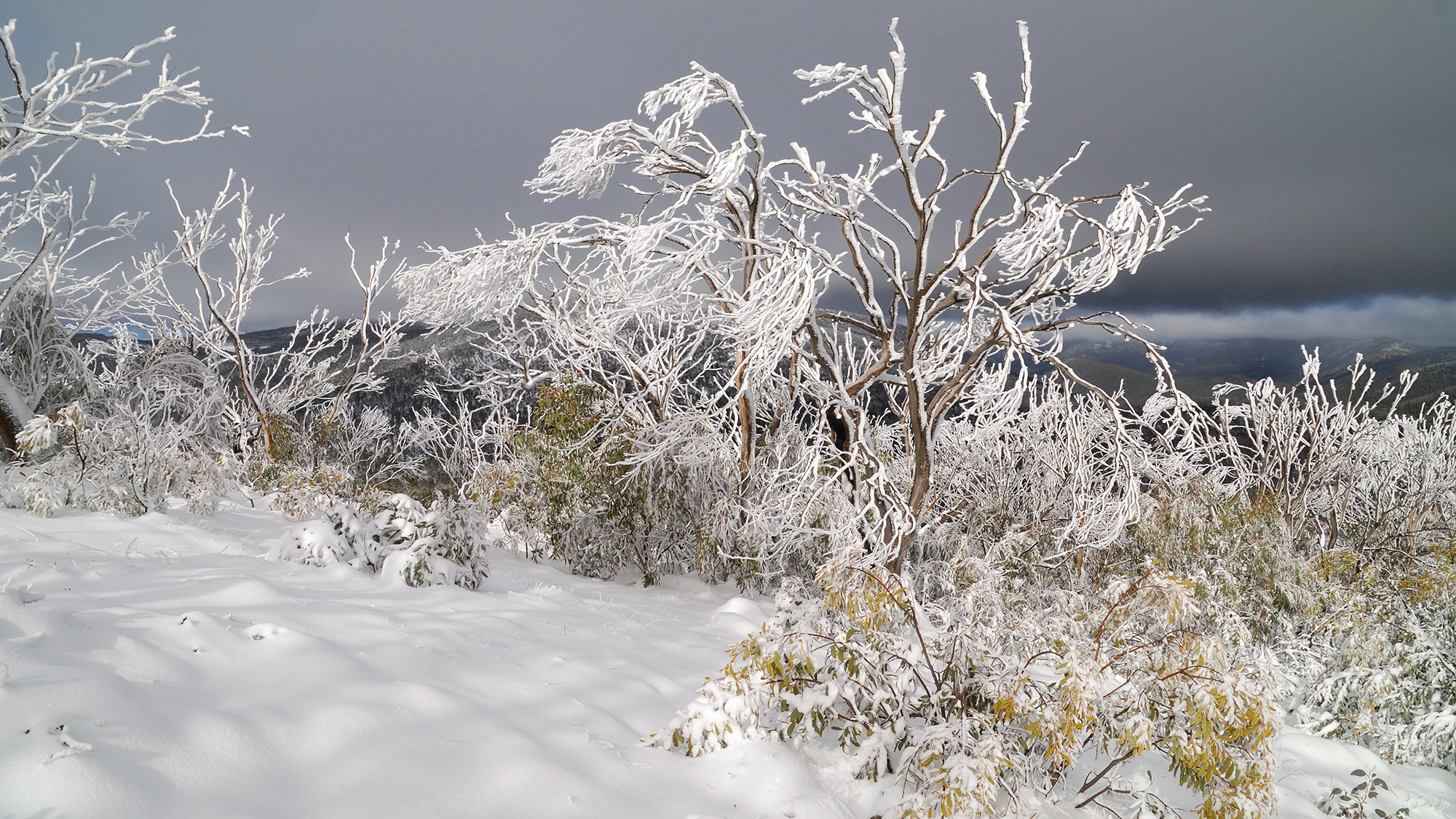
Snow gums (Eucalyptus pauciflora) under snow at Mount Franklin, Namadgi National Park, Australia.
(Image credit: Auscape via Getty Images)
Storing seeds for better times
Plants can also store seeds underground when times are difficult. Almost 350,000 plant species produce seeds. For most of these species, the seeds contain dormant tiny versions of the young plant, with all the structures that will turn into leaves and roots.
“Seeds can live essentially in stasis in the soil,” Daniel Anstett, an evolutionary ecologist at Cornell University, told Live Science. “You can have the seed bank where certain seeds might come back, and there’s access to the backward library of genetic information that many plants can ultimately draw upon.”
Seed banks are a vital tool for resilience in many plant species. They create the opportunity for metabolically inactive individuals to reanimate when environmental conditions improve, according to a 2021 paper published in the journal Nature Communications. “When lucky, at least some of these individuals will awaken in the future when the environment is more conducive for growth and reproduction,” the authors wrote.
Seedbanks can also be reservoirs of genetic diversity, which is integral to being able to adapt to new environments.
“The raw material for adaptation comes from genetic variation,” said Angert. “Genetic variation is larger in large populations, and genetic variation can be shared between populations as the environment changes — if individuals can disperse successfully between them.”
In a paper published in journal Science earlier this year, researchers, including Angert and Anstett, showed rapid evolution saved scarlet monkey flower (Erythranthe cardinalis) populations from prolonged drought in the U.S. and Mexico between 2010 and 2018.
“They can either grow really fast, flower and put out seeds before the fall drought takes effect, or they can grow much more slowly and bunker down,” Anstett explained.
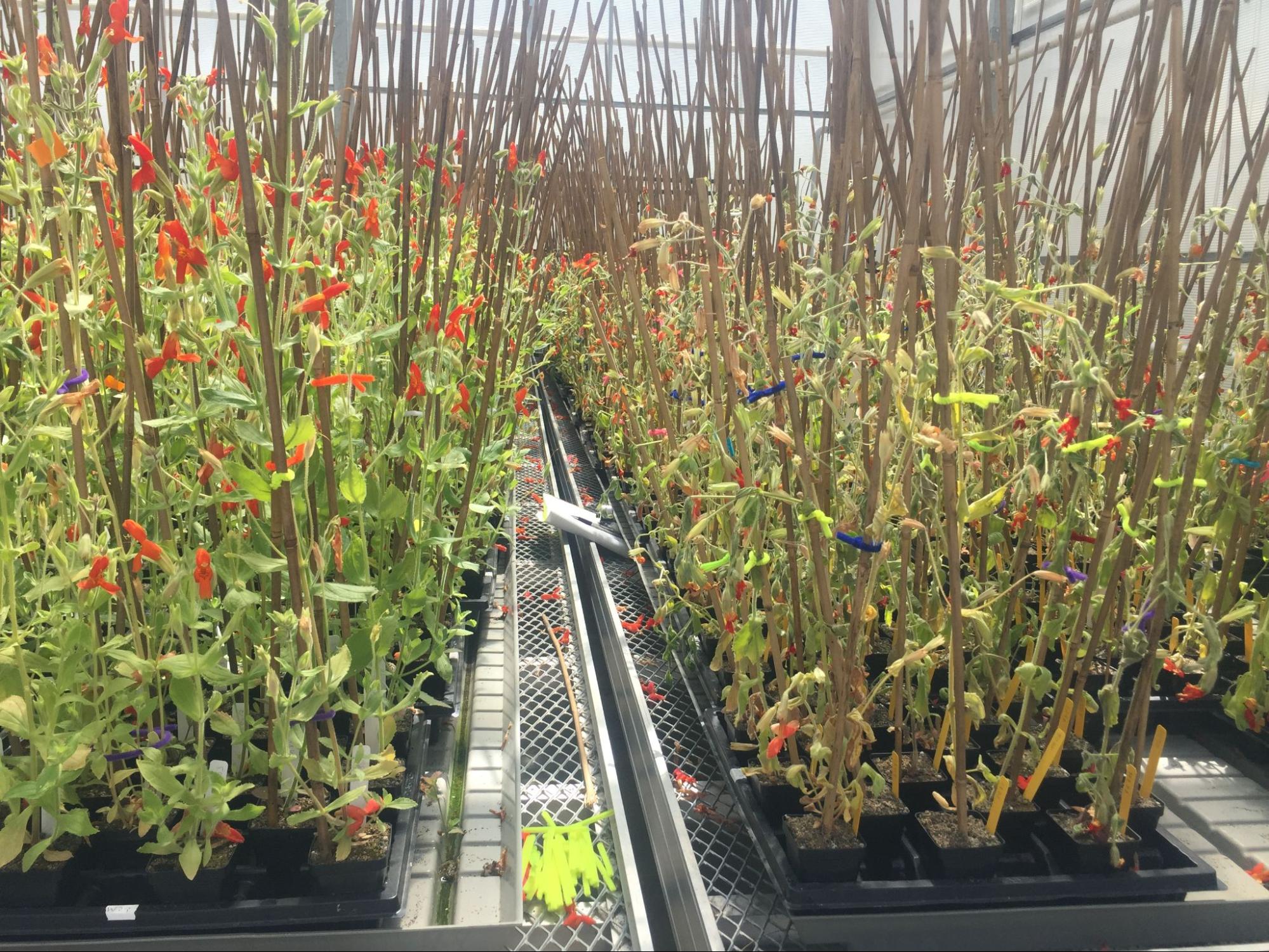
Scarlet Monkeyflower (Erythranthe Cardinalis) in a greenhouse drought experiment.
(Image credit: Daniel Anstett)
The researchers sequenced the genomes of 55 scarlet monkeyflower populations to find areas within their genomes linked to coping with stress and drought. They tracked the populations and how they changed over the period. Some populations experienced rapid evolution to cope with the changing environment.
They found that, based on populations’ genetic diversity, they could predict whether a population would be able to survive the drought — even before it started.
While this is only one plant species, Anstett believes it could be true of other organisms too.
Some plants are able to transform how they produce energy to endure a changing environment. This is what Zhen Xu, a paleobotanist at the University of Leeds in the U.K, thinks allowed some plant species to survive the Permian-Triassic mass extinction and might become increasingly important for plants in today’s changing climate.
Plants use photosynthesis to convert carbon dioxide and water into sugars and oxygen, and use stomata, or small pores on their leaf surface, to regulate the amount of carbon dioxide entering the plant.
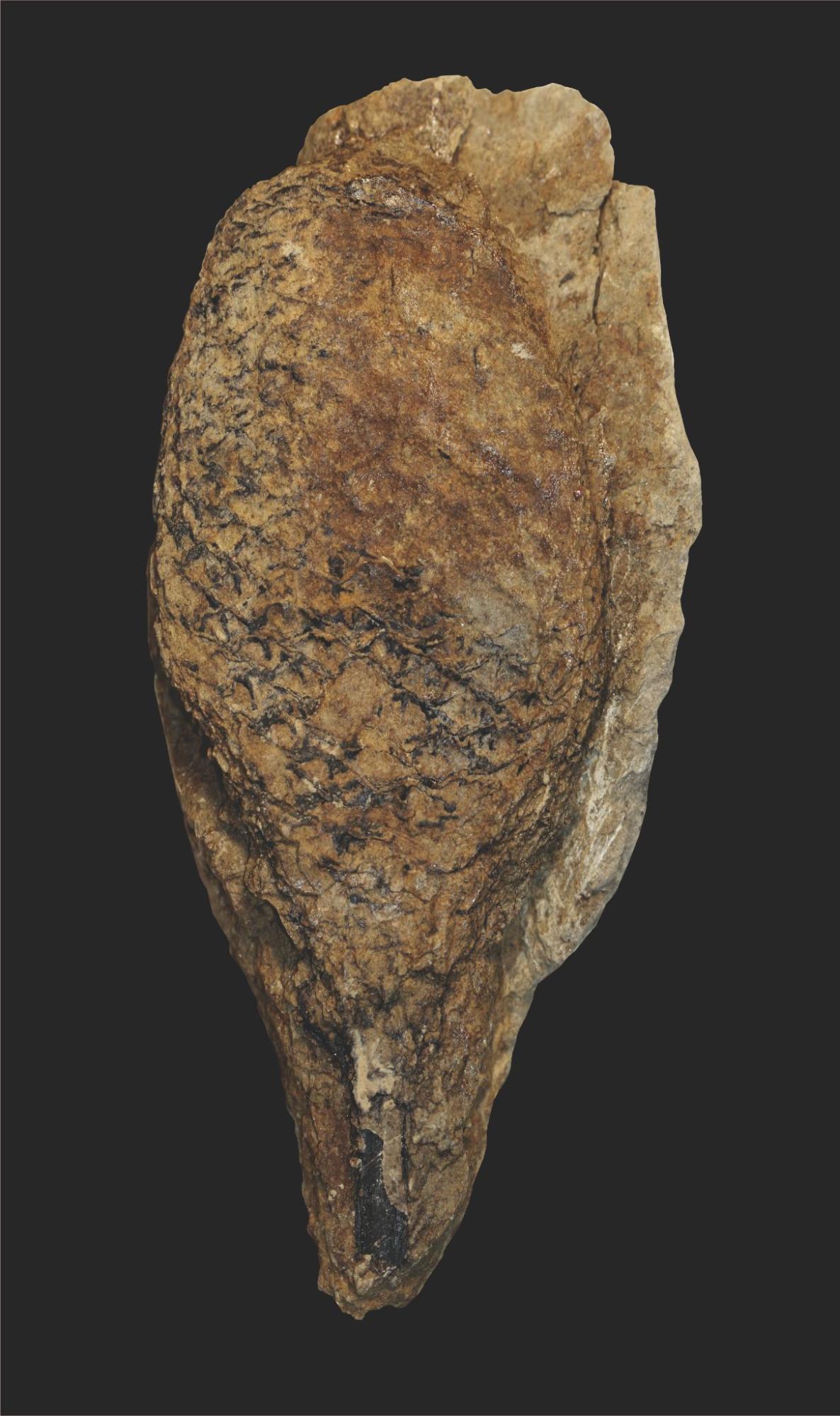
Reproductive cone (strobilus) of a Triassic lycophyte from South China. It is approximately 2.4 inches (6 centimeters long).
(Image credit: Zhen Xu)
Many plants open their stomata during the day to let in CO2 and release oxygen. Others use CAM photosynthesis, which stands for “Crassulacean acid metabolism,” to close their stomata during the day and protect themselves from the heat. At night, they absorb CO2 and transform it into an acid, which they store in their tissues to be used to make sugars during the day.
“CAM photosynthesis is very common in present day desert plants, like the cactus and succulents,” Xu told Live Science. “It’s a very smart way to escape from the high temperature or aridity during the daytime.”
In a study published in journal Nature Ecology & Evolution earlier this year, Xu and colleagues showed that plants that used CAM photosynthesis had an advantage during the Permian-Triassic mass extinction.
They found that Lycophytes, or are ancient vascular plants, switched to CAM photosynthesis around the time of the mass extinction. “We think CAM photosynthesis may be the special strategy to survive” and allowed these plants to dominate after the mass extinction, Xu said.
Some plants go to even more extreme lengths. During cataclysmic events, plants have turned into “hopeful monsters” to survive environmental upheaval, past research shows.
In nine separate events over the past 150 million years, many flowering plants duplicated their whole genome to give themselves a better chance of survival, according to research published in journal Cell earlier this year. The duplicate genome gives them more opportunities to evolve and adapt to challenging environmental conditions.
“We see clusterings of whole genome duplications in time, and every time it corresponds with a described, important geological event, whether it’s a global cooling period, whether it’s a global warming period, or whether there’s an extinction event,” study co-author Yves Van de Peer, a genome biologist at Ghent University in Belgium, told Live Science at the time.
Still, the survival of specific plant populations or species often boils down to luck, experts told Live Science.
Plants “essentially have this broad toolkit” but “some of the plants have some pathways, and other plants have others, and some have some traits, and some have others”, Anstett said. Whether the particular tools they have will help depends on the conditions they face.
During the Triassic-Permian mass extinction, the plants in refugia in China (and elsewhere) were in the right place at the right time, with the right suite of potential adaptations at their disposal and enough genetic variety to tap into them.
Exclusive to Live Science Pro
The same holds true for modern-day species facing a changing climate and potential extinction. Angert said there are ways to make plant species “luckier” in the years ahead, such as connecting fragmented populations to increase genetic diversity, which increases the suite of potential tools at a plant species’ disposal.
“The best thing we could do is to leave larger and better connected populations on the landscape,” she said.
Anstett agreed. “If populations become really disconnected, then potentially we’re eroding away whatever toolkit that these plants have to be able to adapt.”
Help us improve Live Science Pro: We’re always trying to make our content better. Leave us feedback about Pro here.