
(UroToday.com) The 2026 European Society of Medical Oncology (ESMO) Annual Congress held in Madrid, Spain, was host to the session Proffered paper 1: Genitourinary tumour, renal and urothelial. Dr. Randy Sweis presented abstract 4742O – Sacituzumab Govitecan (SG) Combined With Enfortumab Vedotin (EV) and Zimberelimab (ZIM) in Treatment-Naive Metastatic Urothelial Cancer (mUC): Interim Results From Phase 1b TROPHY-U-01 Cohort 7.
Dr. Sweis began by noting that the treatment landscape continues to evolve rapidly, with enfortumab vedotin (EV) plus pembrolizumab now the preferred first-line regimen. With 3.5 years of median follow-up, EV plus pembrolizumab demonstrated a median OS of 33.6 months compared with 15.9 months with platinum-based chemotherapy. He next highlighted sacituzumab govitecan (SG), a Trop-2-directed ADC that has demonstrated activity both as monotherapy and in combination strategies.
In TROPiCS-04, SG achieved an ORR of 23%, including a 5% complete response rate, versus 14% and 3%, respectively, with chemotherapy, although the primary OS endpoint was not met.1 Early combination studies have been encouraging, including an ORR of 70% with SG plus EV in the phase I DAD study and an ORR of 41%, with a 20% complete response rate, for SG plus pembrolizumab in Cohort 3 of TROPHY-U-01. Given that EV and SG target distinct antigens, Nectin-4 and Trop-2, and deliver different cytotoxic payloads, MMAE and SN-38, respectively, combining these ADCs with PD-1 inhibition may provide complementary mechanisms of action. TROPHY-U-01 Cohort 7 therefore evaluated the triplet of SG, EV, and the PD-1 inhibitor.2,3
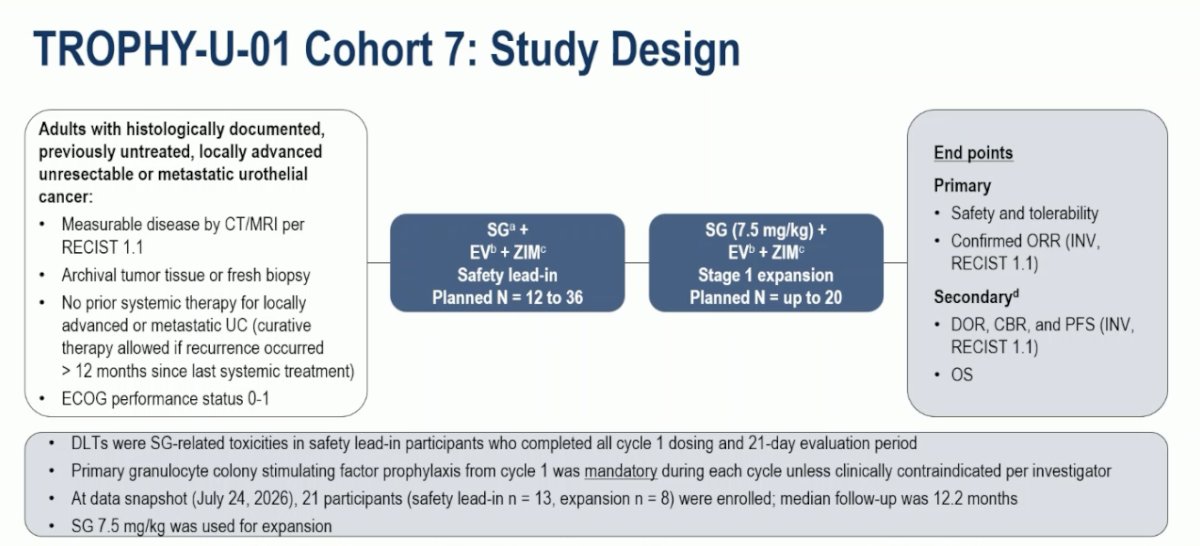
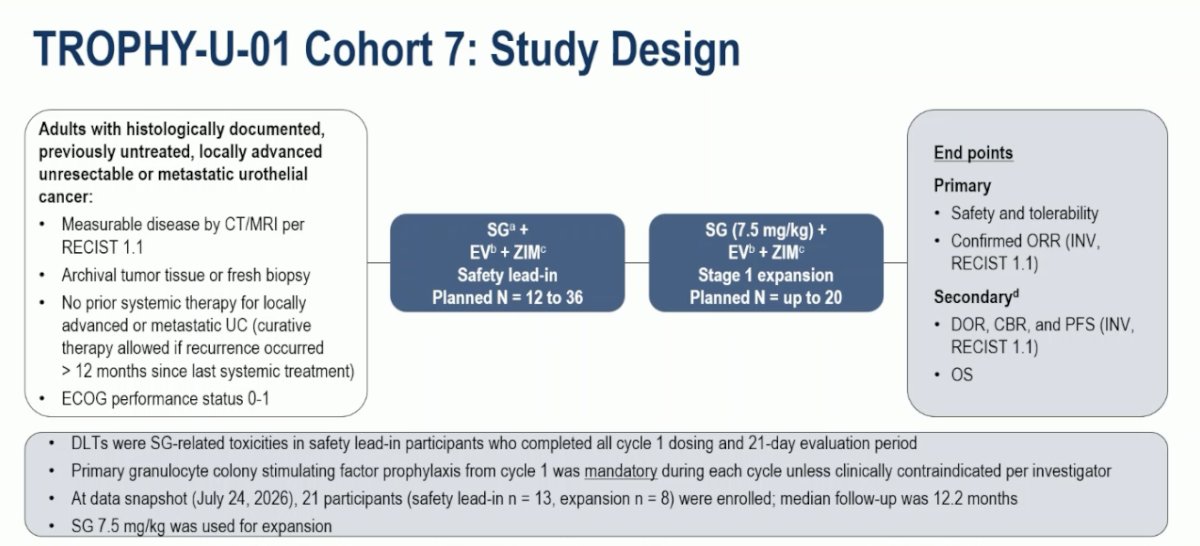
TROPHY-U-01 Cohort 7 enrolled adults with previously untreated, locally advanced unresectable or metastatic urothelial carcinoma, measurable disease by RECIST 1.1, available archival tumor tissue or a fresh biopsy, and ECOG performance status 0–1. The study included a safety lead-in evaluating sacituzumab govitecan (SG) plus enfortumab vedotin (EV) and zimberelimab, with planned exploration of dosing based on the incidence of dose-limiting toxicities (DLTs); the subsequent stage 1 expansion used SG 7.5 mg/kg plus EV and zimberelimab, with up to 20 patients planned. The primary endpoints were safety and tolerability and confirmed ORR by investigator assessment, with duration of response, clinical benefit rate, PFS, and OS as secondary endpoints. DLTs were defined as SG-related toxicities occurring during cycle 1 and the 21-day DLT evaluation period, and primary G-CSF prophylaxis was mandatory beginning with cycle 1 unless clinically contraindicated. At the July 24, 2026 data cutoff, 21 patients had been enrolled, with a median follow-up of 12.2 months.
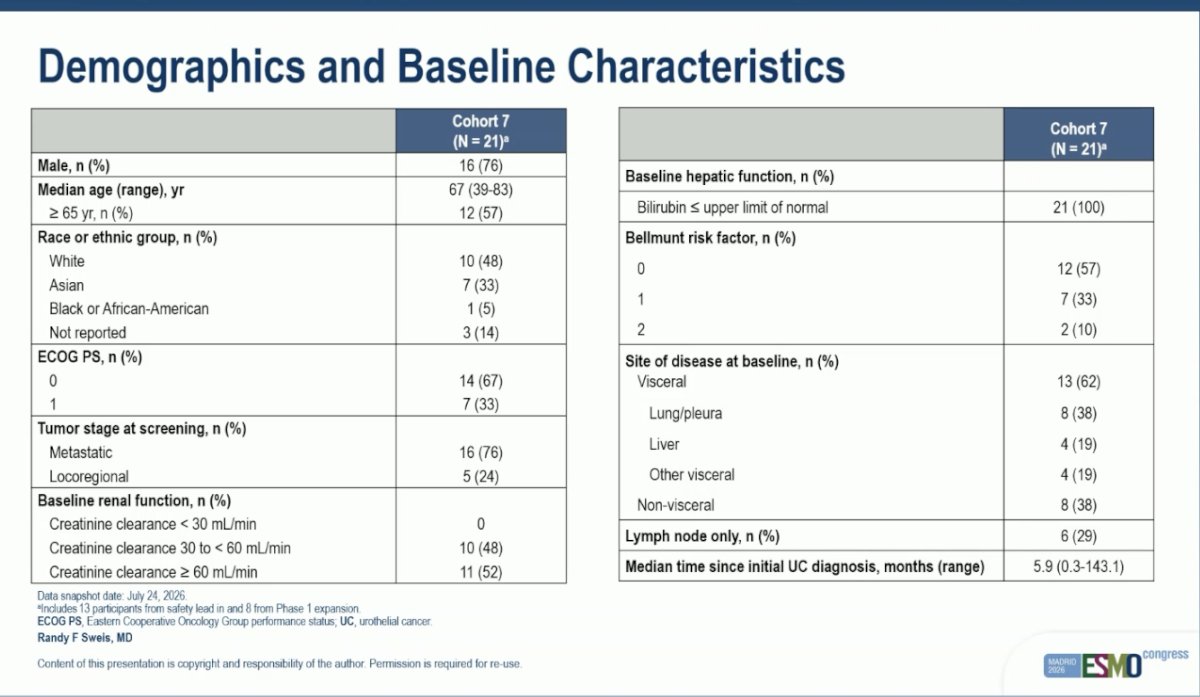
Baseline characteristics reflected a clinically heterogeneous population. Nearly half of patients (48%) had baseline renal dysfunction, with creatinine clearance between 30 and <60 mL/min, while 43% had an intermediate or poor Bellmunt risk score. Most patients had metastatic disease (76%), and 62% had visceral metastases, including lung/pleural involvement in 38% and liver metastases in 19%; 29% had lymph node-only disease. A full description of baseline characteristics is shown in the table below:
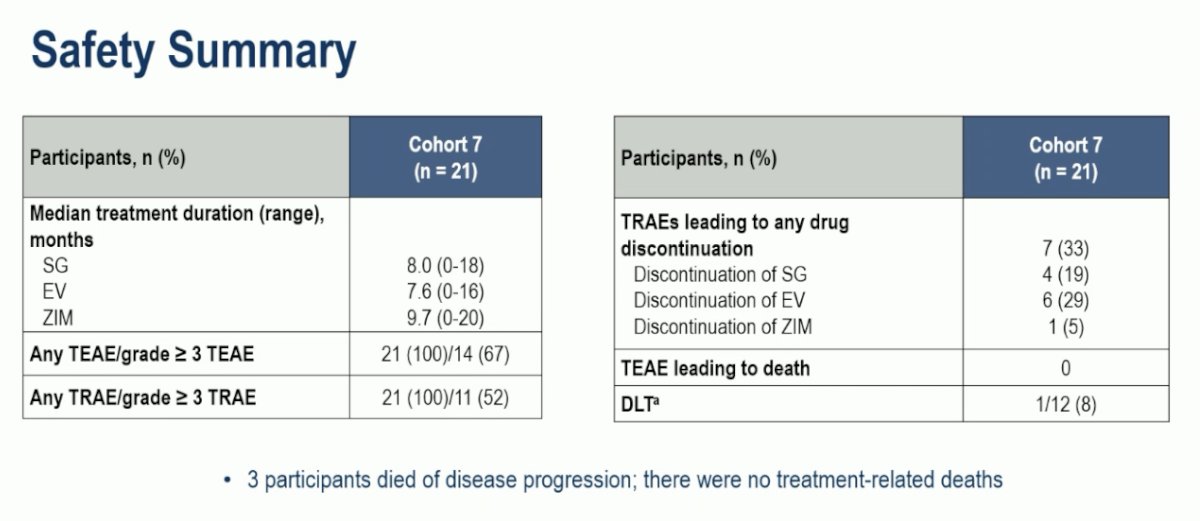
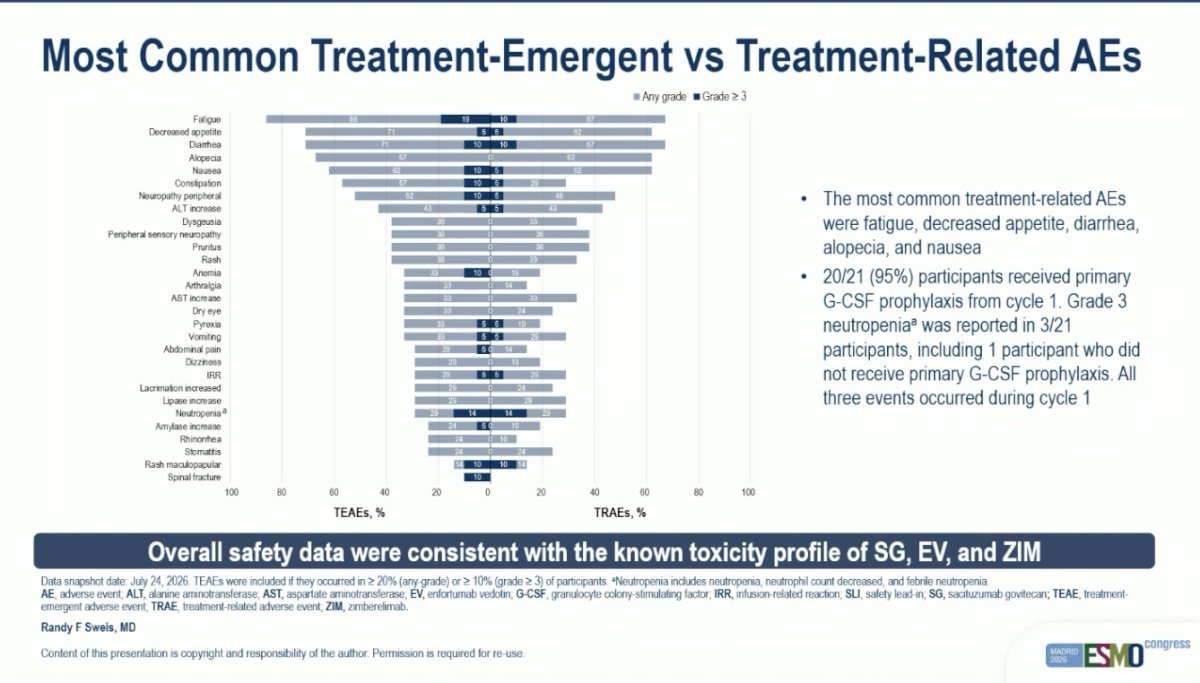
Safety findings showed substantial toxicity with the triplet regimen. All 21 patients experienced a treatment-emergent and treatment-related adverse event, with grade ≥3 events occurring in 67% and 52%, respectively. Treatment-related adverse events led to discontinuation of at least one study drug in 33% of patients, most commonly EV (29%) and SG (19%). One DLT was observed among the 12 evaluable patients in the safety lead-in (8%). Three patients died from disease progression, with no treatment-related deaths reported.
The tornado plot below further characterized treatment-emergent and treatment-related adverse events, with light blue representing any-grade events and dark blue representing grade ≥3 events. The most common treatment-related toxicities were fatigue, decreased appetite, diarrhea, alopecia, and nausea. Peripheral sensory neuropathy was reported in 48% of patients, including grade ≥3 events in 5%. Primary G-CSF prophylaxis was administered from cycle 1 in 20 of 21 patients (95%); grade 3 neutropenia occurred in 3 patients, including one who had not received primary G-CSF prophylaxis. Overall, the safety profile was consistent with the known toxicities of SG, EV, and zimberelimab.
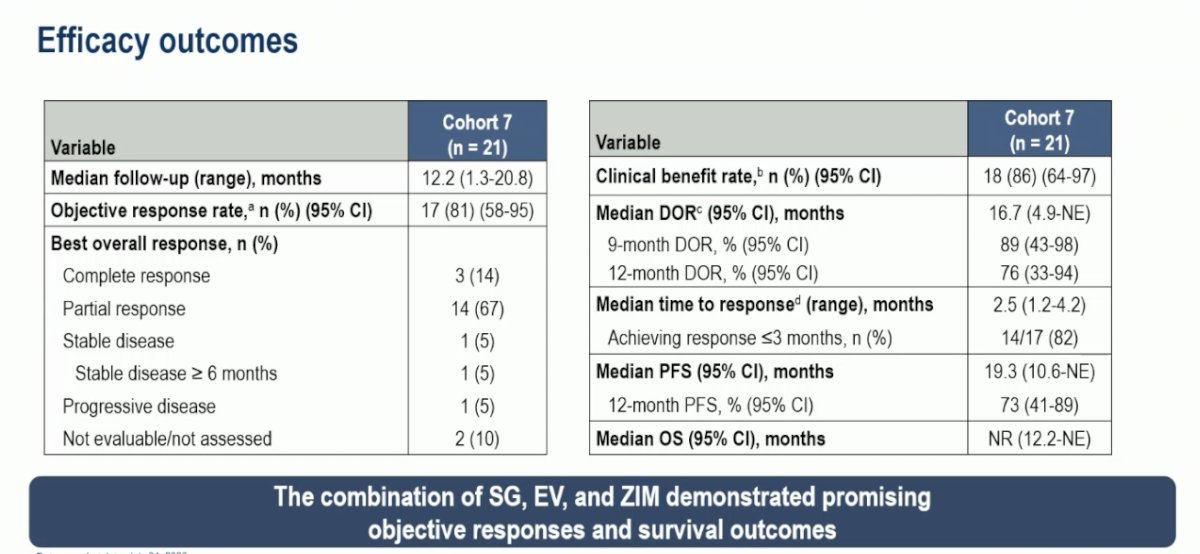
The triplet demonstrated promising antitumor activity and survival outcomes, with an ORR of 81%, including complete responses in 14% of patients, and a clinical benefit rate of 86%. Responses occurred rapidly, with a median time to response of 2.5 months, and appeared durable, with a median duration of response of 16.7 months and 9- and 12-month DOR rates of 89% and 76%, respectively. Median PFS was 19.3 months, while median OS had not been reached at the time of data cutoff.
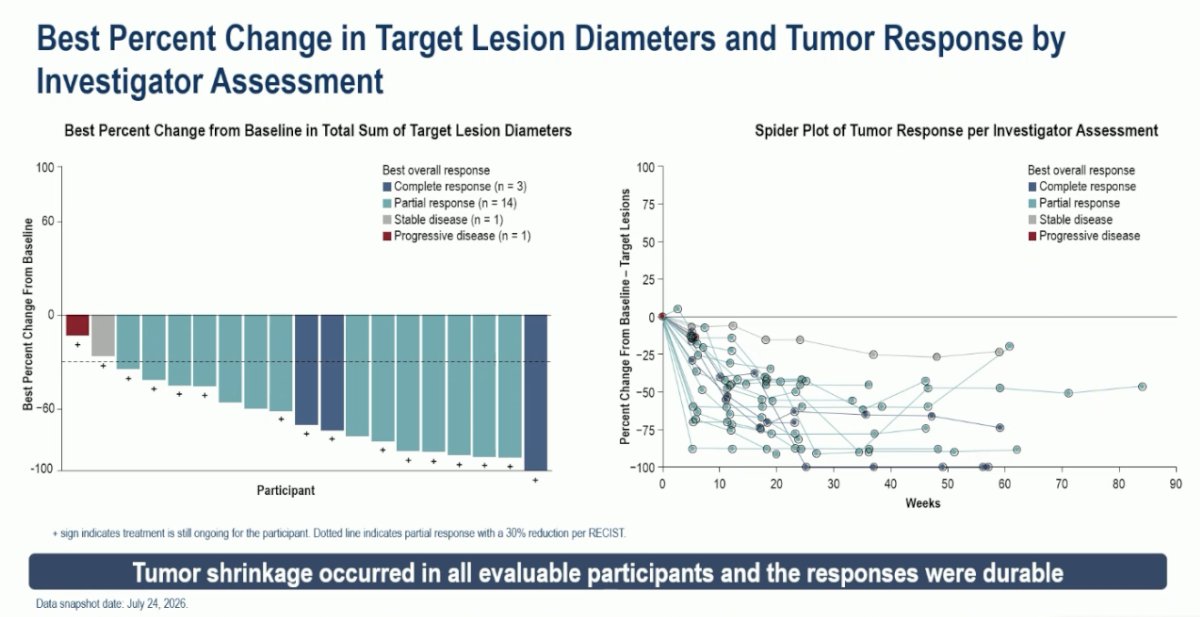
The waterfall plot on the left demonstrated tumor shrinkage in all evaluable patients, with most achieving substantial reductions in target lesion burden. The spider plot on the right showed that these responses generally occurred early and were sustained over time, supporting the depth and durability of tumor responses observed with the SG, EV, and zimberelimab triplet.
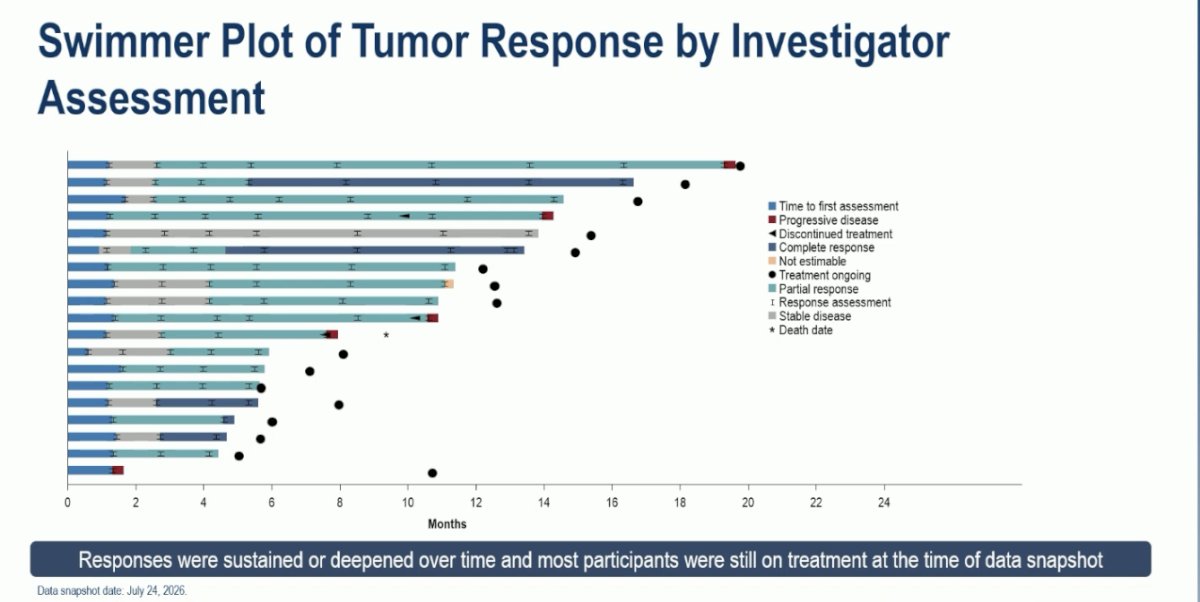
The swimmer plot below further demonstrated the durability and deepening of responses over time, with several patients converting from partial to complete responses during treatment. Most participants remained on therapy at the time of the data cutoff, suggesting that responses were generally sustained with continued treatment.
Dr. Sweis concluded with the following take home messages:
SG + EV + zimberelimab demonstrated manageable toxicity and tolerability with approximately 12 months of median follow-up in patients with treatment-naive mUC, with no treatment-related deaths.
Treatment-related adverse events led to discontinuation of at least one agent in 33% of patients, with the highest discontinuation rate observed for EV.
Overall safety findings were consistent with the established toxicity profiles of SG, EV, and zimberelimab.
The triplet demonstrated promising antitumor activity, with early and durable responses. ORR was 81%, with a median duration of response of 16.7 months.
Median PFS was 19.3 months, while median OS had not been reached at the time of data cutoff.
These findings support further investigation of combinations incorporating ADCs with distinct targets and mechanisms of action alongside immunotherapy in urothelial carcinoma.
Ongoing studies evaluating SG-based immunotherapy combinations include the phase II DAD/DAD-IO study (NCT04724018) and the phase III ECOG-ACRIN EA8231 study (NCT06524544).
Presented by: Randy F. Sweis, M.D. Department of Medicine, Section of Hematology/Oncology, Comprehensive Cancer Center, University of Chicago Medicine, Chicago, IL
Written by: Julian Chavarriaga, MD, Clinical Assistant Professor, Urologic Oncologist, Department of Urology at Penn State Health @chavarriagaj on X, during the 2026 European Society of Medical Oncology (ESMO) Annual Meeting, Madrid, Spain, Fri, Oct 23 – Tues, Oct 27, 2026.
Reference:
Powles T, Tagawa ST, Vulsteke C, Gross-Goupil M, Park SH, Necchi A, et al. Sacituzumab govitecan in advanced urothelial carcinoma: TROPiCS-04, a phase III randomized trial. Ann Oncol. 2025;36(5):561-571. doi:10.1016/j.annonc.2025.01.011. PMID: 39934055.
Grivas P, Pouessel D, Park CH, Barthelemy P, Bupathi M, Petrylak DP, et al. Sacituzumab govitecan in combination with pembrolizumab for patients with metastatic urothelial cancer that progressed after platinum-based chemotherapy: TROPHY-U-01 Cohort 3. J Clin Oncol. 2024;42(12):1415-1425. doi:10.1200/JCO.22.02835. PMID: 38261969.
Tagawa ST, Balar AV, Petrylak DP, Rezazadeh Kalebasty A, Loriot Y, Fléchon A, et al. TROPHY-U-01: A phase II open-label study of sacituzumab govitecan in patients with metastatic urothelial carcinoma progressing after platinum-based chemotherapy and checkpoint inhibitors. J Clin Oncol. 2021;39(22):2474-2485. doi:10.1200/JCO.20.03489. PMID: 33929895.