
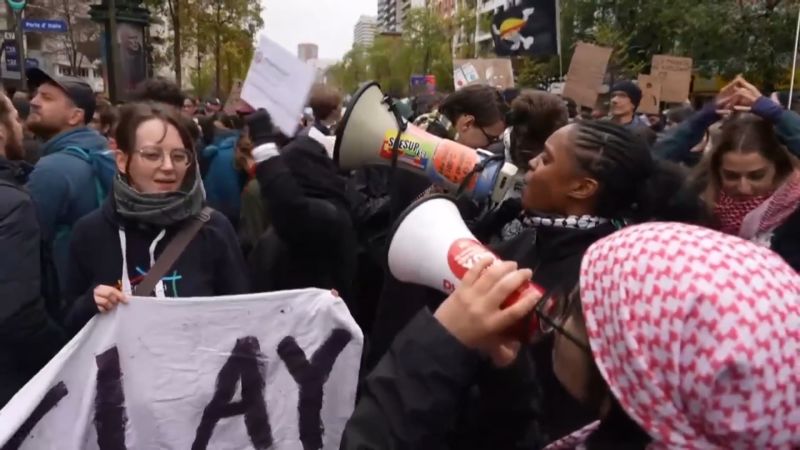
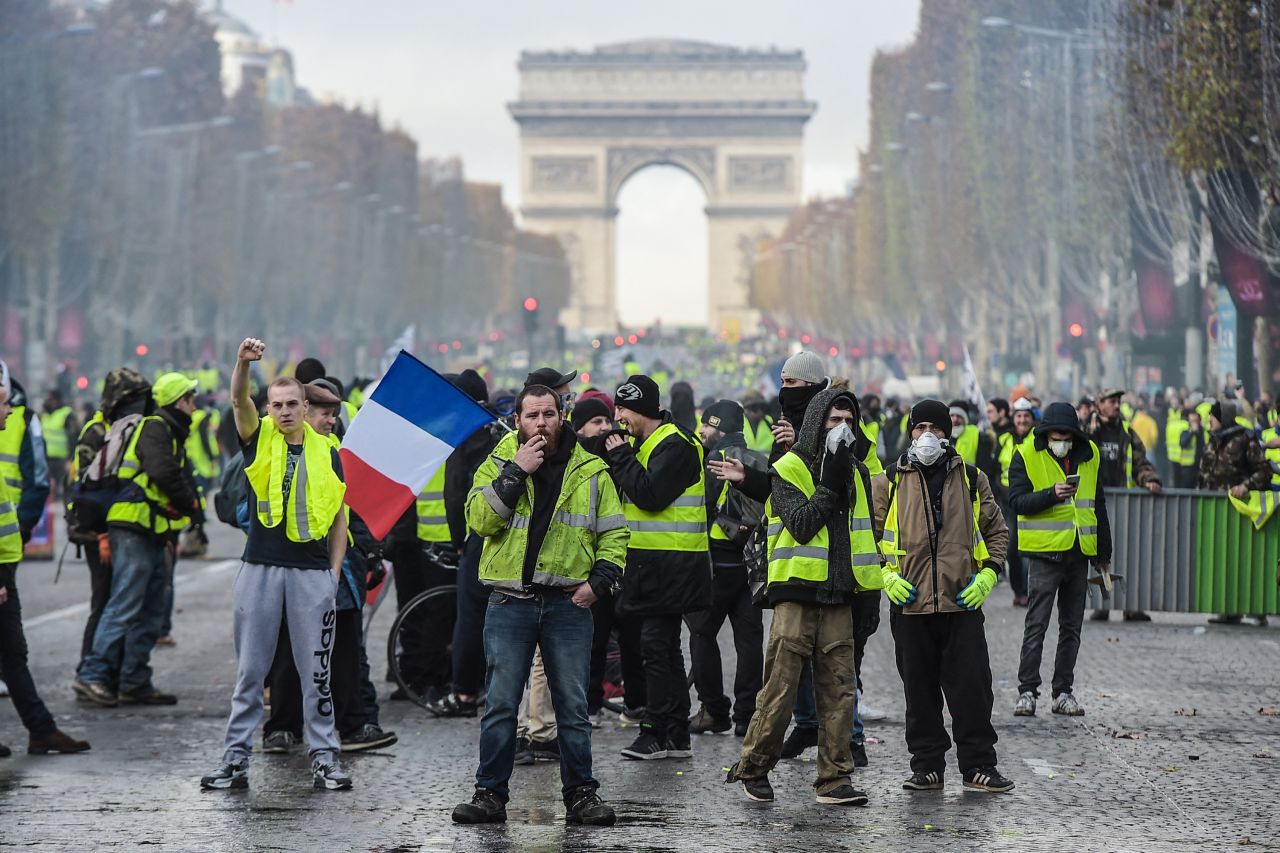
Amid the scores of protesters expected to take to the streets across France today are the gilets jaunes, or Yellow Vests, part of a grassroots citizens’ movement that began almost a decade ago.
The movement dates back to 2018, when more than 250,000 people protested a rise in fuel tax announced by the government, which it said was to fight against climate change.
The protests – named after the yellow high-visibility jackets French motorists must carry in their vehicles – morphed into broader demonstrations against French President Emmanuel Macron and his government in the weeks following November 2018.
They often turned violent, with at least 10 people dying in connection with the protests in their first six weeks.
The French government made many concessions in the first weeks of the initial Yellow Vest protests, including scrapping the initial fuel tax, and implementing a 10 billion euro ($11.05 billion) package of wage rises and tax relief for the poorest.
The Yellow Vests have taken to the streets several times since those first protests died down. In 2020, police took more than 250 people in for questioning and fired tear gas during violent scenes involving the movement in Paris.
People from across the political spectrum have taken part in Yellow Vest protests, including anarchists, anti-immigration populists and hard-core fascists.
There are even groups on social media claiming to be environmental “yellow jackets,” a contradiction of the original protesters’ demands to scrap a new eco-tax.
Some have blamed a radical fringe of the Yellow Vest movement for a rise in anti-semitism in France.
A 2019 study conducted by the Fondation Jean Jaures showed that 50% of those who participated said they believed in a “global Zionist conspiracy.”
CNN’s Melissa Bell, Saskya Vandoorne and Gianluca Mezzofiore contributed to this reporting.