
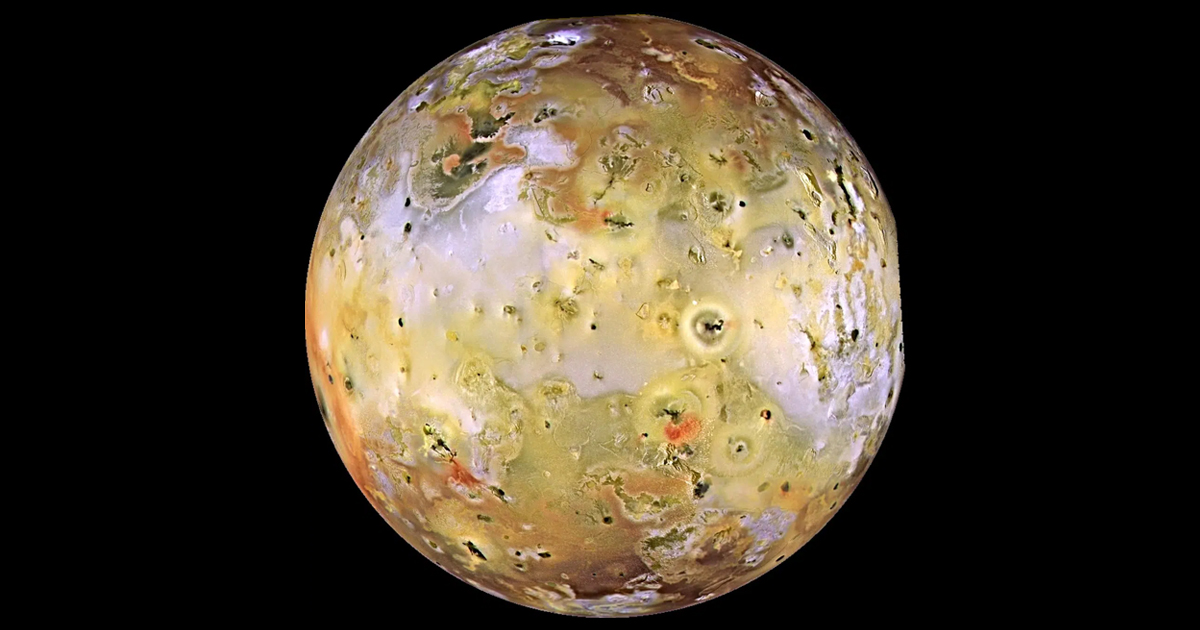
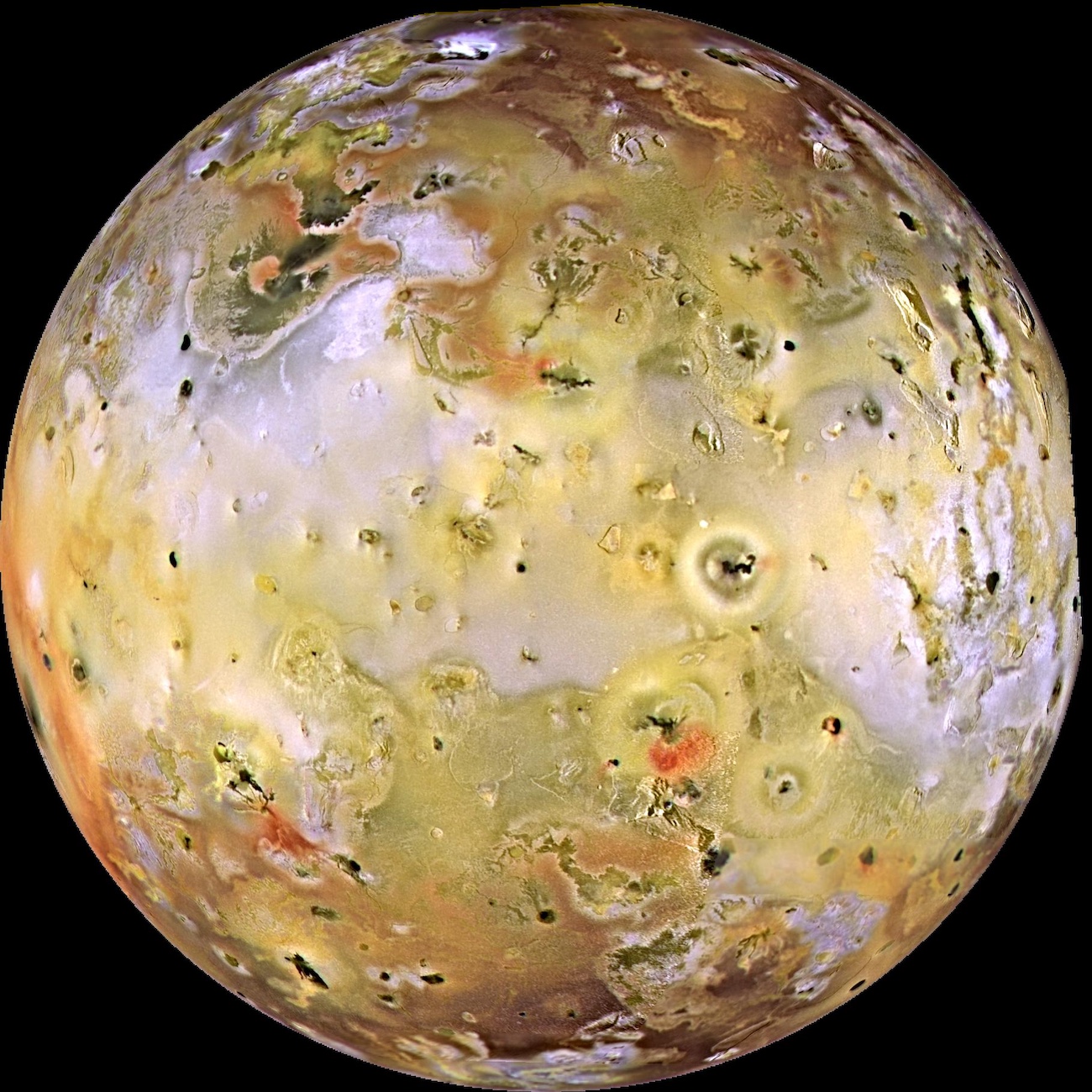
A high-resolution global view of Io captured by NASA’s Galileo spacecraft. (Photo: NASA/JPL/University of Arizona)
At first glance, Jupiter’s moon Io hardly looks real. Its surface is covered in swirls of yellow, orange, red, white, and black, with patterns that could easily be mistaken for an abstract painting. But these colors come from something much more extreme. Io is the most volcanically active world in our solar system.
During flybys in December 2023 and February 2024, NASA’s Juno spacecraft gave scientists and casual viewers alike a spectacular, up-close look at this strange, colorful moon. Passing within about 930 miles (1,500 kilometers) of Io, the spacecraft captured some of the sharpest images of its surface in more than 20 years. The photographs reveal Io’s unique topography, including active volcanic plumes, towering mountains, and lava lakes.
Now, scientists are learning more about what’s happening beneath that dramatic surface. In July 2026, NASA announced that Juno made the first temperature measurements below Io’s surface. Using the spacecraft’s microwave radiometer, researchers detected significant heat just beneath the moon’s crust, offering a new look at how energy moves through the volcanic world.
Across the area the instrument scanned, temperatures rose by more than 40°F just a few feet below the surface. According to scientists, the heat could be moving upward through Io’s crust or coming from cooling lava flows buried beneath layers of solidified rock. Additionally, the measurements revealed that large areas of Io are surprisingly smooth and covered in low-density material that NASA compares to pumice or fluffy volcanic ash.
Io’s extreme volcanic activity is powered by tidal heating. As the moon orbits Jupiter, the planet’s immense gravity repeatedly stretches and squeezes it, generating enormous internal heat.
The new subsurface measurements are helping researchers better understand not only Io, but also how tidal heating works elsewhere in the solar system. Similar forces help provide heat to the subsurface oceans believed to exist beneath the icy crusts of moons such as Europa and Ganymede. Scientists also believe the technique Juno used could eventually offer new ways to study volcanoes here on Earth.
For now, Io remains one of the solar system’s most visually striking worlds. Its almost painterly surface may look serene from a distance, but beneath those bright colors lies a moon constantly being stretched, heated, and reshaped.
Jupiter’s moon Io looks almost like an abstract painting, but intense volcanic activity shapes its surface.
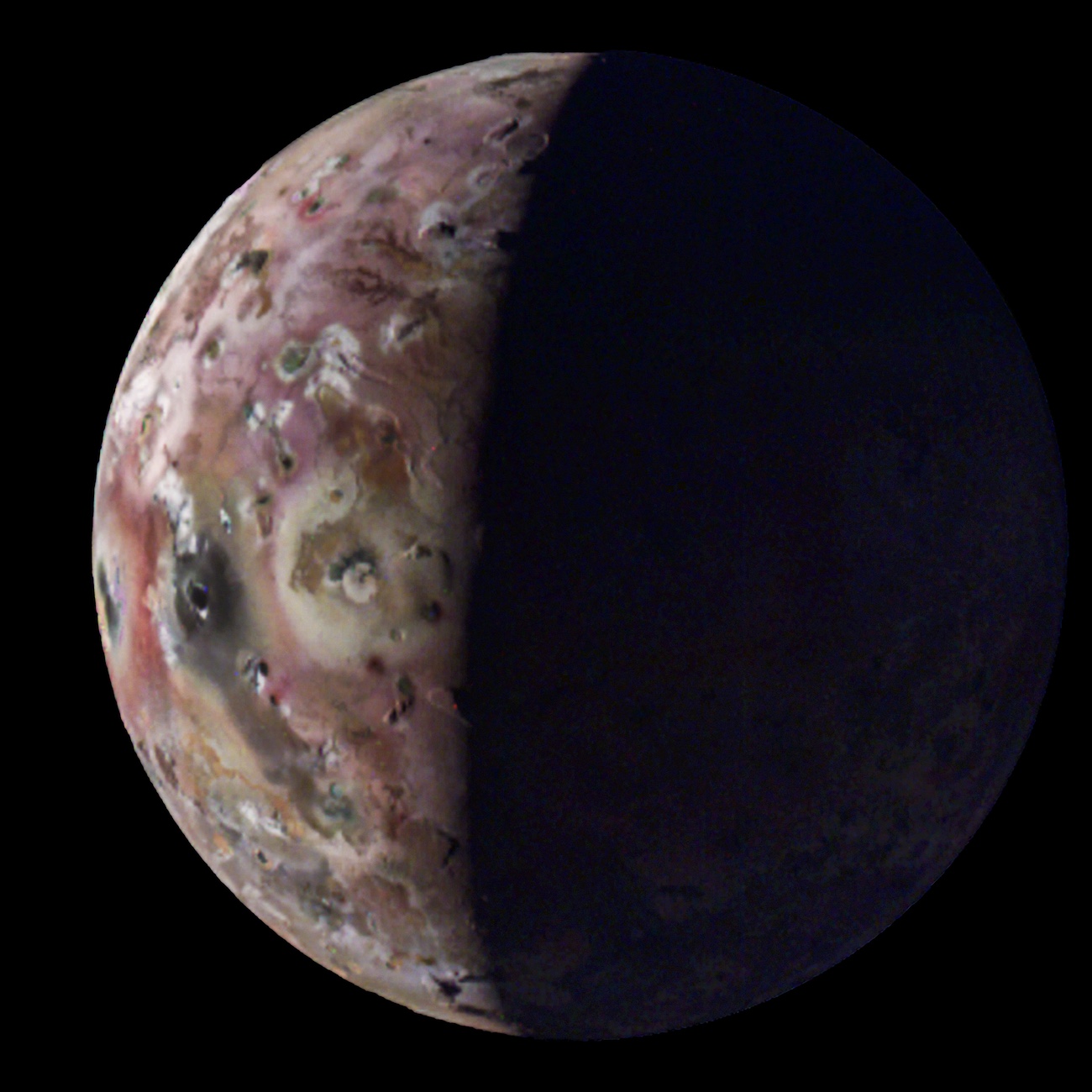
Jupiter’s moon Io is seen partially in shadow during NASA’s Juno spacecraft’s close flyby. (Photo: NASA/JPL-Caltech/SwRI/MSSS)
NASA’S Juno spacecraft captured some of the clearest pictures of Io in more than 20 years during close flybys in 2023 and 2024.
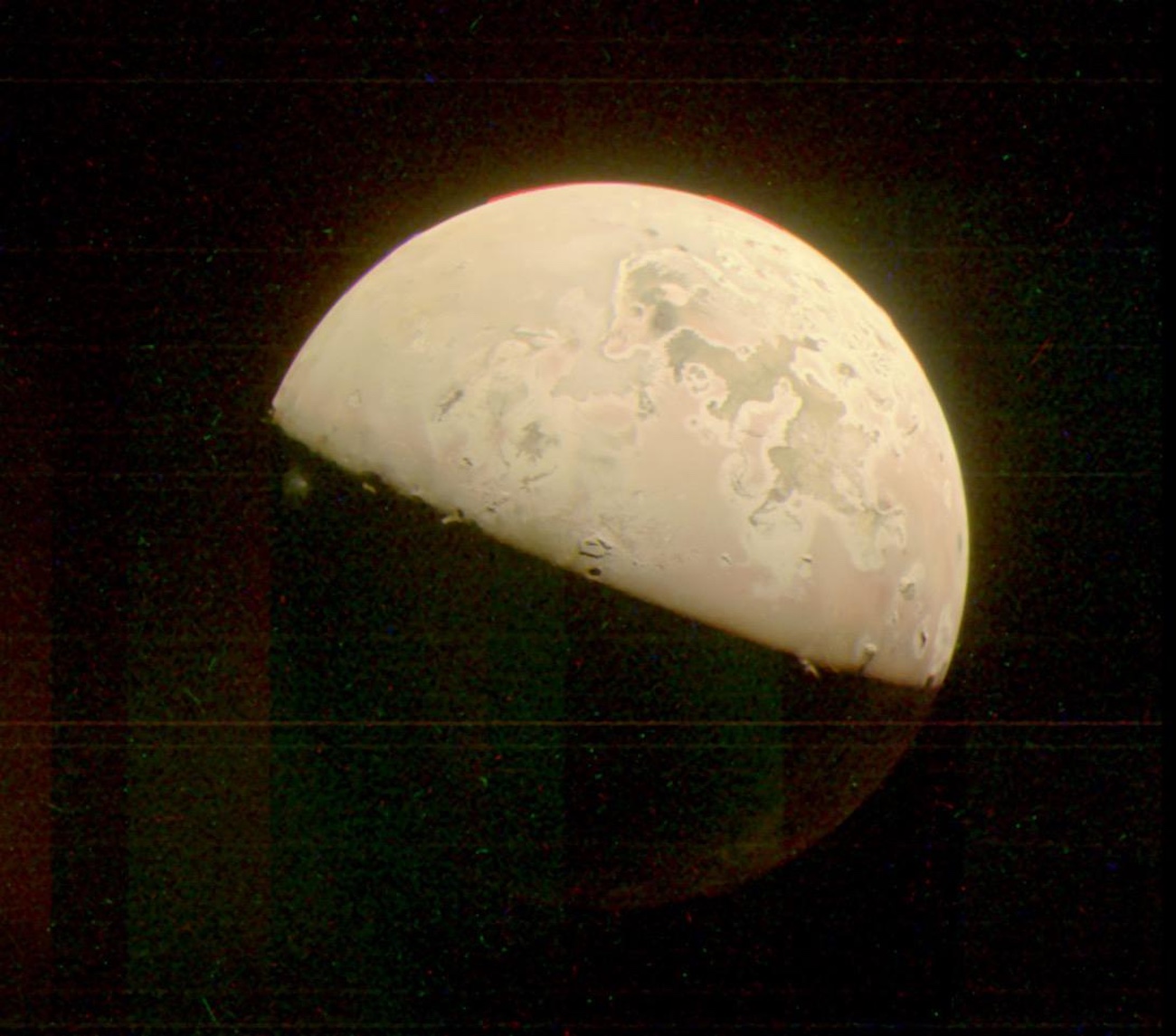
Io is seen half-illuminated just before entering Jupiter’s shadow, with a volcanic plume visible beyond the day-night boundary. The image was captured by JunoCam on December 21, 2018. (Photo: NASA/SwRI/MSSS)
New measurements are helping scientists understand the extreme heat beneath Io’s surface.
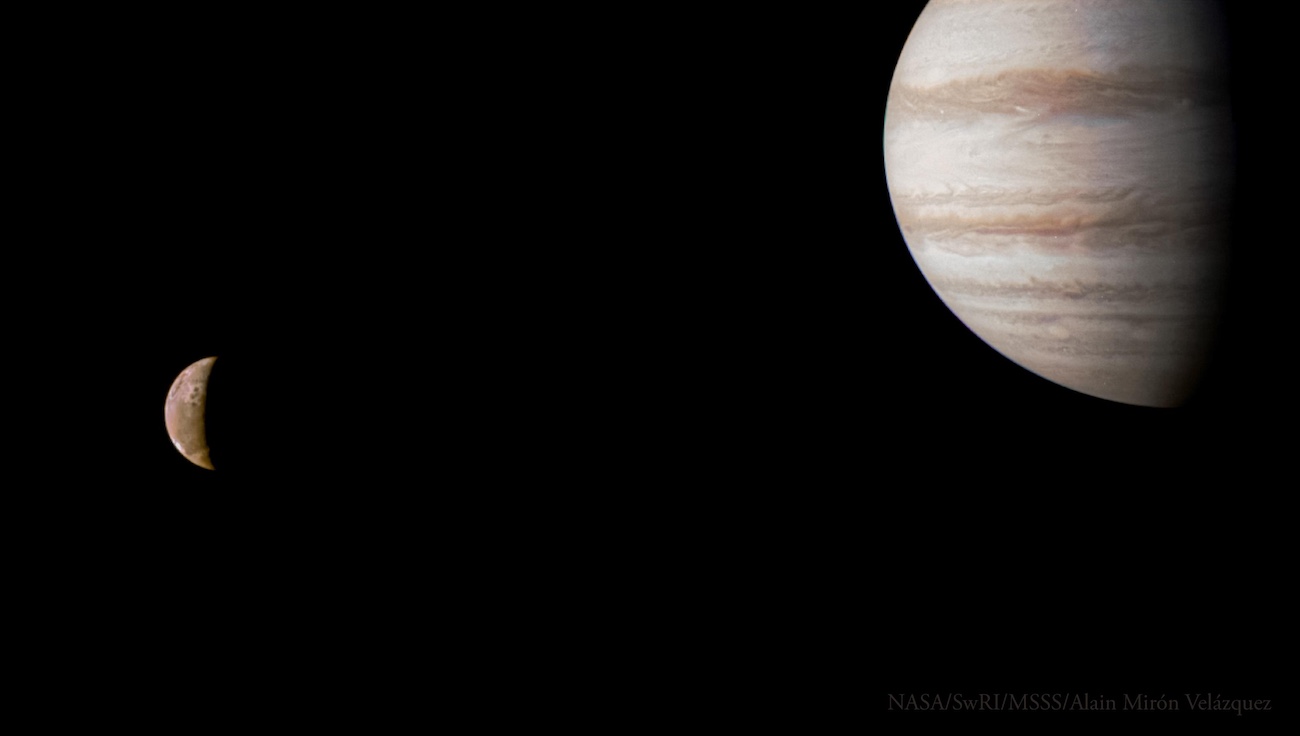
NASA’s Juno spacecraft captured Jupiter and its volcanic moon Io in the same frame during a close flyby in July 2023. (Photo: NASA/JPL-Caltech/SwRI/MSSS; image processing by Alain Mirón Velázquez, CC BY)
Sources: NASA’S Juno Takes Temperature of Jupiter’s Fiery Moon Io, For Your Processing Pleasure: The Sharpest Pictures of Jupiter’s Volcanic Moon Io in a Generation, Io Facts
Related Articles:
NASA Releases Hi-Res Mars Panoramas of Honeycomb Landscapes and a Sand-Capped Butte
NASA Announces Artemis III Crew Members Going to Space in 2027
NASA’s Mars Reconnaissance Orbiter Has Snapped Its 100,000th Image of the Red Planet