
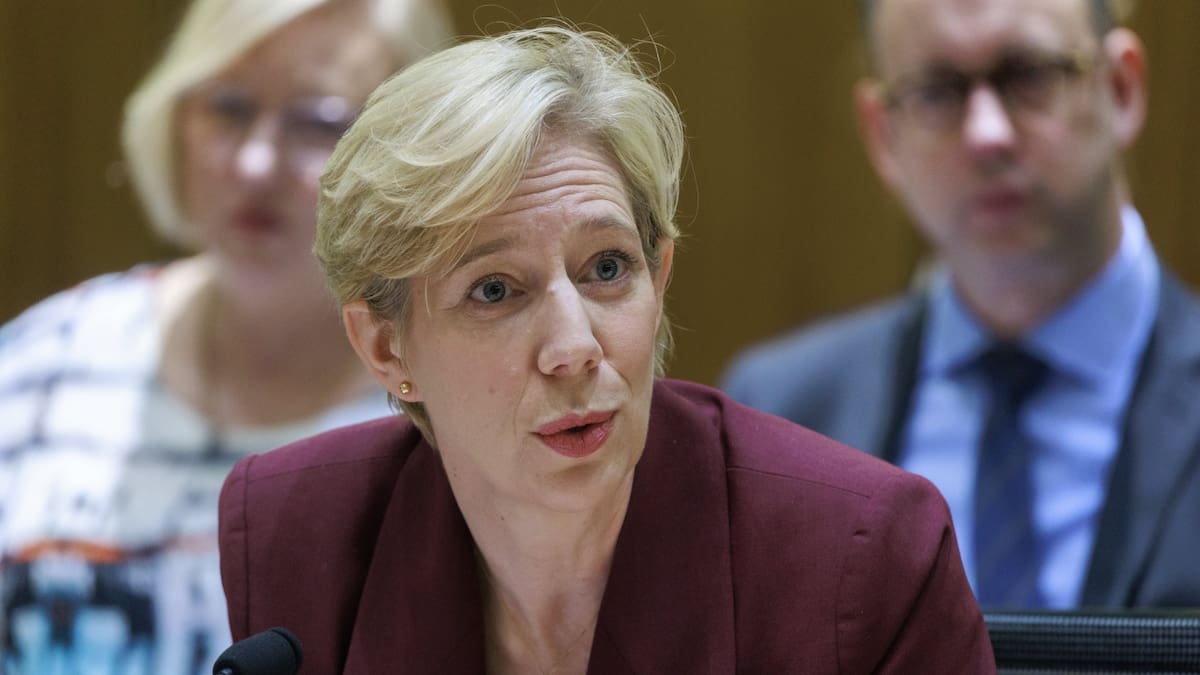
The external appointment of Swedish central banker Anna Breman has taken some of the political heat out of local monetary policy debate.
Breman has thus far proved a clear communicator and seems popular with the financial sector and economic community.
Monetary Policy Committee meetings have been opened to more public scrutiny, with voting decisions published to give the public insight into how united, or otherwise, committee members are.
Breman has expressed an intent to stay focused on the single mandate of inflation and the target of 1-3%.
There’s one significant fishhook in all of this, of course. The inflation rate is currently sitting outside that official target band.
At an annual rate of 4.1%, it continues to run too hot.
After a dramatic post-Covid spike above 7%, the annual inflation rate dropped as low as 2.2% in the December 2024 quarter.
But from there, inflation has risen steadily, pushed up by a combination of high local energy prices and the big global oil price rise.
Perhaps unsurprisingly, the squeeze that higher costs are putting on firms is recorded as one of the most pressing issues in the Mood of the Board survey this year.
However, business leaders were realistic about how much control local policymakers have over what is mostly imported inflation.
“Inflationary costs are due to the fuel crisis, tough one to solve given it is caused by an external event,” said one business leader.
“The New Zealand economy is okay, but the global economy does concern me. We have a couple of never-ending wars upending oil supply chains,” wrote another.
However, others were concerned that central banks and governments had not been as focused on inflation as they should have been in the past few years.
“Central banks around the globe have not had inflation aligned with targets for too many years,” one respondent said.
Fiscal discipline was also required, said another: “Balance the budget to lower inflation”.
By the numbers, 76% of business leaders said they thought the RBNZ’s latest rate hike (taking the OCR to 2.75%) was the right call.
Just 11% said it should have held (13% were unsure).
Business leaders were almost as strongly supportive of keeping the mandate focused squarely on inflation.
They were asked: should the Reserve Bank’s monetary policy settings be solely focused on meeting its inflation target?
Just 22% said no, 9% were unsure, but 69% want it left as the sole target.
“The Reserve Bank should have one clear job: keep inflation under control and maintain price stability,” said one respondent.
Trying to use interest rates to manage employment, house prices or other aspects of the economy was a distraction, they said.
The strength of support for the single mandate reflects the fact that the world generally seems to have re-entered an inflationary period.
In the decade before Covid, global inflation was so low that some economists believed it may have been eradicated as a problem.
Instead, central banks were forced to grapple with deflationary problems.
Some, including the RBNZ, looked at the plausibility of cutting interest rates into negative territory.
Back in 2016, nearly 50% of Mood of the Boardroom respondents believed the Government should rewrite its agreement with the Reserve Bank to give the Governor the ability to consider wider economic factors beyond inflation.
One leading banker, in the comments that year, argued that the single-mandate Reserve Bank Act was right for the 1980s and 1990s, when inflation was the problem – in a post-global financial crisis, low-inflation world, the Governor needed to focus on different things.
Of course, just two years later, those supporting a dual mandate got their wish as the incoming Labour-led Coalition changed the policy.
In hindsight, the timing probably couldn’t have been worse. Covid threw the world’s supply chains into disarray.
Governments and central banks pumped money into lockdown economies.
The result was an inflation spike that rivalled the oil shocks of the 1970s.
Whether a single mandate would have made a difference to how the Reserve Bank played its hand in the dual mandate era, we’ll never know.
But with inflation still running hot six years after the first Covid shock, it is clear that business leaders are not keen to repeat the experiment.
Liam Dann is business editor-at-large for the New Zealand Herald. He is a senior writer and columnist, and also presents and produces videos and podcasts. He joined the Herald in 2003.
Catch up on the debates that dominated the week by signing up to our Opinion newsletter – a weekly round-up of our best commentary.