
Triple-negative breast cancer, or TNBC, is one of the hardest forms of breast cancer to treat, leaving patients with few treatment options and a high chance of relapse after therapy.
One reason for this high chance of relapse is that many cancer drugs block only one pathway at a time. But tumors can adapt quickly by switching to alternate pathways thereby becoming resistant to single therapies over time.
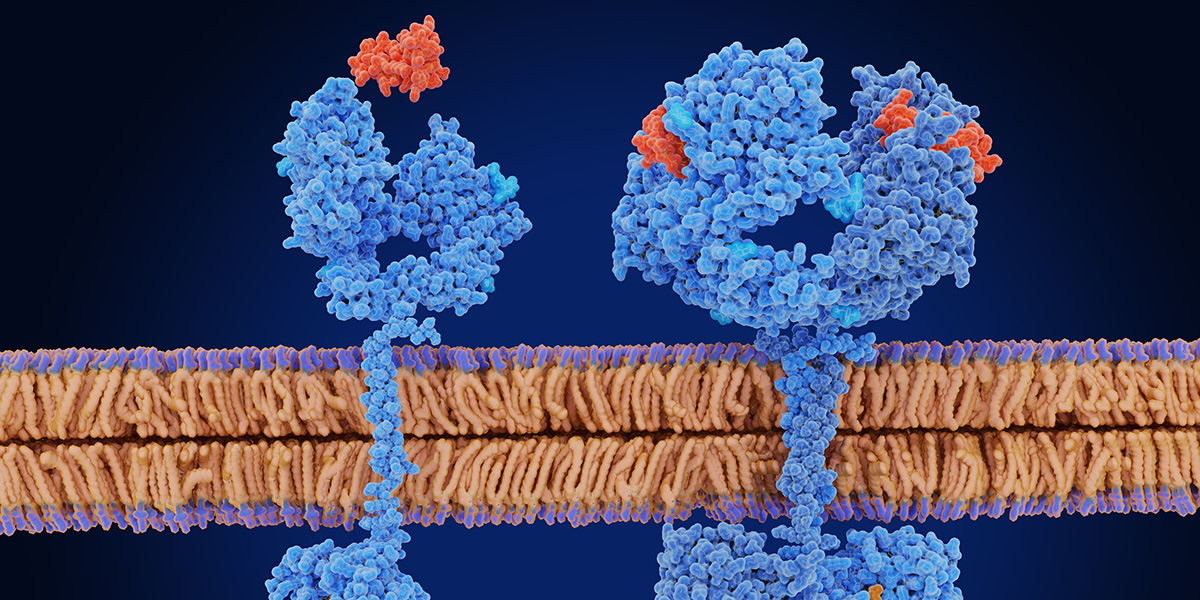
The epidermal growth factor (red) promotes cell migration, adhesion and proliferation. Shown here is the inactive epidermal growth factor receptor (blue) monomer (left) and the active dimer after ligand binding (right).
Mark L. Chiu and a team of researchers at Tavotek Biotherapeutics have developed a new tri-specific antibody designed to attack the disease on several fronts at once. In a recent study published in the Journal of Biological Chemistry, the team described TAVO412, an engineered antibody that targets three proteins linked to tumor survival, growth and metastasis: epidermal growth factor receptor, or EGFR, hepatocyte growth factor receptor, or cMet, and vascular endothelial growth factor, or VEGF.
“Single targeting has been shown to have slight or partial anti-tumor activity,” Chiu said. “Multiple targeting with a therapeutic combination has shown better results.”
TAVO412’s anti-EGFR and anti-c Met arms block signaling proteins that would normally stimulate tumor growth. TAVO412’s anti-VEGF function interferes with blood vessel formation that would supply nutrients to tumors and provide a transport pathway for metastasis. Finally, the active Fc component enables TAVO412 to recruit complement and immune cells to attack cancer cells directly.
In mouse models of TNBC, the therapy slowed tumor growth across multiple cancer subtypes, including tumors with relatively low levels of EGFR and cMet. This finding may be clinically relevant because patients often show wide differences in these tumor markers. Additionally, TAVO412 performed as well as, and in some cases better than, existing therapies at targeting EGFR, cMet and VEGF pathways in preclinical models. The researchers were also encouraged by signs that the antibody selectively activated the immune system against tumor cells with higher levels of EGFR and cMet.
The study highlights a growing interest in multifunctional cancer therapies that combine several treatment strategies into a single drug. Instead of giving patients multiple separate drugs, tri-specific antibodies like TAVO412 may eventually offer a way to block several cancer-promoting pathways while minimizing the risk of relapse due to resistance.
TAVO412 has completed early clinical trials, and additional clinical trials are being planned.
“We want to help patients that are not responding to existing therapies,” Chiu said. “The challenge is to move forward in pivotal clinical trials with patients with unmet medical needs.”