
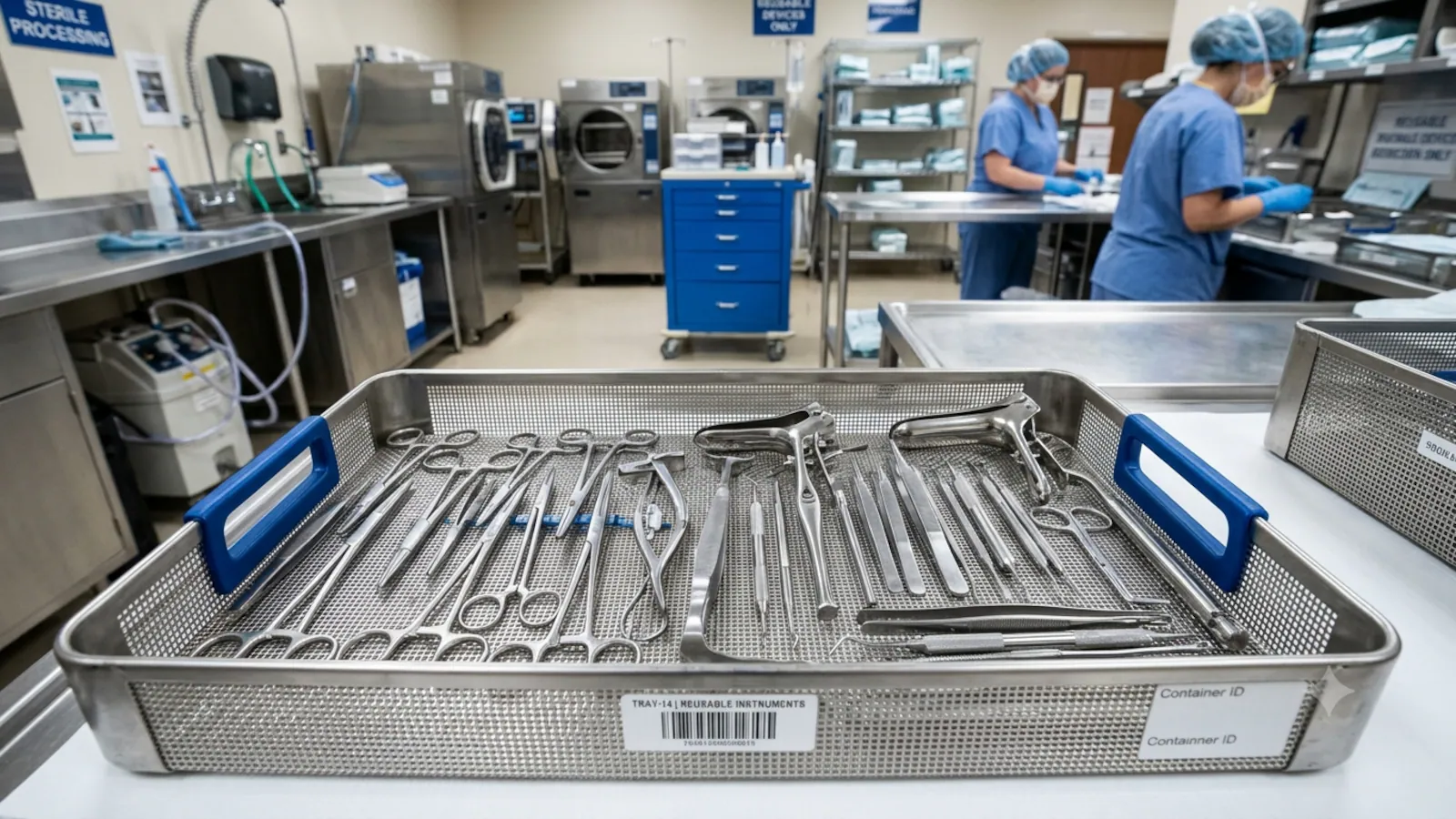
The Directorate General of Health Services (DGHS) has directed states and Union Territories to ensure strict enforcement against the reuse of single-use medical devices and disposable surgical items in public and private healthcare facilities across India. The warning comes after the health authority observed that certain private and corporate hospitals were reportedly sterilising and reusing devices meant to be used only once, particularly in critical specialities such as cardiology, nephrology, oncology, neurosurgery, and cardiothoracic and vascular surgery. In a communication dated October 16, 2026, the DGHS flagged concerns over patient safety, infection prevention and control, regulatory compliance, and healthcare expenditure. It cautioned that reusing such devices could expose patients to cross-infection, device malfunction, reduced performance, and other procedure-related complications. The directive calls for vigilance and effective enforcement to prevent the practice across healthcare organisations under the administrative jurisdiction of the Central and state governments.
Why Has DGHS Flagged The Reuse Of Single-Use Medical Devices?
According to the DGHS communication, certain hospitals have reportedly been reusing single-use medical devices and disposable surgical items after subjecting them to sterilisation. These products are designated for single use, meaning they are intended to be used for one procedure and then discarded according to the applicable instructions.
The letter highlighted that the reported practice was particularly concerning in specialised clinical services, including cardiology, nephrology, oncology, cardiothoracic and vascular surgery (CTVS), and neurosurgery.
The DGHS also noted that, in some instances, patients or government authorities were being charged or reimbursed the full cost of these items despite their reuse. The authority said the issue raised questions about patient safety and healthcare expenditure, alongside compliance with the applicable regulatory and infection-control requirements.
What Are The Health Risks Of Reusing Single-Use Medical Devices?
Medical devices and surgical items are designed for specific uses and must be handled according to their manufacturers’ instructions. Sterilisation alone does not necessarily establish that a device intended for one-time use can be safely reused. The DGHS has highlighted several potential risks associated with the practice:
1. Cross-infection: Inadequate or inappropriate reprocessing can leave patients vulnerable to infections. This is a particular concern when devices are used in invasive procedures or come into contact with blood and internal tissues.
2. Device malfunction: A device may not function as intended after use or unauthorised reprocessing. A malfunction during a medical procedure could compromise patient safety.
3. Loss of performance: Reuse may affect a device’s intended performance, depending on its design, materials and the procedure for which it was manufactured.
4. Procedure-related complications: Device failure, contamination or reduced performance can contribute to complications during or after a procedure.
The DGHS has warned that these risks make the reuse of devices labelled for single use a serious patient-safety concern.
What Has DGHS Asked States And Union Territories To Do?
The DGHS has requested Additional Chief Secretaries, Principal Secretaries and Secretaries (Health), along with Directors of Health Services in states and Union Territories, to ensure strict vigilance and effective enforcement against the reuse of single-use medical devices and disposable surgical items. The communication also calls on the Drug Controller General of India (DCGI) and state and Union Territory drug controllers to support enforcement within their respective jurisdictions.
The directive states that single-use devices and disposable surgical items must be used strictly in accordance with the instructions and recommendations of the original equipment manufacturer (OEM).
The prohibition applies to healthcare organisations, including public and private healthcare facilities, under the administrative jurisdiction of the Government of India, states and Union Territories.
Rajiv Nath, Forum Coordinator, Founder and Forum Coordinator, Association of Indian Medical Device Industry (AiMeD), says, “This is a patient-first decision. Single-use means single-use. Where a product is used contrary to its labelled instructions, such as being reused, any failure or harm cannot be attributed to the manufacturer. Responsibility must rest with the person or establishment that reused it. We ask that this be clearly reflected in enforcement and in any liability framework.”
Which Laws And Regulations Could Apply?
The DGHS has referred to several existing legal and regulatory frameworks in highlighting the seriousness of the issue. These include the Drugs and Cosmetics Act, 1940; the Medical Devices Rules, 2017; and the Clinical Establishments Act, 2010, alongside standard infection prevention and control protocols and applicable biomedical waste management provisions.
The communication cautions that reusing single-use devices may violate applicable regulatory requirements. Healthcare facilities are expected to follow the relevant rules, infection-control protocols and manufacturer instructions for the devices they use. The precise regulatory requirements may vary according to the device, its classification and the applicable legal provisions.
What Does This Mean For Patients?
The DGHS communication places the responsibility on healthcare authorities and facilities to ensure that devices labelled for single use are not reused in violation of applicable requirements. Patients undergoing invasive procedures may ask their treating team about the medical devices being used, whether the devices are intended for single use, and how the hospital ensures compliance with infection-control and device-handling protocols.
As per Dr Amit Thadani, Consultant General and Laparoscopic Surgeon, Mumbai, this will lead to skyrocketing of costs of procedures that depend on these devices, from cardiac to gastroenterology and urology.
“Consider the cost of an ERCP, a common gastroenterology procedure which requires sphincterotome, guide wire, stent pusher, basket at the least. The cost of an average procedure is 50-60k when these devices are reused. If everything is single use, the cost of devices itself will exceed the cost of the procedure and lead to at least a doubling of the cost to well over a lakh. In advanced laparoscopy, the harmonic scalpel is a vital device. We can use it 3-4 times and bring the cost (60k per piece) down sharply. But with this, every patient will need to be charged 60k for not the treatment but the device. It’s a windfall gain for the manufacturers but a massive jump in cost for patients and insurers,” Dr Thadani says.
Patients should not assume that a device is safe to reuse simply because it has been sterilised. Sterilisation and the validation of a device for reuse are not interchangeable, and the manufacturer’s instructions and applicable regulations remain important. The DGHS directive seeks to strengthen oversight of the practice and reinforce the importance of patient safety, infection prevention and accountability in healthcare delivery.
Disclaimer: This content including advice provides generic information only. It is in no way a substitute for a qualified medical opinion. Always consult a specialist or your own doctor for more information. NDTV does not claim responsibility for this information.