

It was early September 2022 and sprinkled among the celebrities attending the Irish premiere of Michael Flatley’s film Blackbird were people thinking a little bit more about the financials around the project.
The film, directed, written, produced by and starring Mr Flatley had been by accounts all but completed four years earlier, its journey to the screen described by one observer as taking on a “mythological” air.
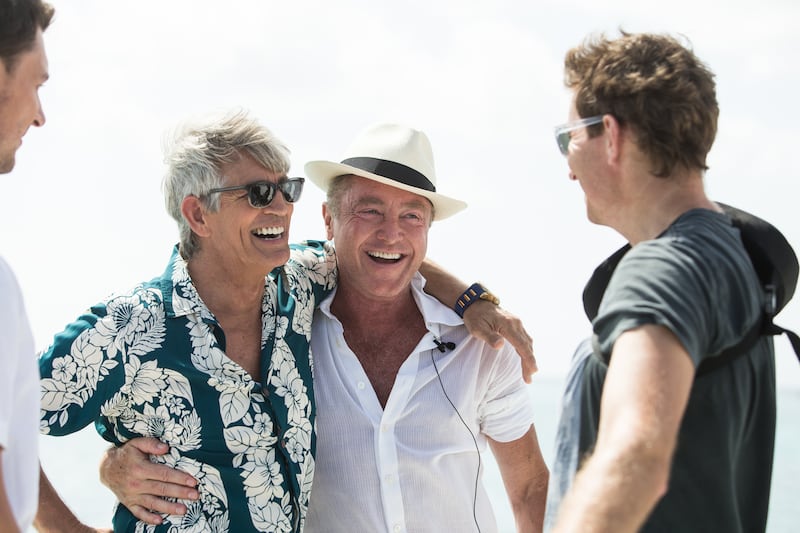 Eric Roberts and Michael Flatley on the set of Blackbird (Brian Doherty/PA) (Brian Doherty)
“I think as the movie progressed, we realised it might face challenges in the open market,” says Des Walshe, a veteran financial adviser who had been working for the celebrated dancer for close to a year at that point.
“But you were thinking the best as you went along. We were.”


As the lights came on at the Lighthouse in Smithfield, the group headed outside and huddled. “We’re f*****,” someone said to nods from others, according to Mr Walshe and one other person in attendance. They parted ways and went home as others partied post screening.
In the end, the critically panned film pulled in an estimated £10,000 on a limited run in cinemas and, while it is unclear how much more it might have earned from streaming, it was certainly far short of the hoped for double figure millions.
It was described by noted film critic Mark Kermode as “mindbendingly terrible,” worse than Sex Lives of the Potato Men.
Des Walshe had persuaded private investors to loan Mr Flatley approximately €4m to cover an outstanding debt and help ease the film towards completion and into cinemas. The loan was secured against Mr Flatley’s Co Cork mansion, Castlehyde.
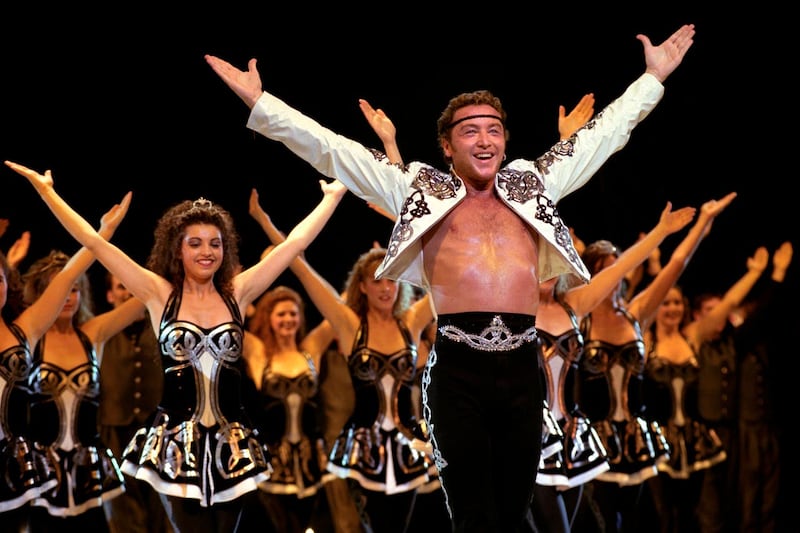 Michael Flatley in Lord Of The Dance some years ago. PICTURE DAVID CHESKIN/PA
That is how, according to Mr Walshe, he “walked backwards” into the Lord of the Dance and an ongoing business relationship with Mr Flatley that ended with heated legal hearings over several days in the High Court in Belfast in January.
There are more days like that to come in the Belfast court, beginning within the next weeks, while affidavits, claims and counterclaims have been flying back and forth for the last six months. Other court cases involving Mr Flatley are ongoing in Dublin.
Mr Walshe is speaking publicly for the first time after he was freed from a non-disclosure agreement. Others involved with Mr Flatley and his businesses over several years up to late last year have also provided details on their relationship with the dancer.
The tangled tale involves multiple millions of pounds, a war of words over the management of the Lord of the Dance and its revenues, billionaires covering debts, the semi-enclave of the ultra-rich Monaco, a currently vacant Castlehyde mansion, the beleaguered film – and whiskey.
But there was also a truly terrible turn in the last number of weeks as Mr Flatley’s wife of 20 years, Niamh, passed away after suffering for some time from a lung condition.
Chicago-born Michael Flatley was catapulted to fame after the 1995 Eurovision Song Contest and the amazing seven-minute Riverdance routine, with a full show following.
The next year, following a dispute, Mr Flatley struck out on his own with Lord of the Dance, a show that became a phenomenal international box office success through the late nineties and beyond.
Mr Flatley used some of the proceeds to buy what was then a dilapidated Castlehyde, the ancestral home of Ireland’s first president Douglas Hyde. He paid a reported, what was then, £IR3m, but spent close to €30m refurbishing the building.
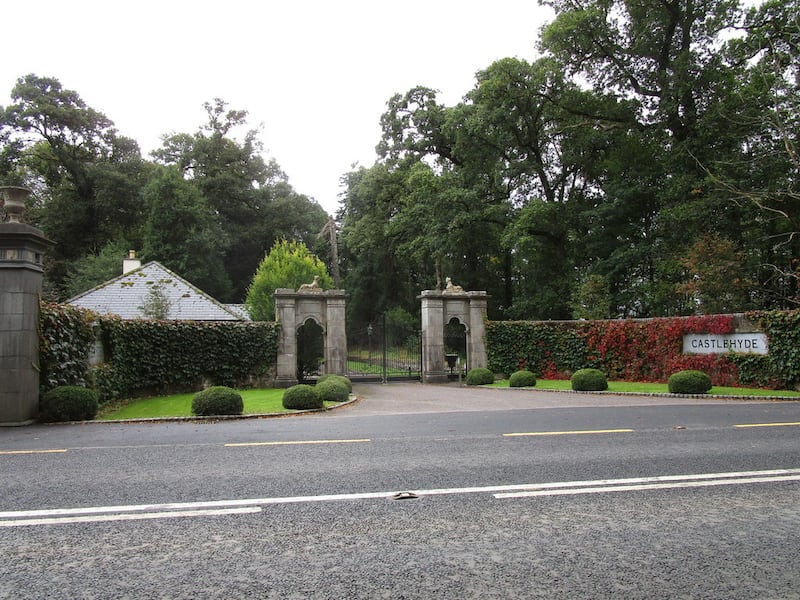 The entrance to Castlehyde estate in Co Cork
It was damaged in a fire in 2016, the genesis of an ongoing €30m legal battle in the High Court involving Mr Flatley, the contractors and an insurance company. The building and grounds were put on the market on two occasions, but failed to sell.
Mr Flatley is claiming the fire left toxic levels of chloride residue that were not addressed by the contractor hired to fix the damage. He has not lived in the house since 2023, spending much of his time in Monaco, among the most expensive places to reside in the world and where he has forged a friendship with Prince Albert II.
To late 2022 and into 2023 following Blackbird’s release, the investors were “looking at alternative methods of repayment”, says Mr Walshe.
“And obviously, the man (Flatley) didn’t want to sell the house naturally enough. So there was….the show business side of things.” There was a further development, or twist, as another financing company, Novellus, headed by the nephew of high-profile bookie, race horse owner and billionaire JP McManus, took over the film debt in late 2023, still secured on the house.
According to several individuals involved, a plan to ramp up the Lord of the Dance show was conceived, with a trial roll-out before a full-scale multi-country tour in 2026, the 30th anniversary, and 2027.
A company linked to Mr Walshe, Switzer, was to manage the project. It was already a registered company, and crucially, based in Northern Ireland, to take post-Brexit advantage of being one foot in the UK and one in Europe.
Co Tyrone-based Joe Gallagher was hired as the agent to work with promoters in England, Germany and other parts of Europe. In total, 260 shows were ultimately booked for this year alone, though it is not clear whether any more are now going ahead next year.
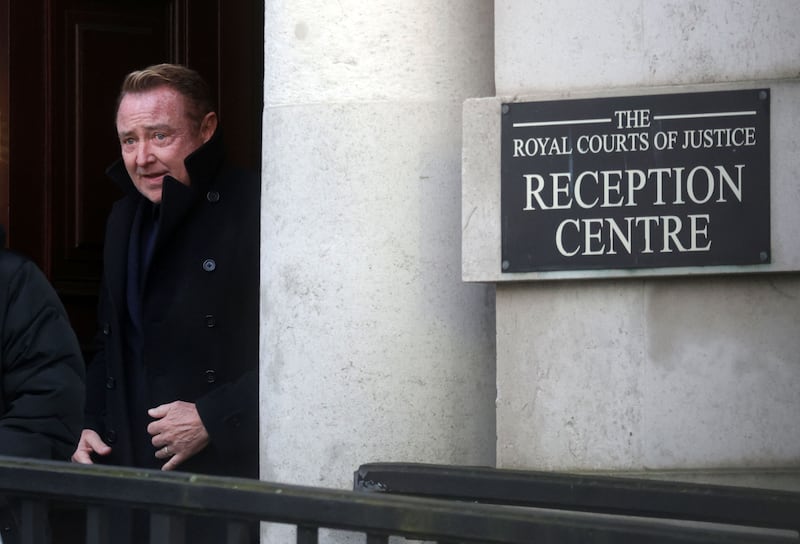 High Court cases in Belfast involving Michael Flatley are continuing
But there was a problem as a company called Cutting Edge, headed by businessman Philip Moross, had loaned money to Mr Flatley’s companies from 2019 and held the music rights to Lord of the Dance. A deal needed to be done to satisfy Mr Moross, according to Mr Walshe.
This, the financial adviser says, happened with a settlement agreement signed on July 12, 2024. And that settlement is front and centre of what can absolutely be described as a bitterly contested legal tussle being played out in Belfast.
In short, 3.75% royalties on the box office gross would go to Mr Moross until a debt of $2.9m was paid off. Mr Flatley would receive the same percentage in royalties. Switzer would be paid £35,000 to £40,000 monthly to manage the tour. “Win, win,” argues Mr Walshe.
The agreement as a whole is in dispute, with Mr Flatley not accepting its validity “even though his signature appears on the document”, a court judgment noted.
People close to Mr Flatley are in touch with The Irish News but did not respond to a number of questions.
However, in an affidavit filed with the High Court in Belfast, Denis O’Sullivan, a former garda and now a director of various Flatley-linked companies, said he was asked to investigate assets and liabilities in connection with Switzer.
“The Flatley family’s core concern was when Switzer Consulting took over management of their financial affairs in the second half of 2022, borrowings stood at approximately €4m,” he said.
“By mid-2025 those borrowings had spiralled to €17m. The family was unable to obtain any explanation for this increase.” This is rejected by Mr Walshe.
As 2024 rolled into 2025, Mr Walshe says everything appeared to be going well, with shows happening and others booked and updates being made, including to costumes.
But then there was the whiskey, originally to be Castlehyde but later named ‘Flatley The Dreamer’. As is normal in the industry, a distillery, Great Northern, would produce the spirit under the Flatley brand.
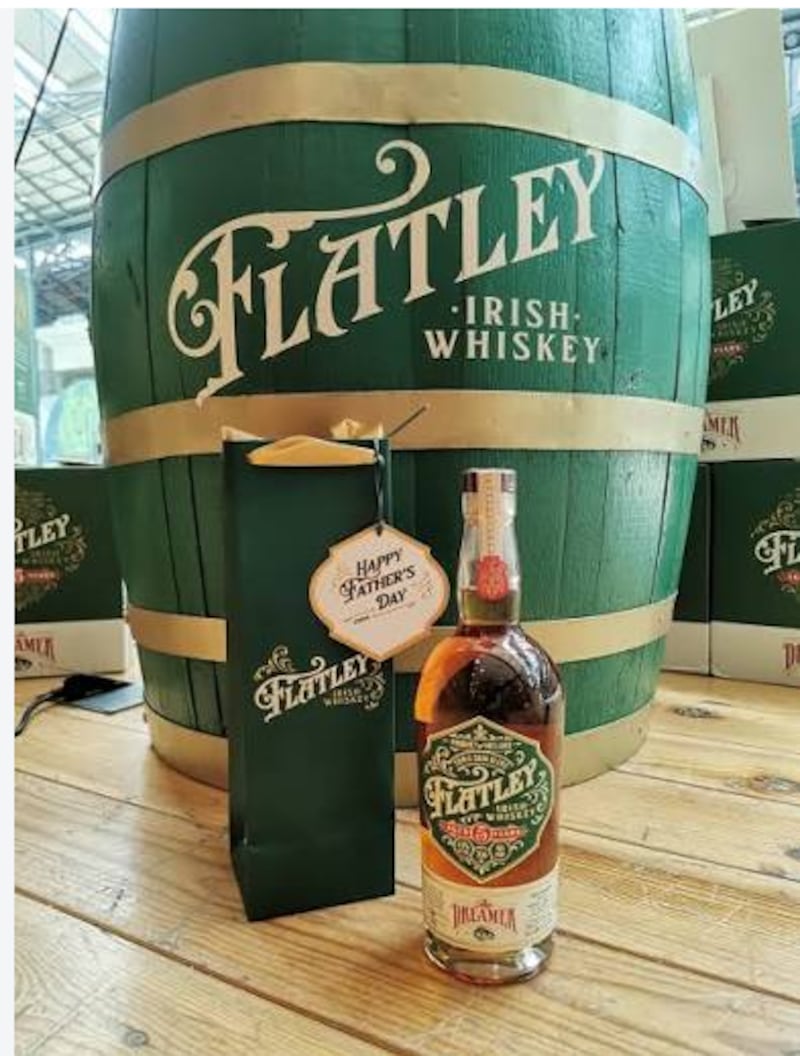 Michael Flatley launched his own brand whiskey in 2024
According to Mr Walshe, there was an agreement for a low-key rollout of the brand. He was surprised when he received word of a party in the Mansion House in Dublin in May, 2024, attended by, among many others, Leo Varadkar, who a month earlier had stepped down as Taoiseach.
“I went bananas,” says Mr Walshe as he remembers wondering about the cost and how much whiskey had already been ordered.
In a judgment in one of the legal actions, delivered last month, a Dublin appeal court judge wrote: “He (Flatley) said that he was the 100% owner of that business. There was nothing about corporate structure, premises, brands, production, stock in bond, or – for that matter – a single drop of whiskey.”
Flatley Whiskey Limited in late August was hit by a judgment of nearly €45,000 by the Great Northern Distillery. The website link on Flatley Whiskey’s social media redirects to a German gambling site
Later in 2024, Mr Flatley was facing legal action from the lenders, Novellus, as the company pursued payment of that loan that first began as the one to finance the film Blackbird but had increased substantially.
Two companies then entered the stage. The companies agreed in March, 2025, to cover the debt, now at close to €7m, still secured against the house, which a judge in Dublin estimated last month to be worth €9.5m.
Mr Walshe says that in the summer of last year, discussions began around the potential sale of Lord of the Dance, valued by the dancer’s own team at around £90m, according to a statement of affairs provided in one of the court actions. Mr Flatley’s representatives did not respond to a question around the discussions over a potential sale.
Expertise in such a sale and more money would be needed so a Guernsey-based businessman was brought on board. Last summer, he agreed a loan facility of £2m, with £500,000 ultimately drawn down.
In late July, 2025, Mr Flatley needed to book into a hotel. He refers in a message to the loan from the businessman and Amex, the credit card company.
“We need to send them 14k to get our card turned back on. We need our credit card to even check in to our hotel Saturday. We owe 37k in all, but if the loan comes in, we can clear the decks,” read the message, which is added to an affidavit filed in another legal action taken by Mr Flatley.
From Mr Walshe’s point of view, troubling murmurs began in Autumn last year. At a meeting in a Dublin hospital in October, he was told an individual linked to those that now held the debt were taking over Mr Flatley’s financial affairs.
Another meeting in November with Mr Flatley and others was the beginning of the end of the relationship. An injunction that potentially would have stopped the Lord of the Dance shows going ahead from February was filed by Mr Walshe and those linked to him in January as part of a wider breach of contract claim.
A High Court judge ruled the shows should go ahead, which from filings everyone appeared to agree on. The $2.9m Moross debt was settled in March by the same companies that covered the one owed to Novellus. By May, Mr Flatley had full control of Switzer.
The Lord of the Dance show goes on, due to roll on to Czechia, Poland and Slovakia after finishing its English run in London last weekend.