
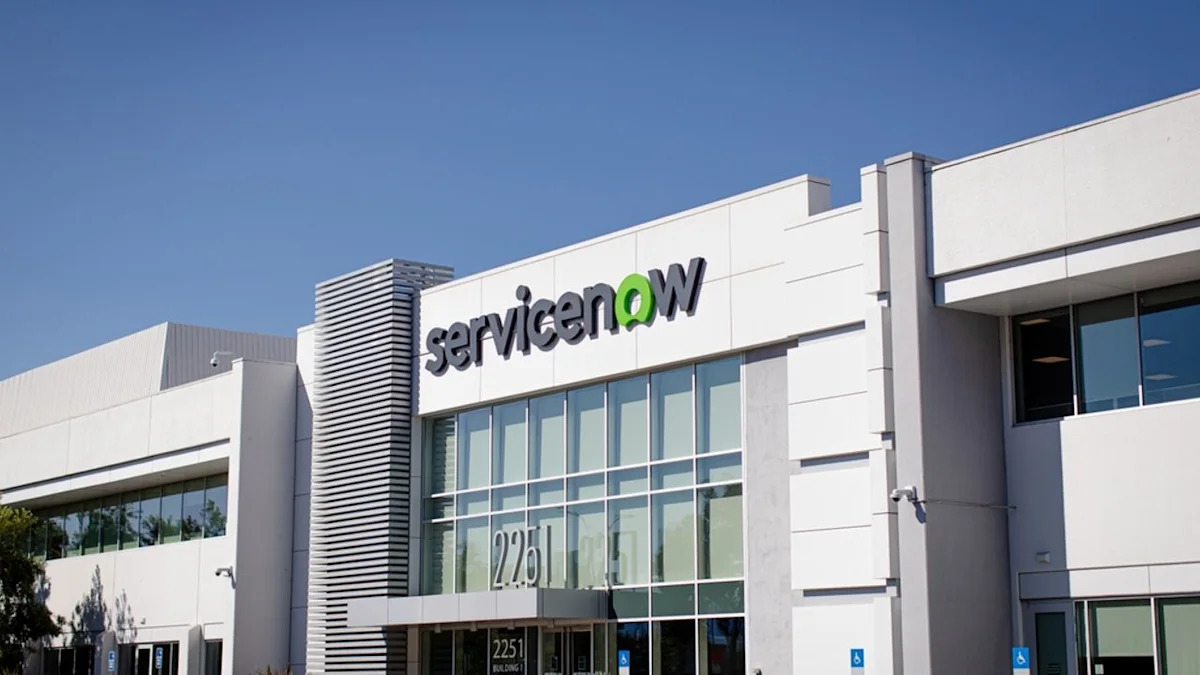
 ServiceNow shares slide as investors weigh slowing backlog growth against AI ambitions Proactive uses images sourced from Shutterstock
ServiceNow Inc (NYSE:NOW, XETRA:4S0) shares fell more than 16% in after-hours trading on Wednesday as investors weighed the enterprise software company’s higher artificial intelligence targets against signs of slowing backlog growth and pressure on margins.
The company raised its 2026 AI annual contract value (ACV) target to $1.7 billion from $1.5 billion last quarter, marking the second increase this year.
However, its fourth-quarter outlook pointed to a further slowdown in current remaining performance obligations (cRPO), a measure of contracted revenue expected to be recognised over the next 12 months.
ServiceNow expects cRPO growth of 18.5% in the fourth quarter, down from 21% in the third quarter on a constant-currency basis.
The forward-looking metric is closely watched by investors for signs of future subscription revenue growth, making the projected deceleration a potential concern despite the company’s stronger AI performance.
Third-quarter subscription revenue rose 20.5% in constant currency to $4 billion, ahead of analyst expectations of $3.98 billion. Total revenue reached $4.1 billion, slightly above the $4.09 billion consensus estimate.
Adjusted earnings per share of $1.00 narrowly missed the $1.02 forecast, although adjusted operating margin of 32.5% beat expectations of 31.2%.
ServiceNow also raised its full-year subscription revenue outlook by $15 million to between $15.78 billion and $15.79 billion.
The company’s AI products continue to gain traction, with production consumption of agentic AI increasing more than 13-fold from a year earlier. It also reported 19 transactions worth more than $5 million in annual contract value, up 135% year over year.
However, concerns about cloud-hosting costs and their potential effect on margins may have added to investor caution as the company expands its AI offerings.
ServiceNow raised its full-year free cash flow margin target by 100 basis points to 36%, citing a capital-efficient approach to AI investment.
The sharp share-price decline suggests investors were looking beyond the revenue beat and higher AI target to assess the pace of future growth and the profitability of the company’s AI expansion.