
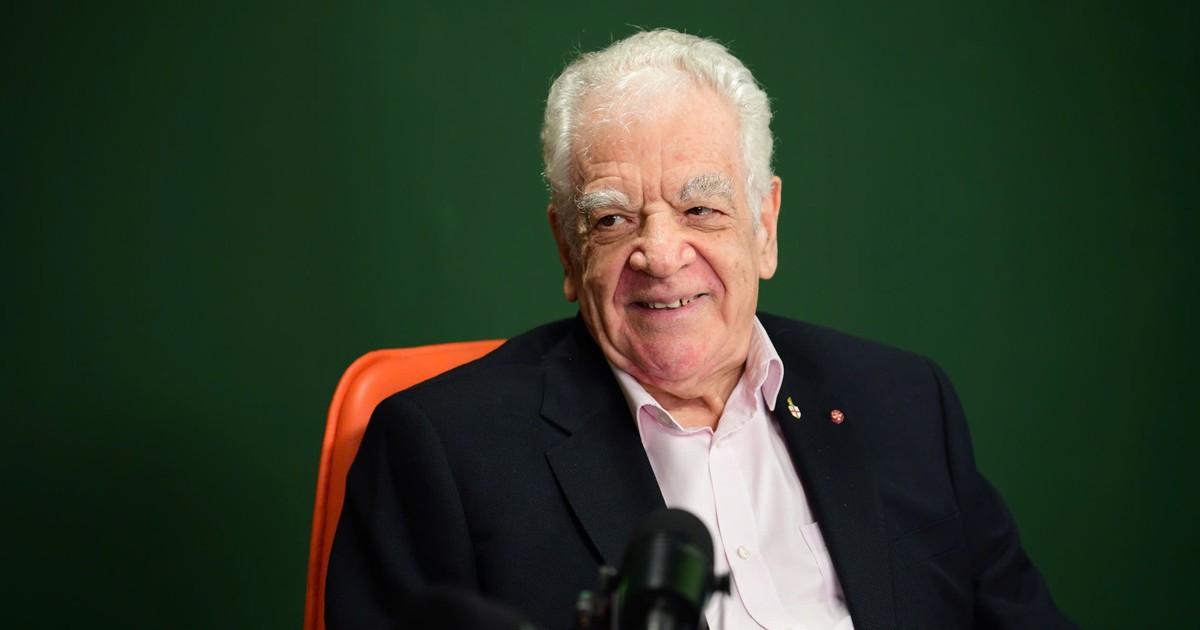
Kenneth Atkinson OBE, founder and senior board advisor of Grant Thornton Vietnam. Photo: Quang Dinh / Tuoi Tre News
Established in Vietnam in 1993, the company provides audit and assurance, tax, business advisory, and business process solutions to domestic and international clients.
Atkinson has over 35 years of experience advising multinational corporations, government agencies, and private equity funds on doing business in Vietnam.
To begin with, could you give a brief introduction to your background?
I have two names, Kenneth Atkinson or Ken as everybody calls me and Pham Kien Son, which is my adopted Vietnamese name, together with my adopted second nationality. So I have dual citizenship. I’ve lived in Ho Chi Minh City full-time since 1993.
I spent three years in Hanoi before that and I’m married to a lovely Vietnamese lady and I have 10-year-old son who was born here as a Vietnamese citizen.
And I love the country. I’ve got no intentions to move back to England, so I’m here for the duration.
You first arrived in Vietnam in 1989, when the country was at a very different stage of economic development. And today Ho Chi Minh City is developing into a manufacturing hub which generates nearly a quarter of national GDP, yet the financial system remains heavily driven by commercial banks. So looking at how far the city has come, do you think that the financial sector has kept pace with the wider economy, or has the real economy outrun the capital markets?
I think it’s true to say that the commercial business has outrun the current financial systems and access to capital that a country experiencing the growth that Vietnam is experiencing actually needs. But on the other hand, that’s not unusual for developing countries to find themselves in that situation.
So I think we are at a crossroads, but the good news is that there’s a lot of focus now on turning Ho Chi Minh City and Da Nang into international finance centers or one center but two locations.
That of course will facilitate bringing in the huge amounts of capital that the country needs for its development. And I remember when I arrived in 1989, the total foreign trade was just US$5 billion.
So it’s come a long, long way since then, and I’m very fortunate to have been part of that development in a country that I love.
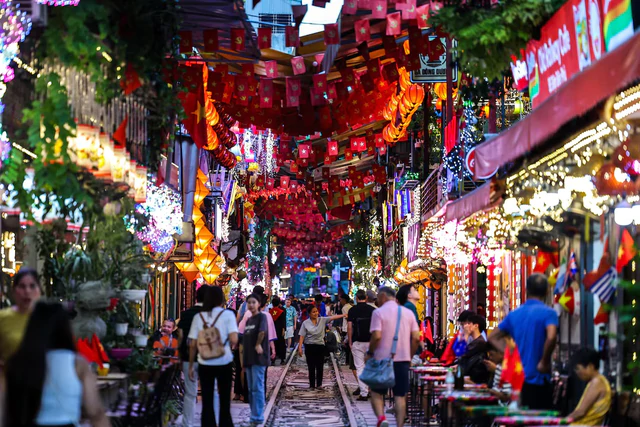
Tourists visit Hanoi Train Street, one of the famous tourist destinations in Hanoi. REUTERS/Athit Perawongmetha
The government is pushing hard to establish an international financial center anchored across downtown Ho Chi Minh City and the Thu Thiem peninsula. From your experience advising global investors, what should a viable IFC in the city look like? Should it be offshore banking, fintech, or a channel of foreign capital into domestic infrastructure?
I think the short answer is that it should be all of those, but I think Vietnam’s got a great opportunity. There’s a lot of discussion about whether we should be like Singapore, Dubai, or the one in India. And I don’t think we should be trying to replicate what’s already been done under very different circumstances.
I believe Vietnam’s opportunity is to position itself as a gateway for capital as the fastest-growing economy in Asia, and probably the fastest-growing economy in the world, with a significant population of over 100 million.
What we need is to develop more financial products, to support fintech for example, to support infrastructure investment through PPP, bond structures, or particular projects. And in order for those financial instruments or methodologies to actually take hold and to develop, we need a proper regulatory environment that people can trust.
And when I say trust, it’s trust in the underlying regulations and trust in the implementation of those regulations, and transparency, particularly of the judicial system.
And that is exactly the issue that I want to bring to the table next, because I think that whatever shape the international financial center takes, its success will ultimately depend on international investors and whether they are willing to commit their capital here.
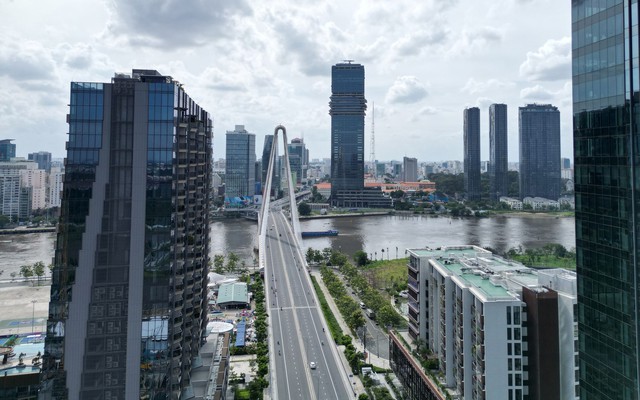
Two sides of the Saigon River. Photo: Tuoi Tre
Every established global financial center, whether Singapore, London, or Dubai, runs on common law principles, clear and independent dispute resolution, and free capital mobility. Vietnam operates on civil law, maintains strict foreign exchange controls through the State Bank, and enforces foreign ownership limits. How can Ho Chi Minh City bridge that gap?
I think that by creating an international finance center, you can have two parallel regulatory environments. So Vietnam is used to operating under the civil code. We’ve got very strict banking and finance laws and we’re not trying to necessarily change those or certainly not trying to change them overnight.
So the International Finance Center gives the opportunity to have a different regulatory environment, and again it’s not going to be possible to move to a completely new regulatory environment overnight. It’s got to be a change that happens gradually.
I think moderating expectations is a big part of this process. I know that the government wants everything to happen quickly so they can attract capital, but until there’s a proper regulatory environment established, then it’s going to be very difficult for major international players to make those capital commitments.
So we need an environment which is transparent and dependable, and there should be proper access to arbitration or court resolutions under common law principles.
An IFC also requires thousands of seasoned forensic accountants, compliance directors, derivatives traders, and fund managers. Given your leadership across professional services and audit networks, does Vietnam have the domestic talent pipeline to staff a world-class financial center, or will success hinge on attracting expatriate specialists?
It’s an interesting question. I think to start with, it would be very ambitious to think or imagine that it can be developed with purely Vietnamese professionals and talents, just because the number of people that are going to be needed, the number of new expertise that’s going to be required for all the things that are necessary.
We need actuaries, solicitors, and forensic accountants. We need people that have been trained in governance and compliance, and that’s not going to happen overnight. But back when I started Grant Thornton in 1994, there were no qualified accountants in Vietnam with international qualifications. And I think if I remember correctly, it was 1997 when the first ACCA graduates in Vietnam were qualified. It was a relatively new profession.
I needed expats because it was on-the-job training. We actually started the first training in Vietnam for ACCA. So I’ve seen it and if I look at Grant Thornton today, all the partners are Vietnamese apart from two foreigners. They all can hold their head up high when talking to international colleagues. The quality of their work matches any of the international firms, so the capability and the talent are here to develop. I’ve got no doubt about that.
It’s just going to take time, so as an interim measure, we need to bring in trained professionals who can do on-the-job training and also give people time to do new forms of certification – actuaries, chartered secretaries, forensic accountants, and all those things that are going to be needed. But I have no doubt that Vietnamese people have the talent and the capability to rise to those levels.
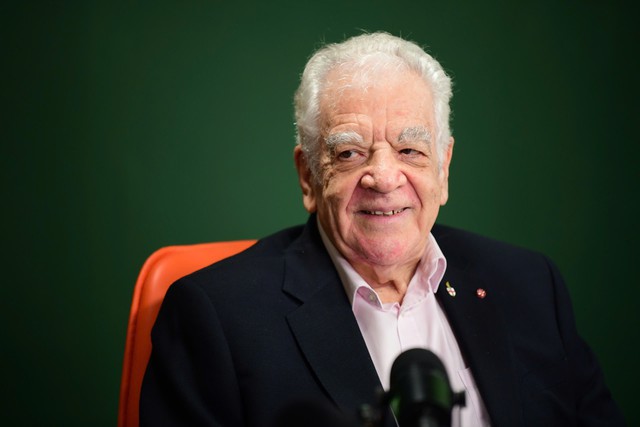
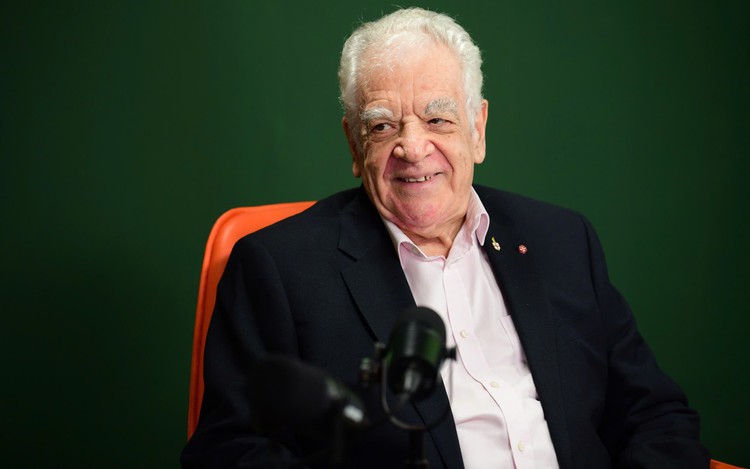
Kenneth Atkinson has over 35 years of experience advising multinational corporations, government agencies, and private equity funds on doing business in Vietnam. Photo: Quang Dinh / Tuoi Tre News
In boardrooms you are known as Ken Atkinson OBE, but on your Vietnamese citizen ID card, your name is Pham Kien Son, and you have officially made this country your home for nearly four decades. When did Ho Chi Minh City stop feeling like an expatriate posting and start feeling like the place you truly belonged?
First of all, I want to qualify the definition of an expatriate. So when people talk about expatriates, we normally think about people that are sent in. They’re paid good salaries, they have education for their children, they have housing, airfares to go home.
And there’s another form of expat, which is the ones that are here, but are building their own business, and they have none of those luxuries. And I was one of the latter because I started a business and didn’t have any financial resources other than my own.
From my first week in Vietnam when I came to help a feasibility study for a project, I felt so comfortable, particularly in my first four days in Hanoi. It was such a lovely city to visit.
But when it really started to feel like home, I think it was really 1996. At the end of 1995, I was diagnosed with cancer. I had to spend some time in Hong Kong having surgical treatments and then recovering.
When I came back to Vietnam a few weeks later, I moved into a hotel on Nguyen Hue, because my office was on the corner of Nguyen Hue and Le Loi, opposite the Rex Hotel, above the Aeroflot office, for those that are old enough to remember. I couldn’t walk properly because of the surgery.
And the cyclo drivers didn’t want me to walk. They wanted to take me and didn’t want to charge me, but I insisted that I had to walk to get the exercise. And then almost every single shopkeeper or people running ‘banh mi’ stalls or whatever would actually kind of engage in conversation. And that made me feel very happy, and I still get emotional when I think about that time. It was very special, and that’s when I really felt I was at home, more so than if I had been in England.
In your memoir Never Say No, you reflect deeply on family, having built a life here with your Vietnamese wife and raising your young son in Ho Chi Minh City. When you look at the city your son is growing up in compared to the city of thirty-five years ago, what makes you most proud, and what do you hope this city preserves as it races to become a hyper-modern metropolis?
It’s an interesting challenge. I think every city that’s developing in an emerging market goes through this transition. When I look at the city now compared to what it was, I am very proud of the achievements.
We have a metro line at last and we’ve got a few more on the way. The tallest building when I first arrived was nine stories. There was nothing on the other side of the river. There was only one bridge. So I think the way the city has developed is absolutely amazing.
But I think what I really want for my son is that Vietnam is very good at holding on to its culture, the respect, the family relationships. Those things, I think, are very precious to Vietnamese people and they’re of significant interest to foreigners that visit.
So I’d like to see Vietnam hold on to those. I’d like them to create areas where these can be shown. For example, along the waterfront there should be a place for both tourists and for Vietnamese to go relax and enjoy.
It’s an opportunity to build places that can show off the culture of Vietnam, the trades, the embroidery skills, the artisan skills that people have, and the local food. So I think that’s what I would like to see captured and retained in Vietnam. So those are the things that I would like to be here for my son to enjoy when he gets older.