
It might be time to book that holiday across the Tasman.
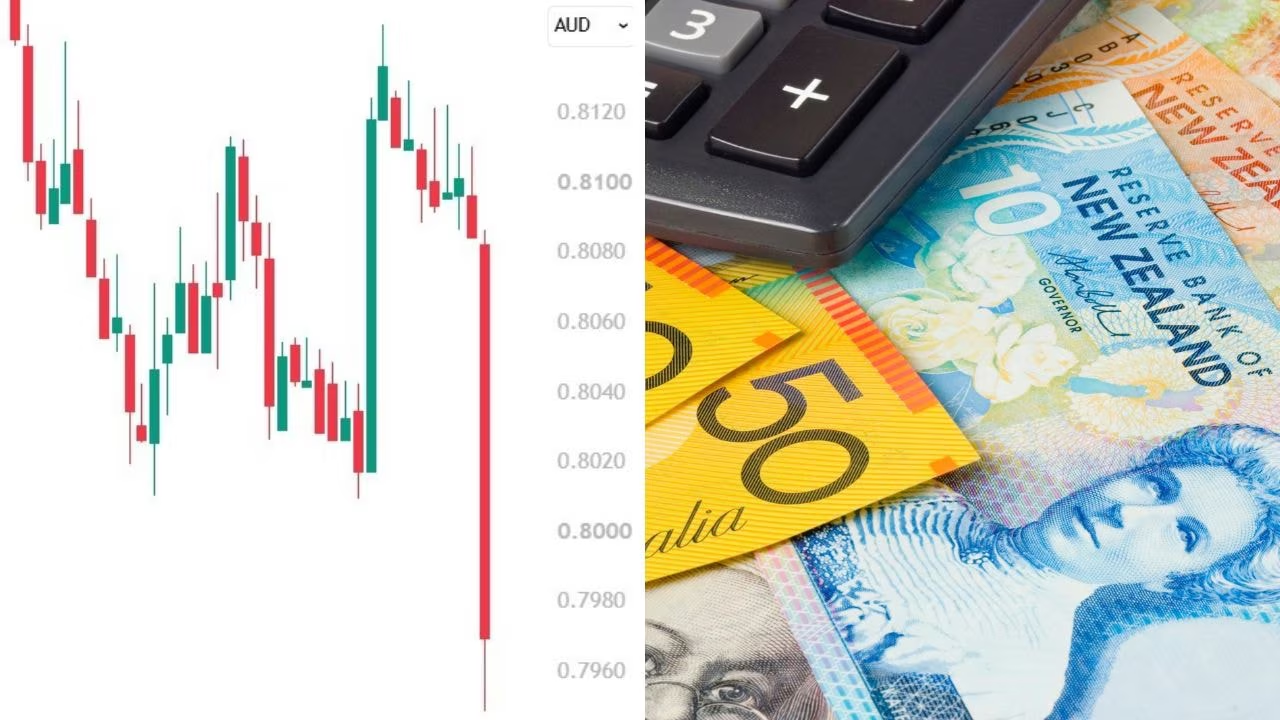
The New Zealand dollar has plunged against its Aussie counterpart, driving the exchange rate to its lowest point in 13 years.
On Wednesday, the New Zealand dollar’s purchasing power in Australia fell 1.6 per cent, going as low as $0.79 AUD — a level not seen since March 2013.
It came as the Reserve Bank of New Zealand (RBNZ) surprised markets and economists by voting to keep the official cash rate at 2.75 per cent.
The move prompted a sharp sell-off in the Kiwi, because in other countries — like Australia— interest rates and bond yields are going up, making them a more attractive place to park cash.
“The RBA is more aggressively raising interest rates than the RBNZ is,” AMP Chief Economist Shane Oliver told news.com.au.
“And so that’s attracting money into the Aussie dollar and away from the Kiwi.”
Glenn Yin, director of research at ACCM Prime in Melbourne, told Bloomberg that the Kiwi was being “demolished after RBNZ’s surprise decision”.
The fall in the exchange rate means travel to New Zealand, and goods imported across the ditch, become cheaper for Aussies.
But it also makes Australian exports to New Zealand more expensive for Kiwis, which might hurt some Aussie businesses.
While New Zealand’s central bank holds rates steady, the situation for mortgage holders in Australia is very different.
Aussies have been slugged with twice the number of rate hikes this year and because most homeowners are on variable rather than fixed rate mortgages, they feel that pain straight away.
Markets and all Big Four banks are expecting another 25-basis-point rate hike from the Reserve Bank of Australia (RBA) next week, which would lift the official cash rate to 4.85 per cent.
It comes after September data, labelled “ugly” by Westpac Chief Economist Luci Ellis, revealed annual headline inflation had risen to 4.3 per cent; higher than New Zealand’s 3.7 per cent.
“The RBNZ did hike more aggressively in 2022,” Mr Oliver said about the lower inflation across the Tasman.
“That weakened the New Zealand economy a lot more than our own economy… they have had recession, whereas we haven’t. And so consequently, inflation was knocked a lot lower and more sustainably lower.
“New Zealand does have this track record of bouncing from one extreme to another.
“It raises rates too much and then it tends to cut rates too much… It looks like a yo-yo relative to Australia.”
Mr Oliver said that post-Covid, the RBA was “trying to traverse the narrow path and hold on to the gains on employment, perhaps more than the RBNZ was… it meant that we didn’t stamp inflation down as sustainably as it could in those other countries”.
Australia’s unemployment rate of 4.7 per cent is substantially lower than New Zealand’s (5.6 per cent).
Mr Oliver suggested that it was better for central banks to focus on taming inflation rather than unemployment.
“If you just try to keep unemployment down and forget about inflation, you’re going to end up with a worst of both worlds scenario, and no one will appreciate it; because everyone’s harmed by high inflation.”
Speaking after the September inflation data was released, RBA governor Michele Bullock hinted that a Melbourne Cup hike was on the cards.
“What we have evidence on is on inflation, and the evidence there is it is far too high,” she told a Senate estimates hearing on Wednesday.
The expected hike would take the cash rate to the highest level since the global financial crisis in 2008.