

Want to bookmark your favourite articles and stories to read or reference later? Start your Independent Membership today.
Already a member?
Log in
There is something almost schizophrenic about the verdict Israelis delivered at the ballot box yesterday. Love him or hate him, the Israeli public confirmed Benjamin Netanyahu as their preferred choice of leader. At the same time, that same public comprehensively rejected his hard-right government. His coalition has fallen from the current 68 seats in the outgoing Knesset to just 54 seats on the current count, leaving him well short of the 61 he needs to recreate it.
In short, Netanyahu has no way of establishing a government with his current partners. That Netanyahu has retained such extraordinary support after October 7 and the catastrophic failures that allowed it to happen is quite remarkable.
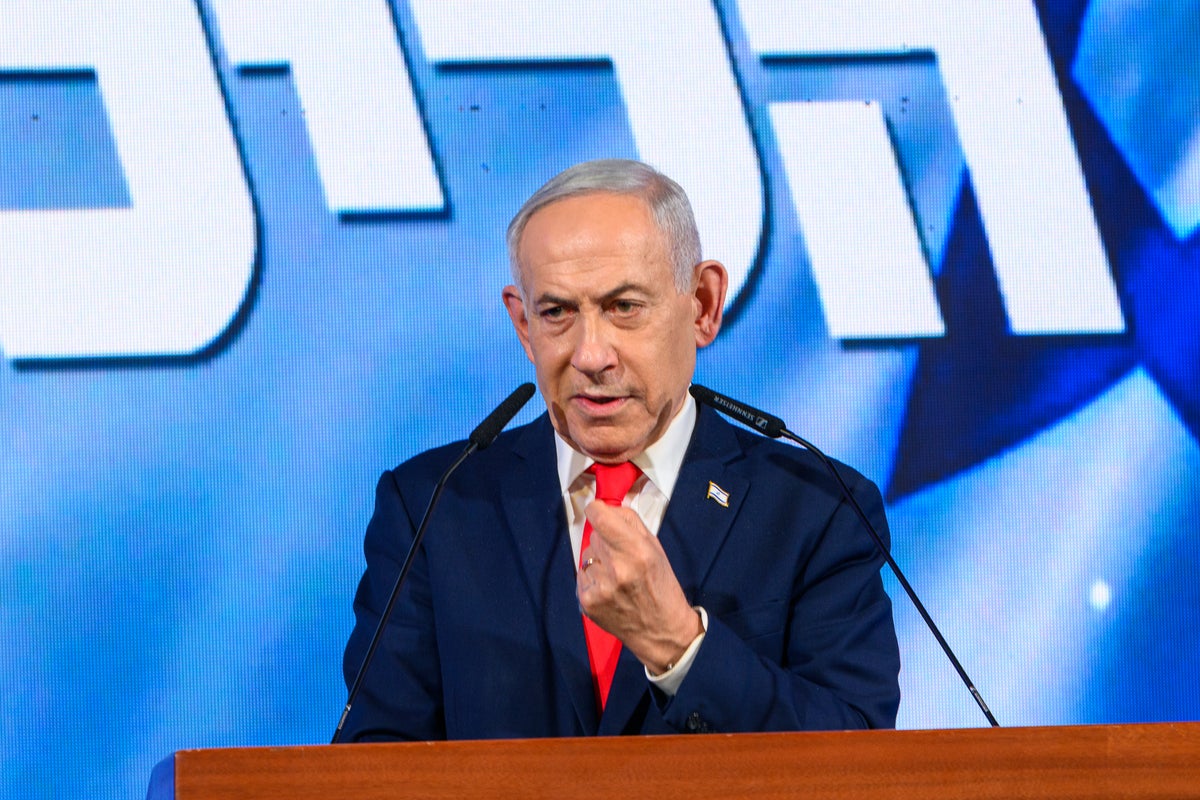
 Benjamin Netanyahu is unable to form his former coalition after Israel’s election results (Getty)
Three years of war, his refusal to accept responsibility, the tearing apart of Israeli society, the assault on its democratic institutions, the Haredi draft fiasco, his closest advisers working with Qatar, and the extraordinary power handed to right-wing extremists and religious fanatics were still not enough to dislodge him.
Netanyahu ran a campaign based almost entirely upon fear, and it worked.
Iran. Nuclear annihilation. International sanctions. Economic catastrophe. The Arabs coming out to vote. After three years in which Israelis have lived through October 7, war on seven fronts, ballistic missiles and hundreds of thousands of reservists repeatedly called away from their families, there was hardly a shortage of genuine fear for him to exploit. Netanyahu simply turned it into an election campaign.
There is something deeply perverse about Israelis looking for security and turning to the man who was prime minister when their security collapsed so catastrophically; a man who has created such division and hatred in the country. It feels almost like an abused child who clings to the abusive parent, more petrified of what lies outside than angry at the parent who continues to abuse them.
Netanyahu has made himself synonymous with Israeli security for so long that even after October 7 shattered that claim, a significant bloc of Israelis still appear more frightened of a future without him than they are angry about the failures of him and his government.
A personal victory perhaps, but a devastating loss for his government. Netanyahu achieved his success by cannibalising his own bloc. While his party, Likud, grew, the coalition around it collapsed.
There is something deeply perverse about Israelis looking for security and turning to the man who was prime minister when their security collapsed so catastrophically
For the past four years, Netanyahu has been held hostage by the most extreme and sectarian elements of his coalition. Itamar Ben-Gvir and Bezalel Smotrich dragged government policy further and further to the right. The Haredim demanded continued exemption from military service as the price of their support. Every threat to walk carried with it the threat to bring down his government.
They had his balls in a vice, and with just the slightest turn, could extract more from a desperate prime minister who ended up putting political survival and personal interest ahead of the national interest and that of the people.
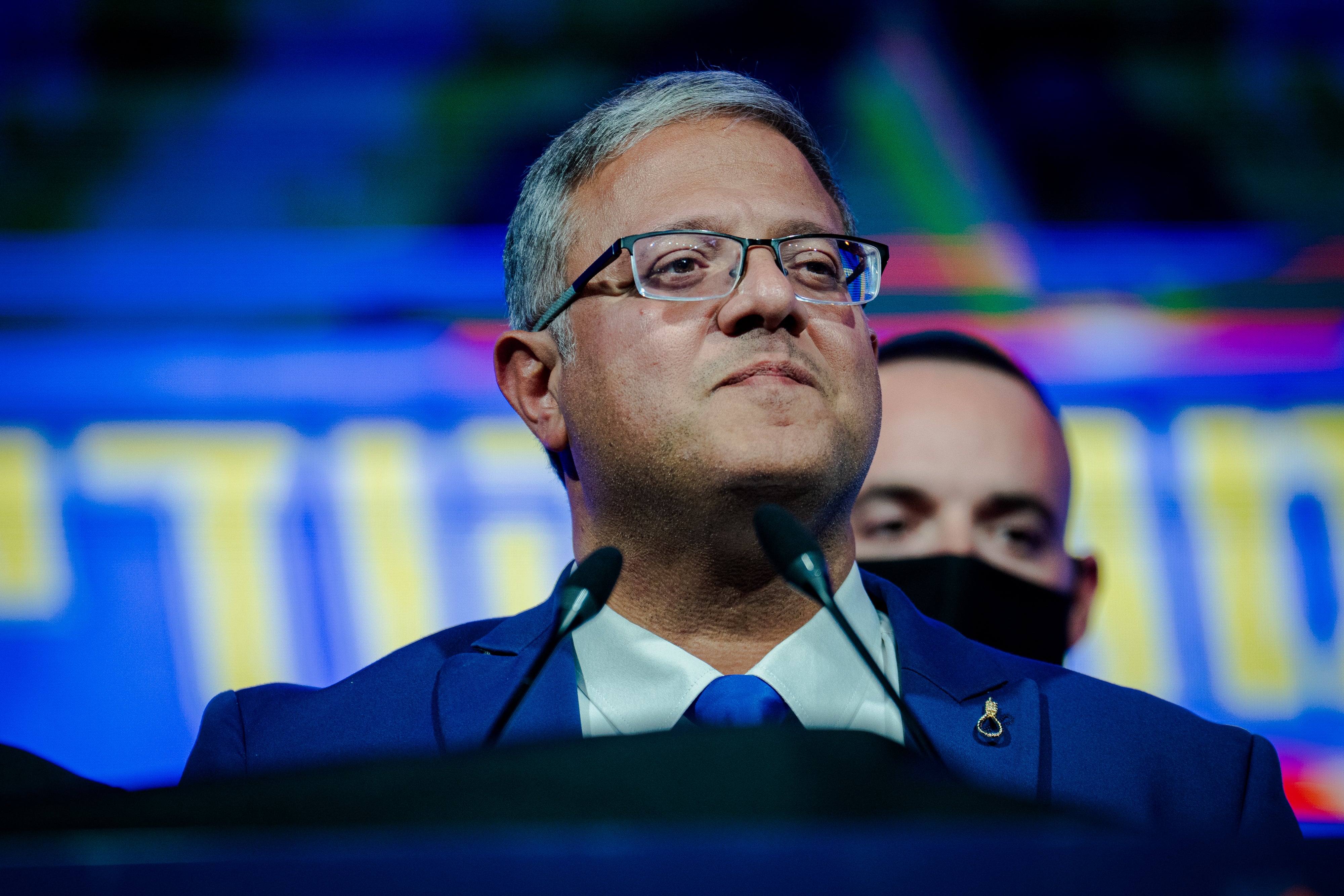 Itamar Ben-Gvir was the hard-right element of Netanyahu’s coalition, which has now collapsed (Getty)
The vice has been removed. Netanyahu’s balls, apparently, none the worse for the experience. The extremists can demand whatever they like, but they no longer have the leverage. This election means Ben-Gvir and Smotrich can no longer dictate policy simply by threatening to walk. Indeed, as things stand, it is highly unlikely they will feature in the next government at all. The Haredim’s price for keeping Netanyahu in power, the draft law, is effectively dead.
But, as popular as he may be with the electorate, Netanyahu has no way to form a government.
The results leave three possibilities. The first is to approach the Arab parties; Netanyahu seemed to rule out this one last night by accusing them of “stealing” the election in an X post last night, saying the groups used “prohibited software to mobilise voters”, which tracks with the rhetoric of the campaign he ran.
He can approach Eisenkot and the opposition bloc to create a unity government. To do so, he would have to dump his current coalition partners and make some major compromises, which he is unlikely to do. Added to which, the opposition parties have promised not to sit with Netanyahu and, even if they did, would demand that a state inquiry into October 7 be established, which Netanyahu would reject out of hand as he is petrified of what it would expose.
The third option is another election, which the country really doesn’t want and which is highly likely to produce a similar stalemate.
This also leaves the opposition with some serious questions to answer. Given October 7 and everything that followed, this should have been a slam dunk. Yet, it was not even close. Netanyahu still came out on top. But while Netanyahu’s survival is remarkable, the surge in the Arab vote may prove the most consequential element in this election.
The Arab parties entered this election with 10 seats between them. On the current count, they have 17 or 18, a level of representation far closer to the roughly 20 per cent of Israeli citizens who are Arab. And the man perhaps most responsible for that success is the right-wing extremist minister, Itamar Ben-Gvir.
The irony is almost too perfect.
For years Arab Israelis have voted in far lower numbers than Jewish Israelis, seemingly convinced that whoever sat in the Knesset, very little would change for them. It took four years of Ben-Gvir as national security minister to convince them otherwise. His attitude towards the Arab community, his constant rhetoric, the failure of the police to address organised crime in the Arab community and the frankly appalling levels of murder in Arab towns and cities gave them more than enough reason to get out and vote.
The opposition faces its own uncomfortable choices. It can continue insisting that Netanyahu is beyond the pale, continue refusing to consider meaningful cooperation with Arab parties
The man who has spent so much of his political career inciting against Arabs and warning Jewish Israelis about the threat of Arab political power may have done more than anyone else to mobilise it. The success of the Arab vote now presents Israel with a much bigger question.
Arab Israelis make up around 20 per cent of the population. Israel rightly celebrates the fact that they vote in free elections and elect their own representatives to the Knesset as evidence of Israeli democracy. If they are now prepared to vote in numbers that deliver anything approaching 20 per cent of the Knesset, Israel cannot continue pretending that their votes count on election day but somehow cease to count the morning after.
Israel cannot have it both ways.
Mansour Abbas has already demonstrated that an Arab party can become part of mainstream Israeli politics. He took Ra’am into the Bennett-Lapid coalition and used his position to secure billions for Arab communities and address the issues affecting the people who actually elected him.
Ahmad Tibi and Sami Abu Shehadeh of the Joint List are a very different proposition. Both remain far more closely identified with the Palestinian cause, while Abu Shehadeh’s Balad rejects the very definition of Israel as a Jewish state.
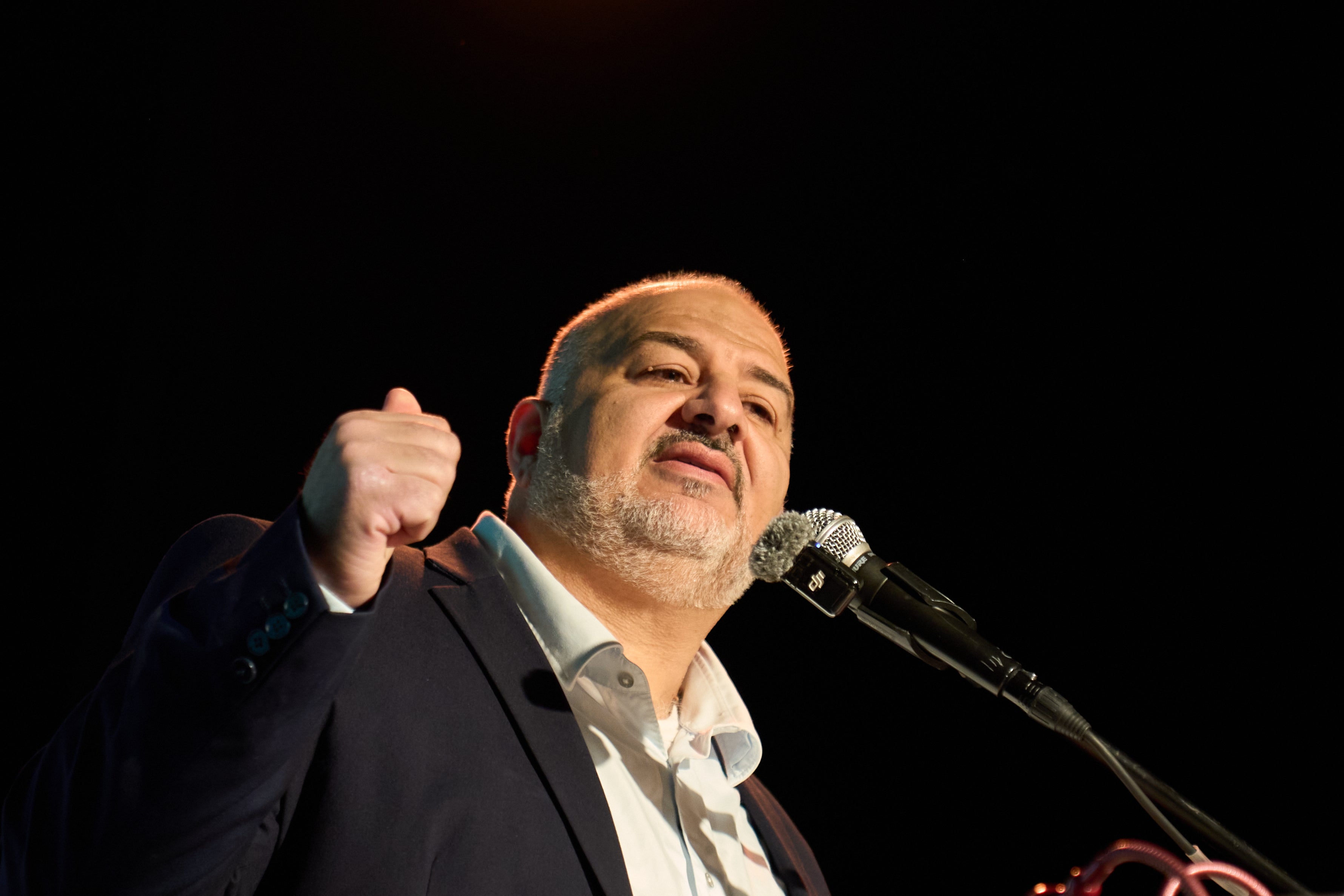 Mansour Abbas’s Ra’am party has already played a part in mainstream Israeli politics (AP)
As long as that remains the case, neither is going to be embraced by mainstream Israeli politics.
As an albeit imperfect analogy, it would be like the British government in the 1980s inviting Sinn Féin into government while it opposed British rule in Northern Ireland. You cannot expect Israeli political parties to share power with politicians who reject the fundamental premise of the state.
So responsibility does not lie solely with Jewish Israel. The question for Tibi, Abu Shehadeh and others is rather more fundamental. Do they want to represent Israeli Arabs as an integral part of Israeli society, or continue to place the Palestinian cause ahead of the interests of their own constituents?
Netanyahu cannot form a government with his existing coalition. The opposition cannot form one on its own. The Arab parties may end up holding close to a sixth of the Knesset, yet both sides have spent the election drawing red lines around who they will and will not sit with.
Well, now we have the results. There is a new reality and we will have to see.
The opposition faces its own uncomfortable choices. It can continue insisting that Netanyahu is beyond the pale, continue refusing to consider meaningful cooperation with Arab parties, and then explain exactly how it proposes to get to 61.
Netanyahu won personally, but lost the government he wanted. The opposition succeeded in denying him his coalition, but failed to persuade Israelis that any one of its leaders should replace him. The extremists have lost their leverage while Arab Israelis have suddenly demonstrated the political power of simply coming out to vote.
Nobody got what they wanted. Save perhaps Israeli Arabs.
Perhaps that is no bad thing. The next few weeks could be among the most interesting and consequential in Israeli political history. What emerges may reshape Israeli politics for years to come.
Read more from Gary Cohen on his Substack here