
For professional athletes, financial success isn’t just about signing big contracts or landing endorsements—it’s about making smart decisions that turn short-term earnings into long-term wealth.
In this series, I interview athletes and entertainers about how they’ve navigated the financial highs and lows of their careers—learning from the big paydays, the unexpected setbacks and the strategies that helped them build something lasting.
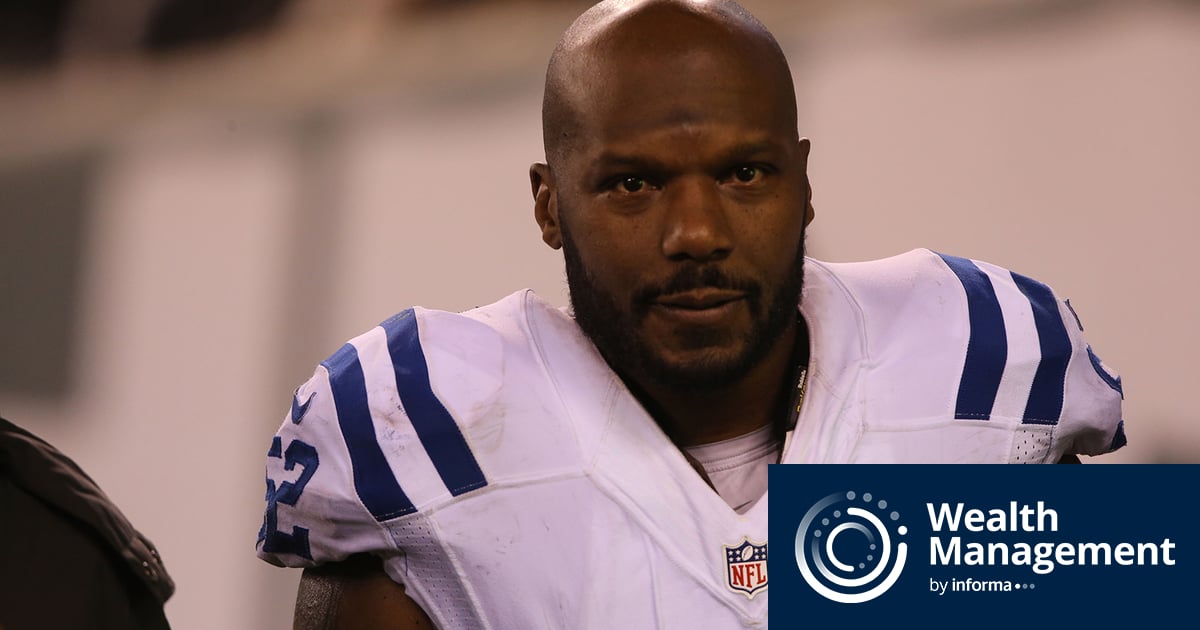
I recently caught up with former Cleveland Browns and Indianapolis Colts linebacker D’Qwell Jackson, a second-round draft pick who went on to play 11 years in the NFL and earn Pro Bowl honors. Jackson worried every year about losing his starting job, but that caution didn’t always extend to his spending.
He spoke candidly about how divorce, injuries and career uncertainty reshaped his approach to money, from setting boundaries with family to accepting accountability from his advisors. Today, he’s bringing those lessons about building the right team to his hospitality and networking venture, the Gentleman’s Suite.
Evan Vladem: You worried every year about getting cut. Did that caution extend to your finances?
D’Qwell Jackson: I took advantage of the opportunity, but every year I thought I was going to get cut. No matter how great a season I had, I would ask my agent, “Am I secure for next year?” Anything can happen in this league.
That approach was purely football: studying and taking care of my body. On the other side, I had no financial literacy.
My family worked check to check. They didn’t know how much money I was making. In their eyes, I was rich. I could pay for any bill, any house, any car—anything their minds could imagine.
EV: How did your agent help you manage that pressure?
DJ: My agent and I created a buffer system because I didn’t know anything about money. I knew how to spend it, but I didn’t know how it worked. He said, “You may play two years. You may play three years. We need to budget as if you don’t know how long you’re going to play this game.”
My money went into a bigger account, and I was only allowed to touch what was allotted to me. I didn’t want a checkbook connected to the big account. I didn’t want that temptation.
If family or friends asked for a big amount, I could say, “I don’t have it.” If they pressed me, I would tell them to talk to my agent. He created that buffer so I could gain confidence over time. It wasn’t about letting him handle it forever and never learning how to say no.
EV: What changed as your confidence and spending grew?
DJ: Probably around year three, my confidence was skyrocketing. I thought I was invincible. I was playing well, and we were starting to talk about a contract extension. You tell a 25-year-old about millions of dollars—game-changing, life-changing money—and I started getting a little loose with the checkbook.
At the time, I was also going through a divorce. I had married shortly after entering the league, and I didn’t have a prenup. That took a big bulk of what I had made before the contract extension, on top of the reckless spending.
Then the general manager who had talked about taking care of me financially got fired. I had a season-ending injury, then another injury. All these plans were unraveling. I thought I was in a secure situation, and suddenly the future was unknown.
The buffer was there. This was the time when I didn’t listen to them. I was in a rebellious state. I was going through something, and that was my response.
I was spending on myself, going to clubs. I wasn’t taking private planes or going on big trips. It was little spending that added up quickly. I couldn’t tell you one major purchase other than a chain and a necklace.
EV: What gave you a second chance?
DJ: I went to IMG Academy, worked out like crazy and invested in my body. The Browns signed me to a one-year, prove-it deal. I didn’t miss any games the following season, and I signed a game-changing contract.
But my life changed because of a relationship. In 2012, I was at a wedding in Turks and Caicos with my girlfriend, who is now my wife. Her best friend’s dad was asking me financial questions, and I had no idea what he was talking about.
He said, “When we get back to D.C., I’m going to set up a meeting. I want you to take it.” That meeting was with the company that represents me now, a family office.
They asked, “How do you want to live when you’re done playing? Do you want a boat? Multiple homes? Let us know, and we’re going to work around it.”
EV: Do people misunderstand why athletes run into financial trouble?
DJ: I tell people to imagine gathering 100 individuals between 22 and 25 and giving each of them a half-million dollars to $1.5 million. A lot are going to make similar poor financial decisions.
The difference in the NFL is that you’re putting your body through a lot of violence, and your career could be over like that. You don’t have the luxury of continuing down a path of poor financial decisions, or you won’t make it back.
I feel like I had a second chance because I was fortunate enough to play as long as I did. A lot of guys don’t get that second chance.
EV: How did you learn to set boundaries with family?
DJ: I wasn’t willing to buy someone a house or a car. I’m here for emergencies. I know things happen, and I’m in a place of privilege. But if someone asks for money, I want the full details. Why are we in this position?
It’s hard to tell family members no when they sacrificed so much for you. As a parent now, I understand that more every day. It was one of the toughest decisions I had to make.
Your contracts are out there for everyone to see. You can’t say, “I don’t have it.” They know you have it. But there’s a rhyme and reason. Before I had kids, I would say, “I have to save this for my future family. I’m building something, and I don’t know if I’m ever going to have a job again.”
EV: What does accountability look like with your financial team?
DJ: I’m not afraid to ask anything. I’ve asked, “What if I wanted to pull all my money out? Can you get it for me? How do I actually know the money I see on my screen or phone is there?”
He’s not afraid to tell me, “You guys have spent too much. This is the path you’re on.” There’s a mutual partnership and accountability.
I used to tell young guys, “Why have a financial advisor if you’re not going to listen to them? Give me the money. I’ll let you spend whatever you want, and I’ll take the fees.” It took growth to get there.
Now, my advisor has created a portfolio where I don’t feel the urge to jump at outside investments. I send him everything.
EV: What do you value beyond investment management?
DJ: Our wills, trusts for our kids, insurance—there’s someone who is the expert in each department. There’s a tax person, and I can have relationships with the insurance companies and brokers we work with.
I prefer it that way because I’m learning. I don’t want to call one person and just get an answer. I want someone to explain exactly what we’re doing, how it benefits me and why we’re going that route.
We’ve built trust over the years. To me, that’s the most important thing. I trust that they have our best interests at heart.
EV: What are you building now?
DJ: I created the Gentleman’s Suite, an invite-only networking concept that can operate as a traveling luxury hospitality suite. The first activation was in Martha’s Vineyard, where our family spends time in the summer.
There’s food, beverage and entertainment, but that’s the backdrop. I’m creating a locker room outside the locker room where like-minded people can build together, enjoy fellowship and speak freely. There could be business that comes out of it, too. I’ve been a direct product of what it means to have a good team around you. Even when things go sideways, you have people you can count on who hold you accountable in all phases of life. I want to create that with the Gentleman’s Suite.