
Benzinga and Yahoo Finance LLC may earn commission or revenue on some items through the links below.
A hip replacement shouldn’t come with a mystery price tag. Yet depending on which Boston hospital a patient walks into, the bill for the exact same surgery could differ by more than $56,000.
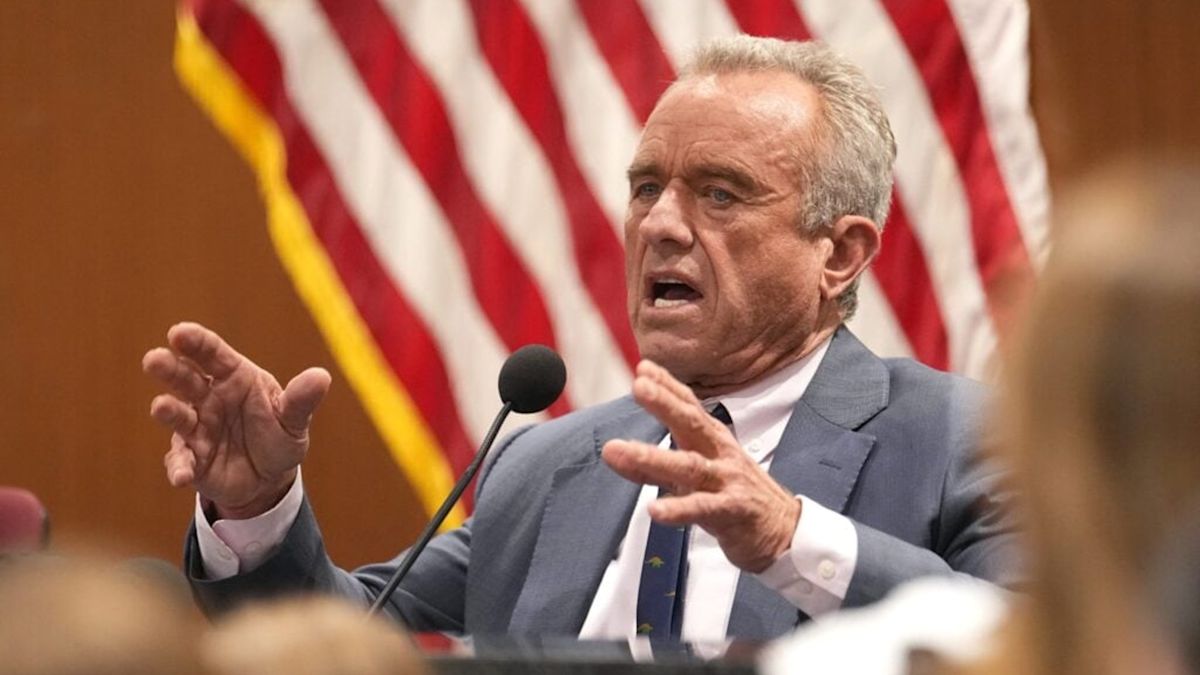
Health Secretary Robert F. Kennedy Jr. pointed to that gap during a U.S. Department of Health and Human Services event in October, where officials announced updated rules aimed at making healthcare prices easier for patients to see and compare.
“Hip replacement in Boston costs $17,900 at one hospital, and at a nearby hospital, it costs $74,000 for the exact same surgery,” Kennedy said.
Don’t Miss:
The example was part of a broader argument about how difficult it can be for Americans to know what medical care will actually cost before receiving it. Kennedy also cited research showing that MRI prices can vary by as much as ninefold within a single city.
The problem, he said, isn’t simply that hospitals charge different amounts. Kennedy argued that insurance companies, which are supposed to negotiate lower prices for their members, can sometimes end up negotiating rates that are higher than what a patient could pay directly.
“And one analysis found that 60% of insurer negotiated hospital rates were higher than the hospital’s own cash price,” Kennedy said.
He then made the comparison even more blunt.
“The insurance company, who is supposed to be negotiating for all of its members and beating down the price, has actually negotiated a price that is higher than if you just walked into that hospital off the street and asked for that procedure.”
Kennedy’s conclusion was equally blunt.
“So the whole system was corrupt,” he said. “It was crooked.”
Trending: Your 401(k) Isn’t The Only Place Your Retirement Money Can Go. Self-Directed IRAs Can Open The Door To Assets Most Traditional Plans Don’t Offer.
Healthcare Prices Can Vary By Thousands
Kennedy’s comments came as HHS announced the finalization of updated Transparency in Coverage rules. The changes are designed to make pricing information more standardized and usable, giving patients, employers and researchers more information about what insurers and healthcare providers actually charge.
Kennedy argued that price transparency is essential because consumers can’t make meaningful choices when they don’t know the price.
“Markets cannot discipline prices that they cannot see,” he said.
The Boston hip replacement example illustrates the problem. If nearby hospitals can charge dramatically different amounts for the same procedure, patients need a way to see those prices before making a decision, particularly when insurance coverage and negotiated rates can further complicate the final bill.
See Also: He Thought He Needed $88K To Invest In Real Estate. Then He Found A Way To Start With $100.
Planning For Medical Costs Before They Hit
Even with better price transparency, unexpected medical expenses can put pressure on a household budget. A major procedure, emergency visit or other healthcare expense can quickly compete with money set aside for retirement, an emergency fund or other financial goals.
Recent KFF polling found that 27% of adults are very worried about being able to afford healthcare costs for themselves and their families, making medical expenses the top financial worry measured in the survey.
AdviserMatch can help connect consumers with financial advisors who can look at the bigger picture, including healthcare costs, unexpected expenses and how much should be set aside for future needs.
That’s particularly useful when medical costs aren’t the only financial uncertainty. A household can plan carefully and still get hit with an expense that wasn’t in the budget. Building an emergency cushion and having a broader financial plan can make those surprises easier to absorb.
Kennedy’s larger point was that consumers can’t shop around effectively when prices remain hidden.
Read Next: Want To Trade Market Moves Before The Opening Bell? There’s Another Way To Do It. Here’s how futures traders prepare for fast-moving markets.
Building Wealth Across More Than Just The Market
Building a resilient portfolio means thinking beyond a single asset or market trend. Economic cycles shift, sectors rise and fall, and no one investment performs well in every environment. That’s why many investors look to diversify with platforms that provide access to real estate, fixed-income opportunities, precious metals, and even self-directed retirement accounts. By spreading exposure across multiple asset classes, it becomes easier to manage risk, capture steady returns, and create long-term wealth that isn’t tied to the fortunes of just one company or industry.
EquityMultiple
For accredited investors looking beyond stocks and bonds, EquityMultiple provides access to vetted commercial real estate deals starting at $5,000, with only ~5% of opportunities passing their due diligence process.
Arrived
Backed by Jeff Bezos, Arrived Homes makes real estate investing accessible with a low barrier to entry. Investors can buy fractional shares of single-family rentals and vacation homes starting with as little as $100. This allows everyday investors to diversify into real estate, collect rental income, and build long-term wealth without needing to manage properties directly.
American PowerGen
As artificial intelligence drives a surge in electricity demand, reliable power generation is becoming a critical part of the technology ecosystem. American PowerGen is developing natural gas-fired power plants in Texas, a fast-growing market fueled by AI data centers, manufacturing expansion, and population growth. By advancing projects through permitting, fuel supply, and grid interconnection, the company is positioning itself to help meet rising energy needs while offering investors exposure to the infrastructure supporting the next wave of AI and industrial growth.
Bito
As AI coding tools take on more of the work traditionally done by developers, companies are facing new challenges around code quality, context and the rising cost of AI-powered development. Bito is building software designed to help AI coding agents better understand complex codebases while helping companies control AI development costs. Founded by former PubMatic executives, Bito has raised more than $10 million from institutional and individual investors and is now raising additional capital through a Wefunder offering, giving investors an opportunity to invest in a company targeting an emerging need within the rapidly expanding AI software market.
FarmTogether
Farmland has historically held its value through market volatility and delivered returns uncorrelated to stocks and bonds. For accredited investors, FarmTogether offers direct access to high-quality U.S. farmland starting at $15,000 — fully managed, with no landlord headaches.
Fundrise
Private real estate and private credit can add income and stability to a stock-heavy portfolio. Fundrise offers access to diversified private real estate and credit strategies through an easy-to-use platform, with professionally managed portfolios designed to generate passive income and long-term growth.
This article RFK Jr. Says It’s Cheaper To Walk Into A Hospital Off The Street Than Use Insurance — Same Hip Replacement Costs $17,900 At One Hospital And $74K At Another originally appeared on Benzinga.com
© 2026 Benzinga.com. Benzinga does not provide investment advice. All rights reserved.