
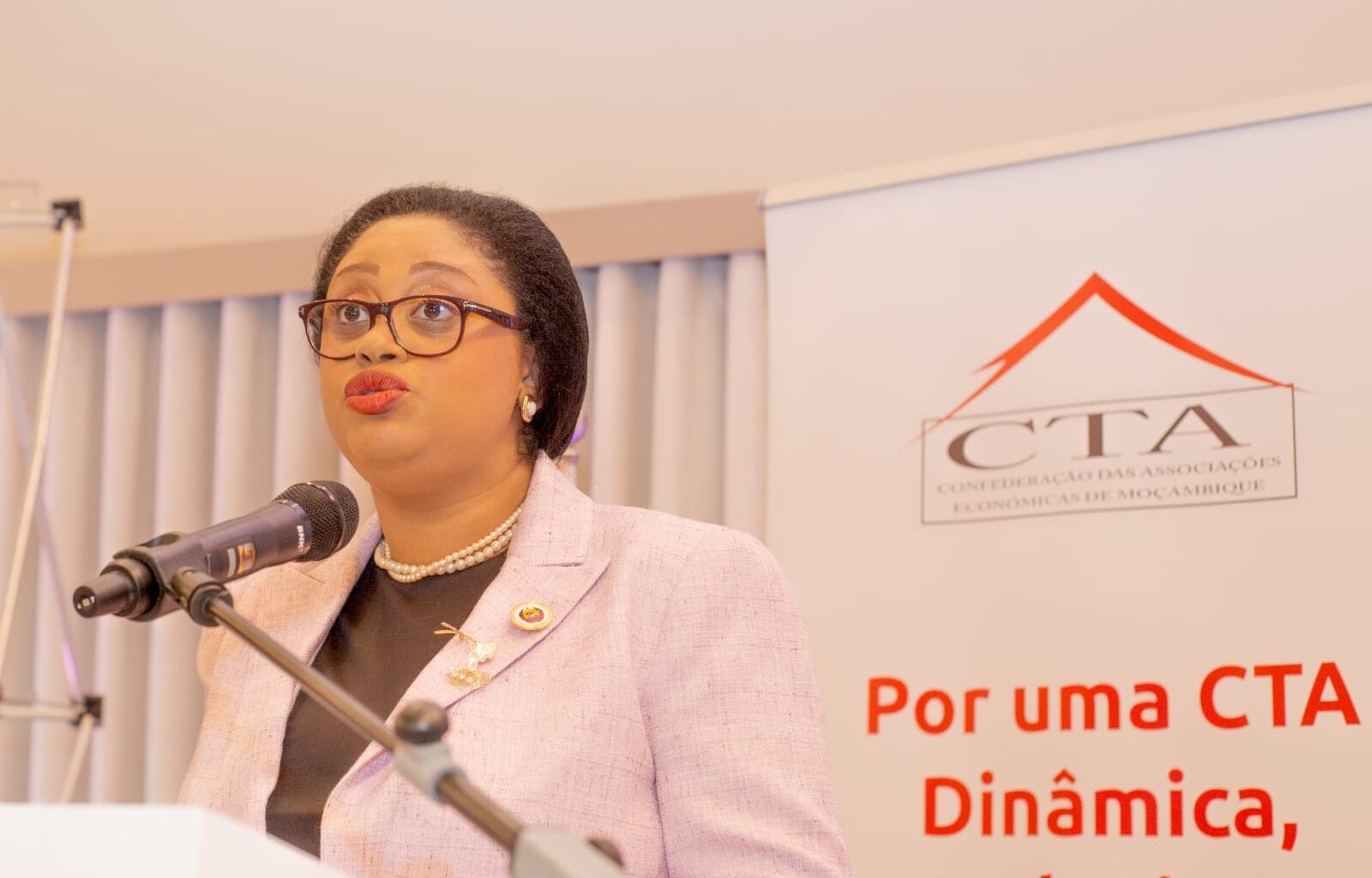
Photo: CTAMozambique’s Finance Minister, Carla Loveira, today said the country could move gradually towards a market-led exchange rate and promised businesspeople that the oldest outstanding debts to suppliers would be regularised in 2027.
“We also have the chapter on exchange rate reform, which aims to move gradually and in a guided manner towards a market-led exchange rate,” Carla Loveira said, presenting measures under way or planned at a meeting with businesspeople in Maputo.
The position, expressed during a meeting held as part of a Business Breakfast dedicated to fiscal policy, the business environment and private-sector priorities for the country’s economic growth, organised by the Confederation of Economic Associations of Mozambique (CTA), comes amid debate over difficulties in accessing foreign currency and the process by which the central bank sets the exchange rate.
In practice, due to the lack of access to foreign currency through the banking system, businesspeople end up resorting to buying currency through alternative channels, at rates considerably above the official exchange rate. Adjusting the official exchange rate to the market rate has also previously been advocated by the International Monetary Fund (IMF).
READ: Mozambique: Consultancy forecasts 30% metical devaluation in Q1 2027
In the same address to businesspeople, the minister also pointed out the need to “improve business environment indicators and also review the tax benefits code, a process that is under way and will also be duly coordinated with the private sector”.
Emphasising that the “private sector is a strategic partner in national economic development” and is “fundamental to driving growth, creating jobs, promoting economic diversification and strengthening the sustainability of public finances”, she stated the Government’s objective of “creating an environment conducive to investment and business activity”.
“We recognise that it is companies that invest, produce, innovate, create jobs and generate added value. It is from this economic dynamism that a broader and more sustainable tax base also emerges, capable of financing Mozambique’s development priorities,” she pointed out.
Having once again heard businesspeople’s criticism at the meeting over delays in State payments for services supplied to the public sector, the minister acknowledged that “Mozambique’s development requires an effective partnership between the Government and the private sector, based on dialogue, trust and predictability in public policies”, with “shared responsibility” for the country’s future.
She cited the example of the approval of the “strategy for payments to suppliers”, which, she said, responds to “the need to regulate and settle arrears, which particularly weaken Mozambican micro, small and medium-sized enterprises”.
“The strategy provides for direct, differentiated payments, but also includes a partial securitisation component, prioritising in 2027 smaller and older claims, as well as a greater number of claims. Securitisation converts recognised debt into securities, which does not necessarily mean immediate liquidity, as these may be acquired alongside the conversion of the securities issued,” she explained.
“We are working on the development of a VAT refund strategy, with a view to ensuring greater speed and predictability in refund payments, strengthening companies’ liquidity and improving their cash-flow management,” she added.
Source: Lusa