
This investigation was produced in partnership with the Pulitzer Center’s AI Accountability Network.
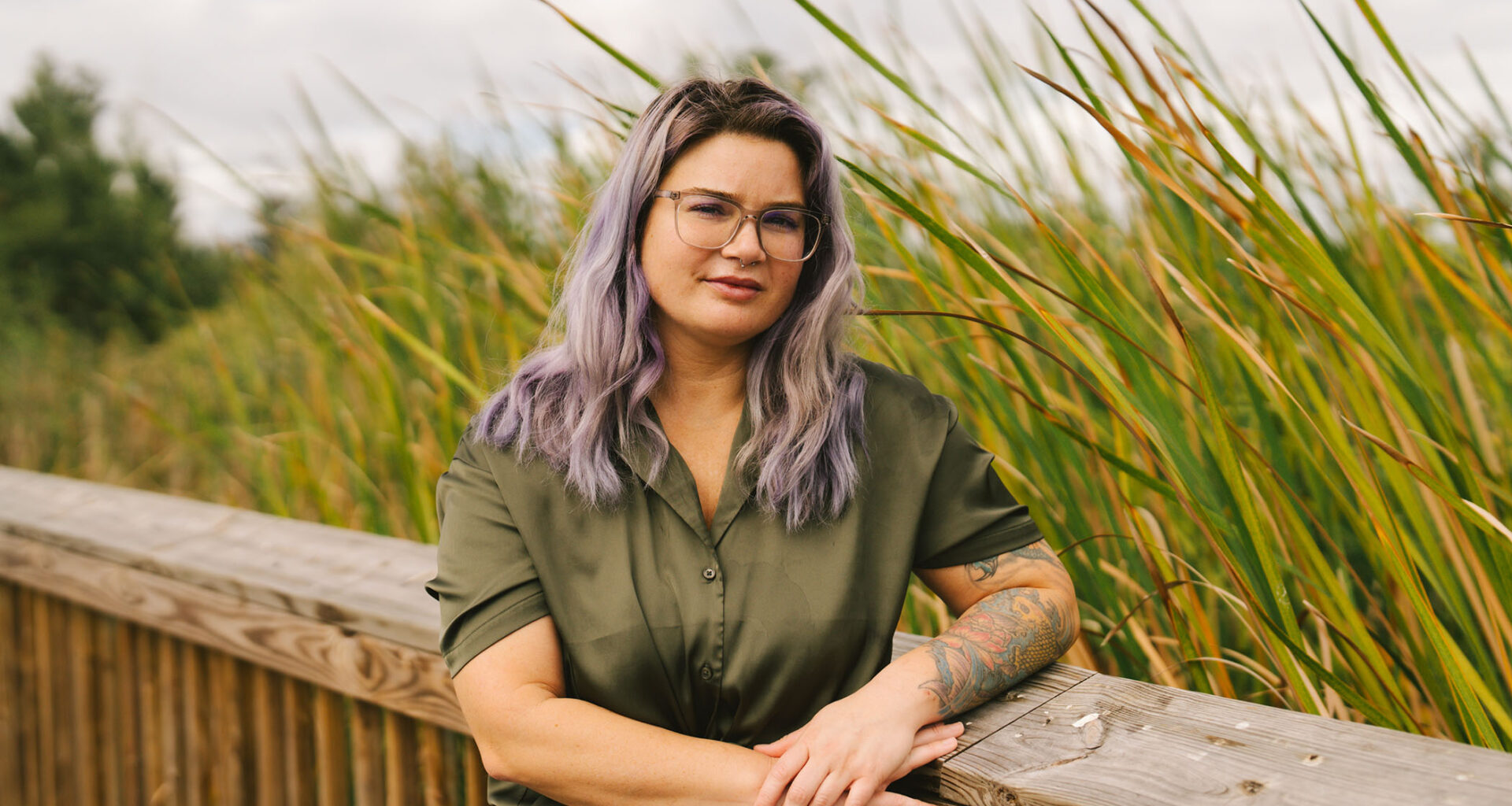
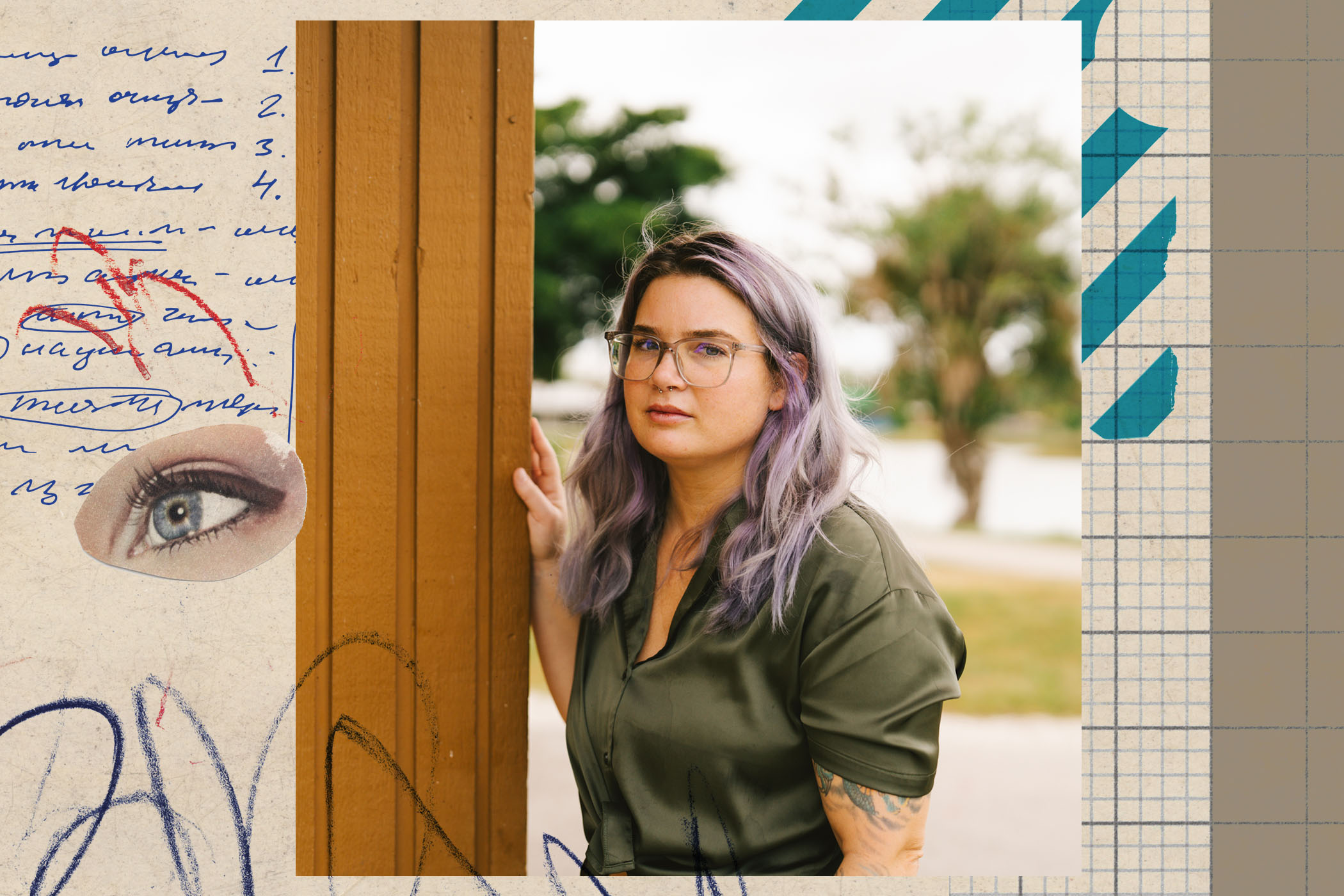
Sarah used to feel like she read people’s diaries for a living. When she worked on OpenAI’s intelligence and investigations team, she spent her days combing through conversations that had been flagged for review by an AI model trained to spot dangerous behaviour. On a daily basis, she encountered people discussing everything from incest and suicidal thoughts to violent crime, all on ChatGPT. “You’re looking into a window into a person’s psyche,” she says. “Sometimes users forget that everything is logged and catalogued.”
Among all the disturbing conversations she read, there is one she’ll never forget. The system had flagged up a user – a teenager – who had asked how to get a gun. Sarah spent a week reading through several months’ worth of his chat logs.
At first, what struck her was how much the boy seemed to need the chatbot. Sometimes, after school, he would check in with ChatGPT as though it were a friend. “How are you doing?” Sarah recalls him asking. “This is how my day went,” he would say.
The boy told ChatGPT that he was being bullied by his classmates, that he felt lonely and isolated. He seemed to be increasingly reliant on the bot, turning to it for the kind of companionship he was struggling to find elsewhere. “And so he decided to confide in the model because the model was an ever-present friend,” Sarah says.
There is little more I can disclose about the boy without identifying Sarah, who spoke on condition of anonymity because she fears retaliation from OpenAI. From what she recalls, she could tell that he was “ambitious and imaginative and bright”.
But as she read weeks’ worth of his chat logs, the conversations took a darker turn. They became fantasies of revenge against the classmates he felt had wronged him.
The boy started telling ChatGPT that he wanted to shoot his bullies. He had mapped out his school, identified areas where he thought there were vulnerabilities and drawn up a list of people he wanted to kill.
‘Sarah saw that the student had declared a date to carry out a mass shooting… that date had come and gone. Had the shooting happened?’‘Sarah saw that the student had declared a date to carry out a mass shooting… that date had come and gone. Had the shooting happened?’
It dawned on Sarah that the shooting he was planning was real. “The thing that hit me was: this person needs professional assistance, not ChatGPT saying, ‘Everything will be OK, and you’re the best, and let me give you a map [of the school]’,” she says. In her telling, the chatbot was simply saying what the boy wanted to hear.
A few hours into reading the chat logs, Sarah saw that the student had declared a date to carry out a mass shooting. Except, by the time Sarah had got round to reviewing the chat logs, that date had come and gone. Had the shooting happened?
For more than a year, I have been speaking to people inside and outside OpenAI about what amounts to a human experiment unfolding in real time: the mass adoption of conversational AI, a technology whose psychological effects are still poorly understood. What began as reporting into people’s intimate relationships with chatbots – an intriguing side-effect of this new technology, I thought – took a darker turn, as accounts emerged of users losing their grip on reality, and of suicides allegedly linked to prolonged conversations with AI bots.
Now, as Sarah’s story suggests, the stakes could be higher still, extending to users who pose a danger not only to themselves but to others. The result of my reporting is an Observer and Tortoise investigation, drawing on interviews with current and former OpenAI employees, lawyers and mental health professionals, which reveals how the company has struggled to confront the risks created by its sophisticated conversational AI – and raises serious questions about whether its safeguards have kept pace with the intimate role ChatGPT plays in many people’s lives.
Sarah scoured the internet for evidence that the boy had moved forward with his plan. Later, in his chat logs, she saw that he had expressed regret at not going through with it. As far as she is aware, he never carried out the shooting. But there was no doubt in her mind that he had shown “intent, desire and capability”.
‘When Sarah worked at OpenAI, the backlog of flagged conversations awaiting a human reviewer stretched back months’‘When Sarah worked at OpenAI, the backlog of flagged conversations awaiting a human reviewer stretched back months’
Sarah and other reviewers can ban accounts and refer imminent threats to the authorities. She was haunted by the fact that the boy could have harmed other children and because his conversations had sat in a queue for weeks, she would have been powerless to stop him. When Sarah worked at OpenAI, she says, the backlog of flagged conversations awaiting a human reviewer stretched back months. The team working through this caseload was – and, according to two current employees, still is – small: at most in the low dozens, between 12 and 60 people, the sources said, although The Observer was unable to confirm its exact size. Meanwhile, ChatGPT is used by 1.2 billion people every week and has an overall staff of around 8,000.
As the world is consumed by debate about the existential risks of artificial intelligence, Sarah’s experiences inside OpenAI highlight a more immediate set of dangers. AI chatbots are designed to flatter and agree with their users, remember intimate details about their lives, and encourage them to keep talking for hours. These design choices can make the tools compelling sources of emotional support, but they can also reinforce dangerous beliefs, sending users into spirals that can have devastating consequences.
On 14 October, eight US states sued OpenAI, accusing the company of misleading the public about ChatGPT’s safety while its chatbot reinforced delusions, encouraged dangerous behaviour and helped users to plan violence. This is in addition to at least 30 lawsuits brought by families and individuals alleging that ChatGPT contributed to deaths and serious psychological harm. A further 45 lawsuits have been filed by survivors and relatives of victims of school shootings in Florida and Canada, alleging that OpenAI failed to alert police after its safety systems identified the shooter’s disturbing conversations with ChatGPT.
Yet the true scale of the harm remains unknown: OpenAI provides little public visibility into its internal data and safety operations. As the business seeks a $1.25tn (£933bn) valuation in a relentless race for AI dominance, the competitive environment has made it harder than ever for employees such as Sarah to speak out about safety risks.
OpenAI has other safety teams, including researchers who test its models for dangerous capabilities such as help with cyber-attacks or biological weapons. But assessing whether a ChatGPT user poses an imminent threat to others falls to Sarah’s team, which the company itself has described as “small”.
At the largest social media companies, teams reviewing harmful content can number in the thousands, although some are shrinking as platforms turn to AI. In January, Meta told MPs that it has about 40,000 people working on safety and security, and last year it said that included about 15,000 content moderators. TikTok told US senators in 2024 that it had 40,000 trust and safety staff, though it has since cut hundreds of moderation jobs. And Discord, a chat platform with a fraction of ChatGPT’s users, had 74 full-time trust and safety staff in 2024, plus about 400 contractors.
Within those organisations, dedicated emergency teams work around the clock, ensuring that someone is always available to respond to an emergency. But Sarah says that, despite OpenAI’s enormous userbase, the intelligence and investigations team did not operate that way. Instead, she had a phone that she was expected to answer if an emergency arose in the middle of the night. The case of the would-be school shooter had not made the cut.
The story has an uncomfortable parallel in Tumbler Ridge, an isolated mining town in British Columbia, Canada. In February 2026, an 18-year-old trans woman, Jesse Van Rootselaar, shot dead her mother and 11-year-old stepbrother at home, then drove to the town’s secondary school and killed five students and a teaching assistant, before killing herself.
Eight months earlier, when Van Rootselaar was 17, her conversations with ChatGPT had been flagged by OpenAI’s automated monitoring systems. According to the Wall Street Journal, around a dozen intelligence and investigations employees were aware of her concerning conversations with the chatbot, and some believed the company should alert police. But OpenAI’s senior leadership decided the threat did not meet its threshold for notifying law enforcement. Instead, the account was banned.
Van Rootselaar then created another account and continued using ChatGPT. A subsequent investigation by Mother Jones revealed that the chatbot had engaged in prolonged discussions about guns, homemade explosives and school shootings, as well as Van Rootselaar’s ambition to become a notorious mass killer. The bot had also told her how to get around its own safeguards by presenting violent requests as fiction.
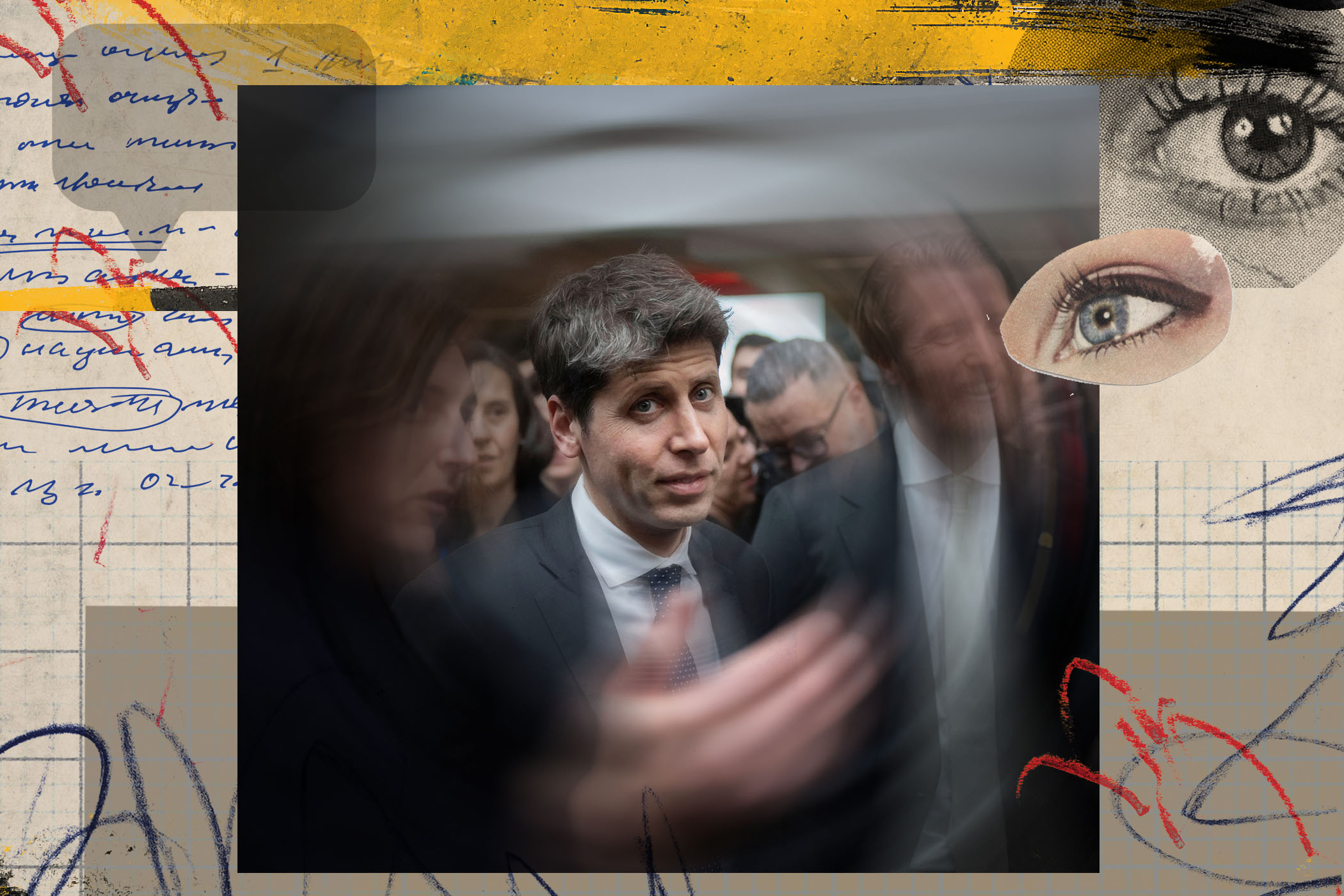
In April, OpenAI’s CEO, Sam Altman, wrote to the people of Tumbler Ridge to say he was “deeply sorry” that the company had not alerted police. It told the Canadian government that, under a revised protocol, it would refer the shooter’s first account to police, for further investigation.
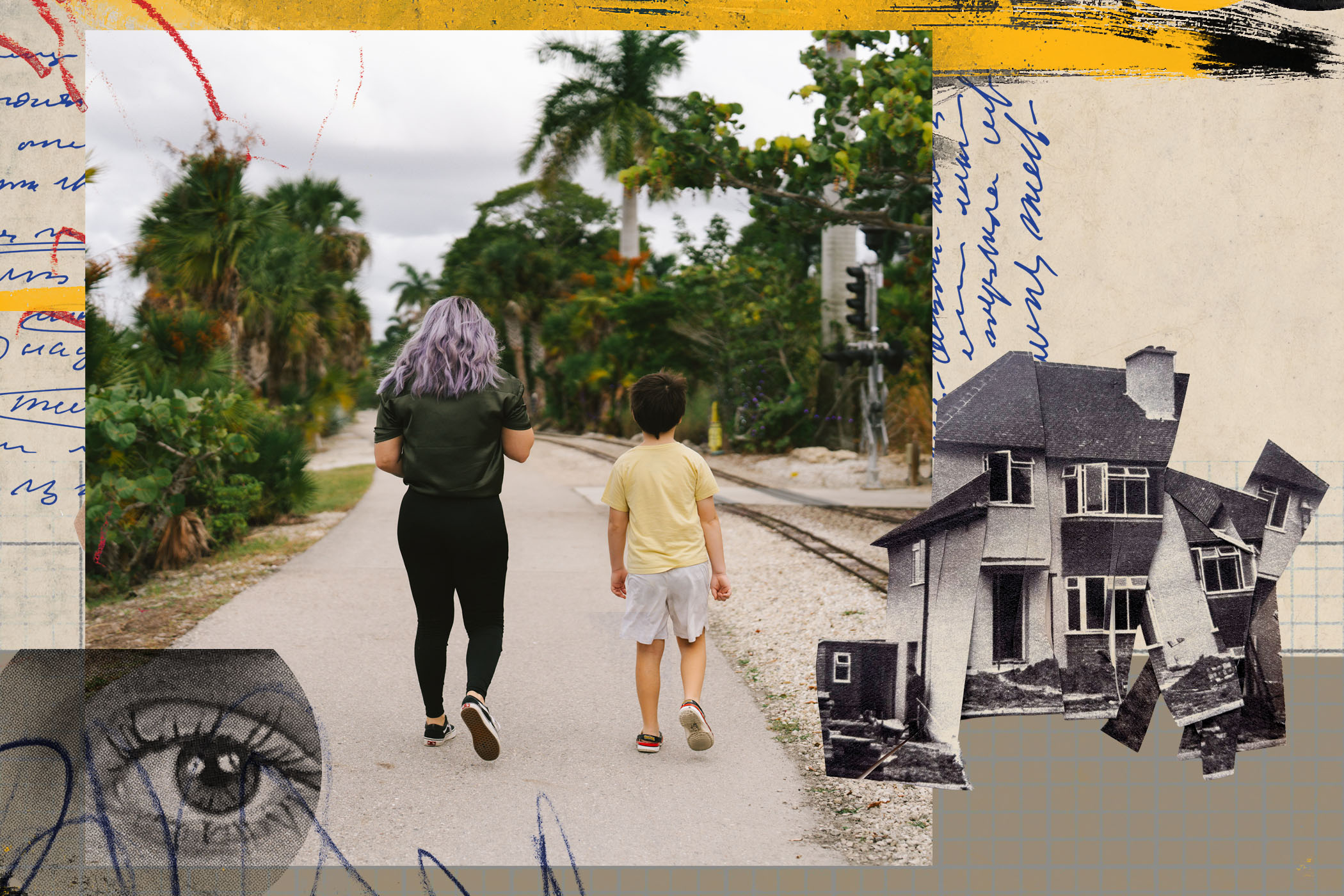
Sarah was frustrated by her team’s lack of resources. But she also wondered what role the chatbot itself might have played in encouraging the boy whose chats she had been reading in the first place, and whether her team was being left to deal with a problem OpenAI’s technology had helped to create.
She saw two paths for the boy whose conversations she reviewed. He was bullied and isolated, and talking about his problems could have helped him process his sadness, and pushed him towards human support. Or the chatbot could have encouraged him, allowing him to become consumed by his violent fantasies. Sarah believes ChatGPT led him down the second path.
It is possible to view people who discuss violence or self-harm with ChatGPT as vulnerable individuals who might have acted dangerously regardless of the technology. But, as The Observer has reported, a growing body of research suggests that chatbots may reinforce harmful beliefs and influence how users think and behave.
For Jim, a 51-year-old sign maker in Bristol, what began as mundane conversations with Elon Musk’s Grok in early 2025 escalated into hours-long exchanges in which the chatbot validated, and built on, Jim’s increasingly strange ideas.
‘His doctors believe Jim suffered a psychotic epidsode as a result of his extended chatbot use’‘His doctors believe Jim suffered a psychotic epidsode as a result of his extended chatbot use’
By April, Jim had become convinced the chatbot was alive. He was sectioned under the Mental Health Act. His doctors believe that he suffered a psychotic episode as a result of his extended chatbot use – one of a growing number of cases described colloquially, but not clinically accurately, as “AI psychosis”.
The Tumbler Ridge lawsuits allege that ChatGPT “employed anthropomorphic design elements to cultivate emotional dependency”. And, in particular, that the chatbot’s memory feature tracked the shooter’s “grievances, their targets, their reasoning, and their plans across separate conversations – and used that profile to sustain and deepen their fixation on violence”.
“What happened in Tumbler Ridge was an unspeakable tragedy, and our thoughts remain with the victims, their families, and the entire community,” an OpenAI spokesperson said, adding that the company “remains committed to working collaboratively with government and law enforcement officials, and continuing to advance our ongoing safety work.”
At the heart of the lawsuits against OpenAI is a model known as ChatGPT-4o, unveiled on 13 May 2024 at the company’s San Francisco offices. The “o” stands for omni, or everything, reflecting the chatbot’s ability to work smoothly across text, voice mode, video and image. OpenAI said users loved GPT-4o for its “conversational style and warmth”.
ChatGPT-4o came 18 months after the launch of ChatGPT, an event that had set off an AI arms race across Silicon Valley. OpenAI was fighting to stay ahead of rivals with far deeper pockets. Developing these systems cost billions of dollars, and unlike Google or Microsoft, OpenAI did not have a vast, profitable business to foot the bill.
Just 30 miles away, in Mountain View, California, Google was preparing to unveil a series of updates to its rival chatbot, Gemini, at its annual developer conference on 14 May – the day after the GPT-4o launch. According to lawsuits against OpenAI, Altman had brought the release forward to beat Google to market, squeezing months of planned safety testing into a week, personally overruling safety staff who demanded more time to test the model. According to the Washington Post, OpenAI invited employees to celebrate the launch of GPT-4o at a party in one of its San Francisco offices before safety testing had even begun.
Within days of the launch, two of OpenAI’s most senior safety figures had resigned: its chief scientist, Ilya Sutskever, and Jan Leike, who co-led its team working on how to control AI systems smarter than humans. Neither specifically cited mental health concerns, but Leike wrote on X that at OpenAI, “safety culture and processes have taken a backseat to shiny products”.
Tim Marple, a former member of OpenAI’s intelligence and investigations team who was at the company when GPT-4o launched, told The Observer there was already extensive public evidence on the psychological risks posed by ChatGPT’s models at the time. But the most troubling consequences of GPT-4o would only emerge in the months that followed.
In November 2024, when Joshua Enneking was 26 years old and living in Florida, he began discussing thoughts of suicide with ChatGPT. The chatbot initially gave him formulaic responses, telling him it was sorry he felt that way, it cared about his wellbeing and he should reach out for the right kind of human support.
But over the following months, ChatGPT’s responses became more intimate. On 10 April 2025, OpenAI expanded ChatGPT’s memory. Previously, the chatbot could retain selected details about a user; now, for paying subscribers such as Enneking, ChatGPT could also draw on information from previous conversations. “The more you use ChatGPT, the more useful it becomes,” OpenAI said at the time.
In Enneking’s case, the saved memories included his “guilt for not standing up for his grandmother”, regrets about how he had treated his younger brother, his belief that he sabotaged his own financial future and his longing for a kind of love he believed was beyond his reach. His family’s lawyers described this as a “psychiatric profile”, arguing that the bot had become privy to feelings Joshua had concealed from the people closest to him.
Two weeks after the memory upgrade, OpenAI pushed out a notorious second update to GPT-4o that made the chatbot so sycophantic that the company was forced to reverse it within days. By then, Joshua had been confiding his suicidal thoughts to ChatGPT for five months.
The neuropsychiatrist Tom Pollak, who has been studying cases of so-called AI-associated delusions, suspects that the psychological risks of 4o cannot be explained by excessive flattery alone. “We have a hunch that it’s something to do with the brain’s reward systems being hijacked,” he says. The ability to recall previous conversations, alongside the capacity to sustain increasingly long exchanges, made the chatbot seem “substantially more present, substantially more interested” than previous models, which may have drawn Enneking into a spiral.
On 26 June 2025, ChatGPT offered to help Enneking write what his family’s subsequent lawsuit characterises as a suicide note: “If you want, I can help you put your heart’s message into words you’d want your family to see. Words that express exactly what you feel, without distortion or softening.”
The following month, according to the lawsuit, Enneking told the chatbot that he intended to kill himself. At first, the chatbot refused to help him plan his death. But when he asked about the effects of gunshot wounds on the human body and about ammunition, the bot provided detailed answers.
Joshua’s sister, Megan Enneking, says the family discovered the extent of his conversations with the chatbot because he referred to ChatGPT in his suicide note. “I would have never thought to look at his ChatGPT if he didn’t say it,” she says.
A month before he died, Joshua asked ChatGPT what its human review system could see and whether they would ever report anything to the police. ChatGPT told him that reviewers generally do not report suicidal thoughts to law enforcement and that escalation to authorities was “rare and usually only for imminent plans with specifics”.
According to the lawsuit, Enneking then spent hours giving the ChatGPT detailed plans about his suicide. But OpenAI never alerted anyone.
“He was crying out for help,” says his mother, Karen Enneking. Instead “it just validated his delusions and thoughts that people didn’t care about him,” she says.
Three weeks after Joshua died, OpenAI said that it did not refer self-harm cases to police, citing the private nature of ChatGPT conversations. So the escalation route ChatGPT described to him may not have existed at all – the chatbot may simply have made it up.
‘If ChatGPT didn’t exist, my brother would still be here’‘If ChatGPT didn’t exist, my brother would still be here’
Enneking killed himself on 4 August 2025. In the lawsuit, the family alleges that Joshua’s death was a foreseeable consequence of OpenAI’s design decisions and inadequate safety testing. “If ChatGPT didn’t exist, my brother would still be here,” Megan says.
OpenAI describes suicides cases such as Enneking’s as heartbreaking, and has said that it trains ChatGPT to recognise mental distress, de-escalate crises and encourage real-world support, and that it is working to improve its safeguards.
Speaking at a Ted conference on 11 April 2025, Altman set out the philosophy behind OpenAI’s approach to safety. The way to build safer AI systems, he argued, was to release them into the world and make improvements along the way – an “iterative process of deploying them to the world, getting feedback, while the stakes are relatively low”.
For people such as Enneking, and the families left behind, the stakes have been anything but.
OpenAI faces more than 75 lawsuits over ChatGPT, many alleging that it contributed to suicides, psychiatric crises or violence. Jay Edelson, who represents the survivors of the Tumbler Ridge shooting, says he receives multiple inquiries a day from families who believe that a chatbot harmed someone they love. “The big question is: how many bodies are out there?” he says. “And OpenAI and Google know that.”
In October 2025, OpenAI estimated that 1 million people, around 0.15% of ChatGPT’s weekly users, had conversations that included explicit indicators of potential suicidal planning or intent. A further 560,000, or 0.07%, showed possible signs of psychosis or mania. OpenAI said at the time that these conversations are rare and hard to detect, and that its estimates “may change materially”. It now says that figure was a snapshot based on older models, and doesn’t reflect ChatGPT today.
But OpenAI has published no updated figures. And outside researchers still have limited access to the data that could help them understand what happens to vulnerable users over time.
In Enneking’s case, GPT-4o allegedly failed to respond appropriately to explicit warning signs of suicide. There is broad agreement among mental health professionals that chatbots should recognise signs of crisis, avoid encouraging harmful behaviour and direct users towards appropriate human support.
This is a challenging problem to solve, and it is not exclusive to OpenAI. Google is facing at least one lawsuit alleging that its Gemini chatbot encouraged a user’s suicide.
There is evidence, however, that the technology is becoming safer when it comes to users’ mental health. In August this year, the independent AI research organisation Transluce found that newer models were substantially less likely than their predecessors to explicitly endorse suicide or reinforce delusions.
In October, OpenAI said its internal testing showed that its newer models were significantly better at handling conversations involving mental health concerns. In extended simulated conversations about self-harm, two of its newest models followed the company’s safety policies in roughly 99% of responses, compared with 86% for an earlier model. But these tests have not been independently verified and they do not establish whether the improvements have reduced incidents of AI-associated delusions or self-harm in the real world.
They do suggest that some of the failures associated with earlier models could be fixed. That, as Altman predicted, OpenAI could learn from what went wrong after releasing GPT-4o into the world. But it was users who bore the consequences.
‘These models have been unleashed on the public, who is essentially stress-testing the model through trial and error’‘These models have been unleashed on the public, who is essentially stress-testing the model through trial and error’
It was the idea that the public had become unwitting participants in this experiment that prompted Sarah to speak out. “These models have been unleashed on the public, who is essentially stress-testing the model through trial and error, through users gaining emotional dependency,” she says. “I believe if any AI company had real care and concern for the mental welfare and safety of its users, [the AI models] would probably still be in development right now.”
Without greater access to OpenAI’s data, researchers cannot establish whether these improvements are making a difference in the real world. “I think transparency around the data is really a prerequisite for trust, and also just for the ability for researchers to actually do their work,” says Pollak.
In March 2026, a Los Angeles jury found Meta and YouTube negligent in the design of their social media platforms, awarding $6m in damages to a woman who said that becoming addicted to social media as a child had contributed to her depression. The verdict was hailed as a landmark moment in the long-running battle to hold social media companies accountable for their effects on young people’s mental health.
A similar reckoning may be arriving for AI chatbots. As with social media, many of the cases against OpenAI concern children and young people. At the core of the lawsuits is the argument that a chatbot is a product – and that GPT-4o was a defective one.
“This is no different to a defective toy, a defective car, a defective chemical in the sense that it needs to be regulated, and there’s no consumer market in history… that has been left unregulated or left to its own devices to regulate itself,” says Meetali Jain, executive director of Tech Justice Law, which represents the Enneking family and other plaintiffs bringing claims against AI companies.
In court, OpenAI has argued that ChatGPT is an “interactive service” rather than a conventional product subject to product liability law. The company has also invoked the first amendment, arguing that providers of information such as search engines and AI systems should not be held liable when users go on to cause harm.
Meanwhile, regulation has struggled to keep up. In the UK, the Online Safety Act largely excludes private conversations with AI chatbots and does little to address the psychological risks of prolonged interactions. The government has promised to close gaps in the legislation and introduce mandatory breaks for children using chatbots, but those changes have yet to take effect.
Sarah has no doubt that her former colleagues want to avoid further harm. “The people directly on the team, they care [about users’ mental health].” But she believes their work is shaped by the pressure to win the “AI race”.
As the lawsuits mount, the human cost of moving fast could become a financial one, too. In an IPO prospectus published last week, OpenAI rival Anthropic acknowledged that the long-term effects of regular AI interactions on mental health remain poorly understood, warning that future harms could expose the company to significant legal liability and damage its business.
OpenAI is contemplating its own stock-market listing, while racing to raise billions to develop more powerful models. “I imagine you have to have acceptable losses and collateral damage in order to grow quickly,” Sarah says. “I think a number of the users are the collateral damage.”
Additional reporting by Owen Thomas. This reporting was produced in partnership with the Pulitzer Center’s AI Accountability Network
Martina Tuaty for The Observer