
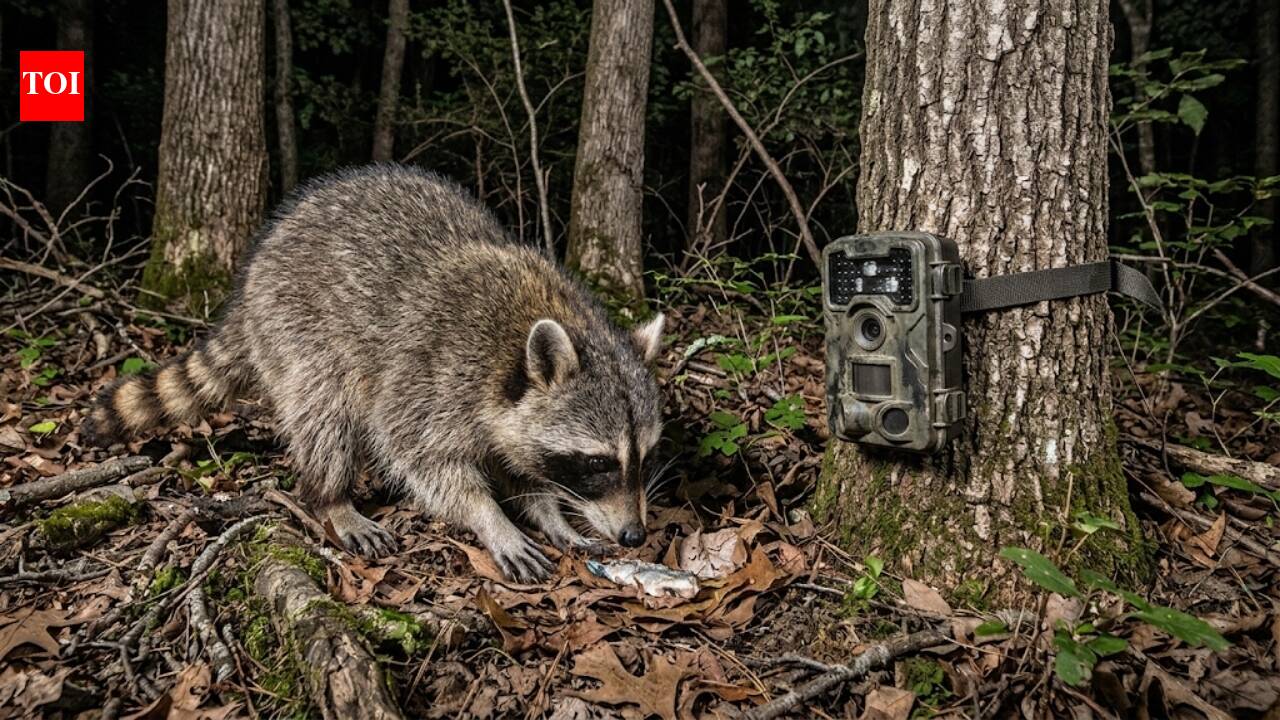
 AI-generated representative image showing a raccoon investigating sardine bait beside a motion-triggered wildlife camera. Credits – Gemini The problem wildlife biologists face is surprisingly simple. Small and medium-sized predators are hard to count in North American woodlands because many of them move mostly at night and stay out of sight. Motion-triggered cameras help, and researchers often place an odorous lure in front of the camera to draw animals closer. Whether a single scent works equally well for every species has been less clear.A study from southeast Oklahoma put that question to the test, and the answer was no. Published in the journal Wildlife Biology in 2026, it is listed in the USGS publications warehouse under the title “Experimental lure design reveals the best attractants for increasing detection of multiple mesocarnivores.” The researchers compared four lures at camera stations. Plains spotted skunks, grey foxes and raccoons preferred sardines, whereas striped skunks preferred a lure made from skunk scent. Lures made no difference to the detection of coyotes or opossums.Four odours and a blank camera The study, by Danielle Brosend, Anna Moeller and Robert Lonsinger, ran in southeast Oklahoma from January through May 2023. The study region was in LeFlore County and included the Ouachita National Forest and the Wister Wildlife Management Area. Data from 82 sites are archived in the Dryad repository.At each site, the team set up a cluster of four motion-triggered cameras. They describe their approach as a leave-one-out lure design: three cameras were randomly assigned one of four lures each, and the fourth had no lure and served as the control, according to the study’s Dryad dataset record. The lures were a skunk-based lure, fatty acid tablets, a sweet lure and sardines.The seven species present included raccoons, grey foxes, coyotes, bobcats, Virginia opossums, striped skunks and plains spotted skunks. The team also tracked temperature, rain and moon brightness along with the lures, as weather and moonlight could also influence what the cameras recorded. And the findings were in.Who liked whatLures did not work the same way for everyone. Lure combinations changed detection of plains spotted skunks, striped skunks, grey foxes, raccoons and bobcats, but made no difference for coyotes or opossums. In other words, a scent that works well for one species can be wasted on another. Within sites, lure preference differed between species. Plains spotted skunks, grey foxes and raccoons preferred sardines, while striped skunks preferred the skunk-based lure. That suggests a species-specific smell can sometimes beat a general one for the right animal. Environmental conditions mattered as well. Moon illumination affected detection of striped skunks, and temperature affected detection of bobcats, and rainfall affected detection of grey foxes. Conditions on the night can shape what a camera records, whatever lure sits in front of it. The job these cameras are being asked to accomplish makes those details matter.
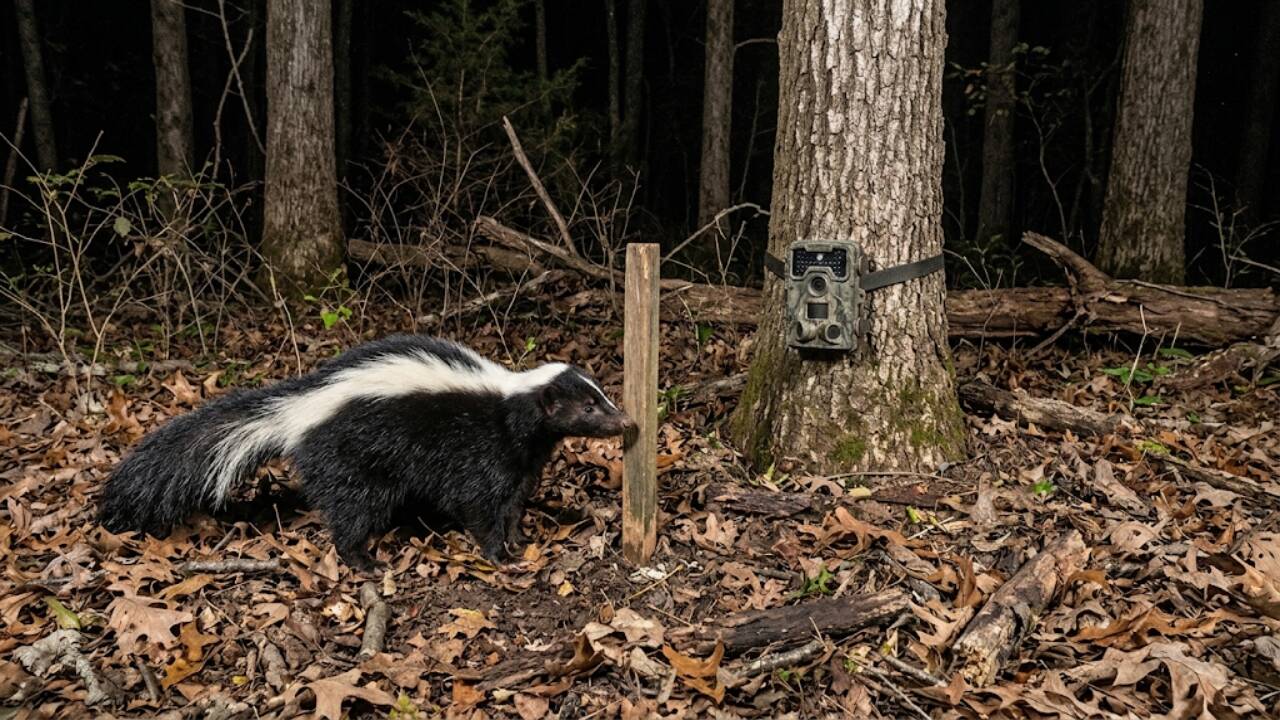
AI-generated representative image showing a striped skunk investigating a scent lure beside a wildlife camera in an Oklahoma forest. Credits – Gemini
Why the right lure mattersMany small and medium-sized predators have low detection rates, which makes them hard to monitor, according to the authors. Lures can raise those rates, but how much they help varies between species. Knowing which smell suits which animal can improve sampling and the quality of the monitoring that follows. Earlier research adds a warning about sardines. A 2021 study in Ecosphere found that sardines increased detections across all the carnivores tested, but they decayed quickly and were no different from having no lure by day 18. Fatty acid tablets lasted longer but never differed significantly from the control. In that study, grey foxes and raccoons responded to both lures, and ringtails responded only to sardines.A separate North Carolina study, published in Wildlife Research, saw a similar gap. Sardines more than doubled the detectability of several species but had little or no effect on striped skunks. That fits the Oklahoma data, where striped skunks went for a different lure. The Oklahoma work covers one region and one season, and the four cameras at each site were clustered together, so the unbaited camera is best read as a comparison point rather than a perfectly scent-free scene. Camera detections tell us which smells draw animals in front of a lens, not how many animals live there.The message is relevant for anyone organising a wildlife census. Pick the bait for the creature you’re hoping to find, figure it will be gone in a few weeks, and always have a blank camera in the mix. A can of sardines will draw the raccoons along, but if it’s a striped skunk you’re wanting, you might need something that smells like one.