

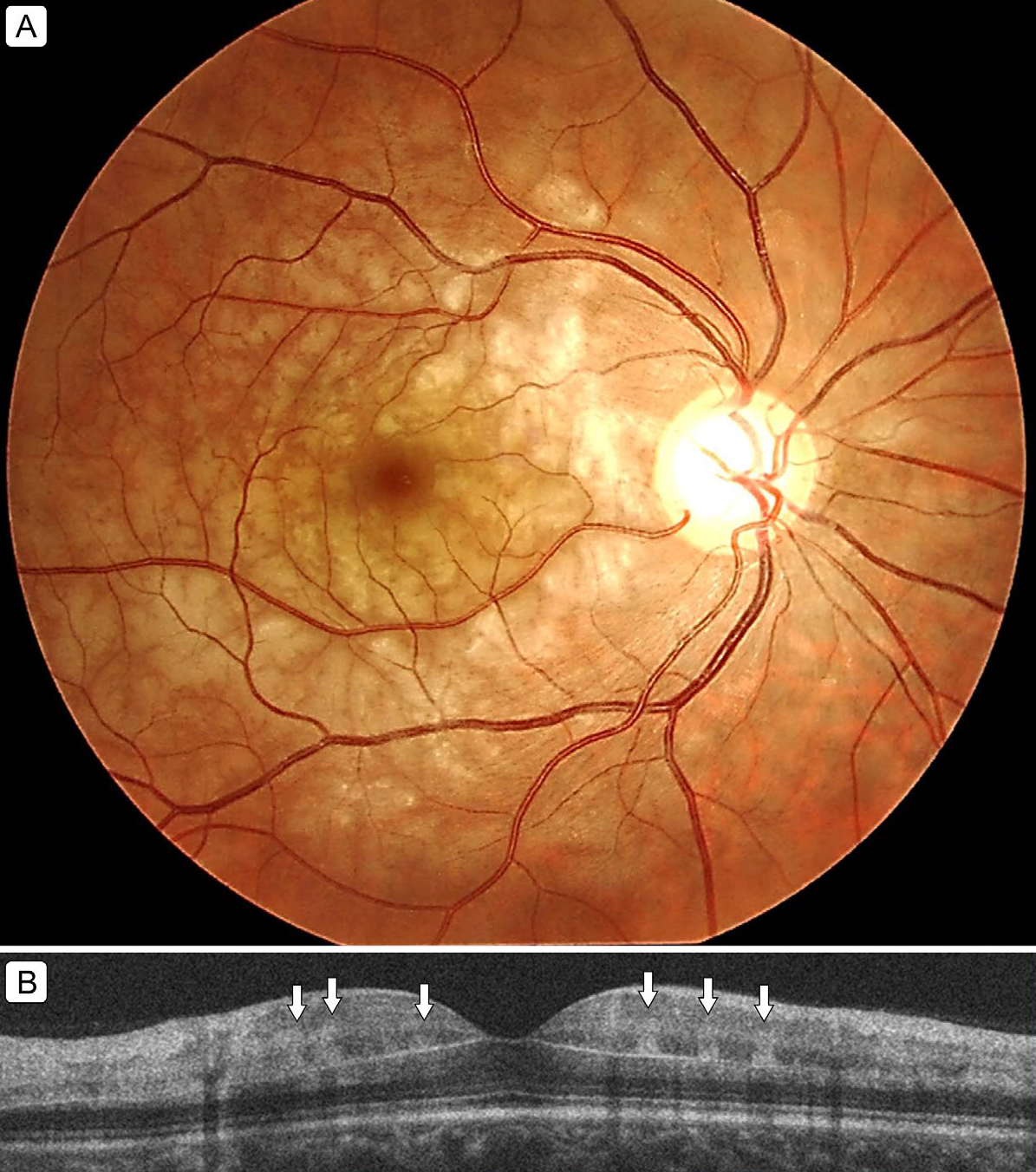
PAMM combined with AAION is a clinical sign that often points to giant cell arteritis.
Photo: Makino S. Digital J Ophthalm, Aug. 17, 2022. Click image to enlarge.
Paracentral acute middle maculopathy (PAMM) on OCT may help practitioners identify arteritic anterior ischemic optic neuropathy (AAION), according to a multicenter US study published in American Journal of Ophthalmology.
The analysis included 119 patients (27 with AAION and 92 with NAION) aged 50 and older who were diagnosed with either AAION or nonarteritic anterior ischemic optic neuropathy (NAION) between January 2020 and January 2025.
PAMM was identified in 18.5% of patients with AAION, whereas NAION was found in 5.4%. The finding demonstrated 94.6% specificity but only 19% sensitivity for AAION, indicating that its presence may support a diagnosis of AAION, but that its absence does not exclude the condition. PAMM appears on OCT as a hyperreflective band centered in the inner nuclear layer, sometimes extending into the outer plexiform layer. It represents ischemia involving the intermediate and deep retinal capillary plexuses. Because giant cell arteritis can compromise blood flow through the ophthalmic and retinal circulations, this retinal finding may accompany ischemic injury to the optic nerve.
However, the researchers cautioned against treating PAMM as a definitive diagnostic marker. Its positive predictive value was 50%, meaning that only half of the PAMM-positive patients in this study had AAION. The authors noted that the predictive value would likely be lower in the general population, where AAION accounts for a smaller proportion of anterior ischemic optic neuropathy cases.
Notably, PAMM also appeared in five patients with NAION. Three had experienced severe systemic events associated with reduced perfusion, including coronary artery bypass surgery, acute blood-loss anemia and end-stage renal disease requiring hemodialysis. The researchers suggested that systemic hypoperfusion or other vascular mechanisms may explain these findings. Two additional patients had spontaneous NAION, with PAMM detected in the fellow eye.
The authors emphasized that the absence of PAMM should never delay further evaluation or corticosteroid treatment when clinical suspicion for AAION is high. Combining macular OCT with other imaging markers, including OCT angiography, may improve diagnostic accuracy in future studies.
Click here for the journal source.
This article was developed by the editorial staff in conjunction with experts in the field. In the process, AI may have been among the editorial tools used to meet the goals of human editors, who approved all content.