
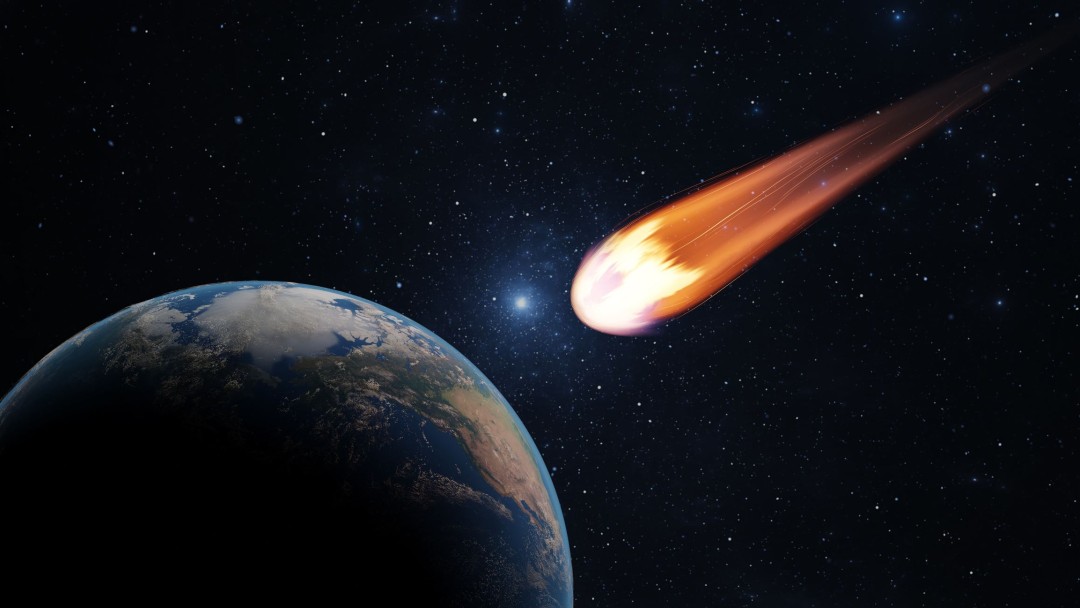
The notion that frozen visitors from space jump-started life on Earth just took a major hit. A new modeling study led by University of Cambridge researchers finds that when comets slam into our planet, the entry is so intense that key organic compounds are overwhelmingly destroyed—making the comet-delivery theory for life’s building blocks “highly unlikely,” lead author Richard Anslow says in a statement, per Futurism.
Focusing on hydrogen cyanide (HCN), a common prebiotic molecule on comets, the team calculated that conditions would have to be almost impossibly precise—right speed, right angle, right aftermath—for enough of it to survive and then kick off chemistry leading to life. Since HCN is an especially tough molecule, researchers surmised that if it likely couldn’t survive, neither could any other, per Mashable. Anslow calls it at best a “one-in-a-million” fluke. The work, published in Scientific Reports, doesn’t kill the idea entirely, though, as Mars’ thinner atmosphere might have offered a gentler landing zone for such molecules.