
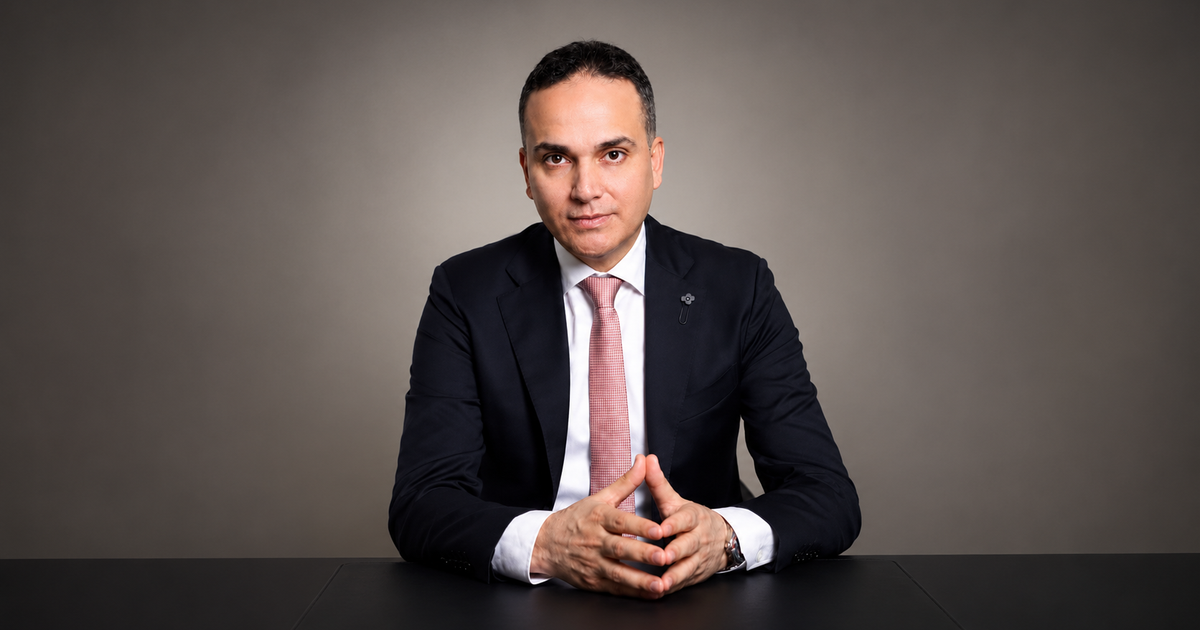
In Benghazi, two very different investments illustrate Ahmed Gadalla’s ambitions for Libya. One is a multibillion-dollar steel complex designed to establish the country as a significant producer of direct-reduced iron. The other is the arrival of MADO, the well-known Turkish ice cream brand, bringing a new hospitality experience to Libyan families.
The projects may seem worlds apart, but both reflect a common philosophy: rebuilding the economy means investing in productive industries while creating opportunities for people to work, socialise and build their futures at home.
As chairman of Alushibe Holding Group, Gadalla is pursuing investments across manufacturing, industry and consumer services, with a particular emphasis on local production and international partnerships.
“Imports still have a place, but the aim here is to produce more at home and build expertise,” he says.
That ambition is reflected in Zulfa Food Industries, a milk and juice processing project in Benghazi developed with Tetra Pak technology. The initiative aims to serve Libya’s domestic market through local manufacturing, reducing reliance on imported products while developing technical expertise.
The benefits extend beyond what leaves the factory. Packaging, transport, storage and distribution can all create opportunities for other businesses, helping build a wider industrial ecosystem around domestic production.
“Food production is one area where we can build local capability, bring in modern technology and serve our own people,” Gadalla says.
His most ambitious industrial project is the private-owned Libya United Steel Company (SULB), a direct-reduced-iron complex being developed near Benghazi in partnership with Tosyalı Holding, one of the major players in the international steel industry.
With reported investment of approximately $2.5 billion and production targeted for early 2028, the complex is designed to become one of the largest of its kind globally. Its development represents a significant undertaking, with the potential to generate employment during construction and operations while creating demand for engineers, technicians, contractors and industrial suppliers.
For Gadalla, the significance goes beyond the facility itself.
“The bigger idea is that Libya can make and export steel, not just oil.”
Libya’s natural resources and strategic location offer opportunities to develop industries beyond energy. Realising that potential, however, requires long-term investment, technical expertise, reliable infrastructure and a skilled workforce.
Partnerships with established international companies can help bring the technology and experience required to develop these capabilities. The longer-term opportunity is to ensure that Libyan workers and businesses benefit from the knowledge and supply chains created around such projects.
For Gadalla, local production is about more than replacing imports. It is about building businesses and skills that can support economic activity for years to come.
Why ice cream matters too
The planned arrival of MADO in Libya offers a different perspective on that vision. Alushibe has partnered with the Turkish brand, with plans for ten branches across the country.
While steel and food manufacturing address industrial capacity, hospitality speaks to another dimension of economic life: the return of everyday experiences that families can enjoy together.
“Industry builds the economy, but people also need places to enjoy, gather and celebrate,” Gadalla says.
After years of conflict and uncertainty, he believes that investments in restaurants and family-oriented venues can contribute to a sense of normality while creating jobs in hospitality and retail.
“After everything Libyans have been through, there is real value in giving families a place to enjoy themselves. Joy is part of rebuilding too.”
The project reflects the breadth of Alushibe’s interests, combining investments in large-scale industrial development with consumer businesses that serve the domestic market.
His stated focus remains on Libya’s longer-term economic potential.
“Libya has resources, a strategic location, a domestic market and talented, entrepreneurial people,” he says.
He sees particular importance in creating opportunities for younger Libyans to develop careers at home, whether as engineers, technicians, managers or skilled workers. Achieving that will require more than individual investments, including sustained attention to training, infrastructure and the wider business environment.
Gadalla does not suggest that any single project can transform the country. Instead, he sees industrial development as a gradual process in which each successful investment can contribute to a broader economic base.
“No single project does everything, but every serious investment adds something.”
From food processing and steel production to hospitality, his strategy reflects a belief that Libya’s future depends not only on the resources it possesses, but also on what it can build, manufacture and sustain. The ultimate measure of that ambition will be whether these projects translate into lasting businesses, skilled employment and greater productive capacity for the country.